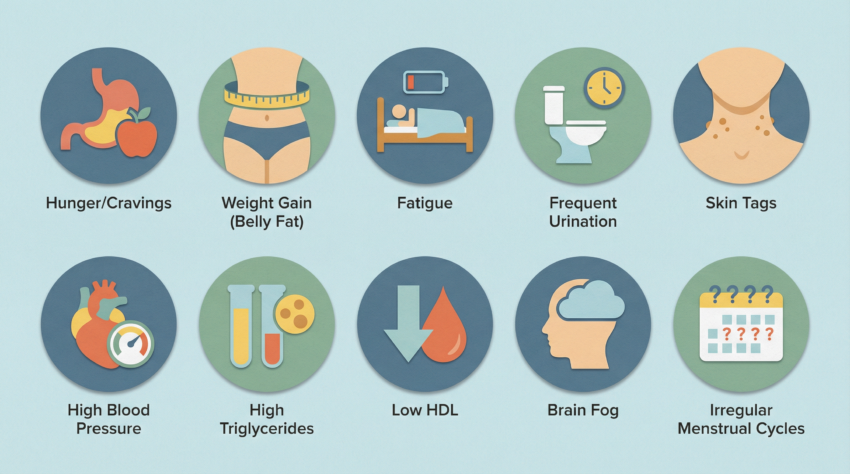
# 10 Warning Signs of Insulin Resistance You Shouldn’t Ignore Insulin resistance is often called a “silent” condition because it can develop for years without any obvious symptoms. Your body shows specific signs which indicate it struggles to regulate blood sugar levels properly. Early detection of warning signs enables people to begin preventive actions which stop prediabetes from developing into type 2 diabetes. The following ten warning signs of insulin resistance require your immediate attention.## 1. Increased Hunger and Cravings When your cells are resistant to insulin, they don’t get the glucose they need for energy, even though there’s plenty of it in your bloodstream. Your brain continues to receive hunger signals after you have finished your meal through this process. Your body will create strong cravings for sugar and carbohydrates because it needs fast energy sources.## 2. Unexplained Weight Gain, Especially Around the Belly Insulin resistance leads to weight gain which mostly affects the visceral fat that builds up around your abdominal organs. The body processes this fat which produces substances that create inflammation and make insulin resistance worse which results in a continuing cycle. A waistline over 40 inches in men and 35 inches in women is a key indicator of increased risk. [1]##3. Fatigue and Low Energy LevelsYour body signals you through fatigue and sluggishness because your cells require glucose to function properly. The condition shows symptoms which go beyond basic tiredness because it remains present after resting. Your body shows this symptom after you eat because it needs to process the glucose that enters your system.##4. Frequent Urination and Increased ThirstYour kidneys need to work harder when your blood contains too much glucose because they have to process this excess sugar. The body eliminates extra glucose through urine which draws water from body tissues. The condition leads to increased urination which forces your body to drink more water for hydration.##5. Skin Changes: Acanthosis Nigricans and Skin TagsInsulin resistance shows physical changes in the skin appearance. The skin condition acanthosis nigricans shows up as dark velvety patches which usually develop in the armpits neck and groin areas. High insulin levels can stimulate the growth of skin cells, leading to this condition. The skin starts developing skin tags which appear as soft small growths.##6. High Blood Pressure Insulin resistance is a key component of metabolic syndrome, a cluster of conditions that increase the risk of heart disease. The blood pressure level of 130/80 or above functions as a standard measurement to indicate insulin resistance existence. The specific process between insulin and kidneys and blood vessels requires detailed understanding yet remains challenging to explain.##7. High Triglyceride LevelsTrigllycerides exist as a blood fat substance which circulates in your bloodstream. Insulin resistance causes the liver to produce more triglycerides while your body struggles to eliminate them from your bloodstream. A fasting triglyceride level of 150 mg/dL or higher is a sign of insulin resistance.##8. Low HDL (“Good”) CholesterolHDL cholesterol functions to eliminate harmful cholesterol from your blood vessels. People with insulin resistance show HDL cholesterol levels below 40 mg/dL for men and 50 mg/dL for women which raises their chances of developing heart disease.##9. Brain Fog and Difficulty ConcentratingYour brain cells need glucose to function just like all other cells in your body need it for energy. The brain develops cognitive symptoms such as brain fog and memory problems and concentration difficulties because insulin resistance prevents glucose from entering the brain.##10. Irregular Menstrual Cycles and PCOSIn women, insulin resistance is closely linked to polycystic ovary syndrome (PCOS), a hormonal disorder that can cause irregular periods, acne, and excess hair growth. The body produces high insulin levels which causes sex hormones to become unbalanced and produces these symptoms.## When to See a Doctor If you’re experiencing any of these signs and symptoms, it’s important to talk to your doctor. The doctor will order fasting glucose tests and A1c tests to measure your blood sugar levels which helps them identify insulin resistance and prediabetes. Early diagnosis and lifestyle changes can make a significant difference in preventing the progression to type 2 diabetes and other health complications.### References[1] WebMD. (2024). *Insulin Resistance Syndrome*. Retrieved from http://www.webmd.com/diabetes/insulin-resistance-syndrome
10 Warning Signs of Insulin Resistance You Shouldn’t Ignore
Tags:
Category: Insulin Resistance
 Urdu
Urdu  English