Potassium is essential for heart and muscle function — but in kidney disease, it can accumulate to dangerous levels. For people with diabetes and kidney disease, understanding potassium is a matter of safety. Here is what you need to know.
Why Potassium Matters
Potassium is an electrolyte that regulates nerve and muscle function, including the electrical activity of the heart. Healthy kidneys maintain blood potassium within a narrow range (3.5–5.0 mmol/L) by excreting excess potassium in urine. When kidneys are damaged, this regulatory capacity is impaired, and potassium can accumulate — a condition called hyperkalaemia.
Hyperkalaemia can cause dangerous heart rhythm abnormalities and, in severe cases, cardiac arrest. It is one of the most serious complications of advanced kidney disease.
Who Needs to Restrict Potassium?
Not everyone with diabetes and kidney disease needs to restrict potassium. The need for restriction depends on:
- eGFR level: Potassium restriction is generally recommended when eGFR falls below 30 mL/min (Stage 4-5 CKD)
- Blood potassium levels: If your blood test shows potassium above 5.0 mmol/L, restriction is needed regardless of eGFR
- Medications: ACE inhibitors, ARBs, and some diuretics raise potassium levels and may require dietary adjustment
Potassium restriction is not appropriate for everyone with diabetes. In early kidney disease, a high-potassium diet from fruits and vegetables is actually beneficial for blood pressure and cardiovascular health. Only restrict potassium if your healthcare team has specifically advised it based on your blood test results.
High-Potassium Foods to Be Aware Of
If potassium restriction has been recommended, the following foods are particularly high in potassium and should be limited:
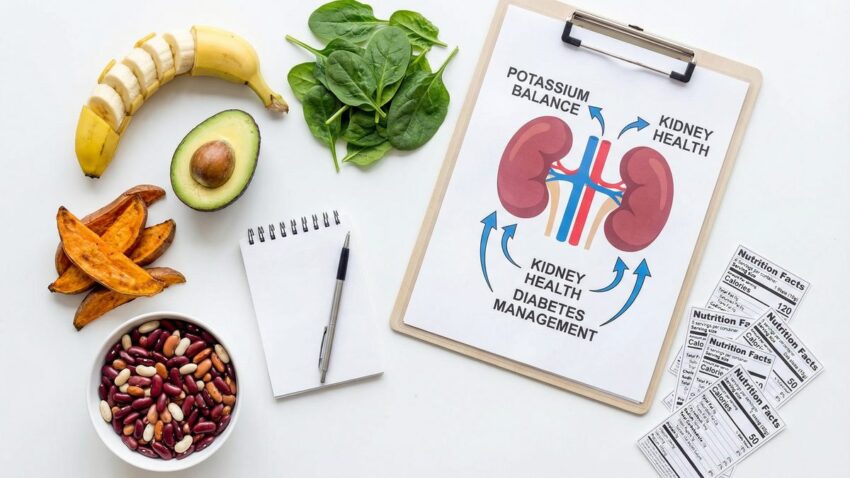
- Fruits: Bananas, oranges, kiwi, avocado, dried fruits, tomatoes
- Vegetables: Potatoes, sweet potatoes, spinach, mushrooms, Brussels sprouts
- Legumes: Lentils, kidney beans, chickpeas
- Dairy: Milk, yoghurt (moderate restriction)
- Nuts and seeds: Most varieties are high in potassium
Cooking techniques can reduce potassium content. Leaching — peeling, cutting into small pieces, soaking in water for several hours, then boiling in fresh water — can remove 30–50% of the potassium from vegetables like potatoes.
Potassium management in diabetes and kidney disease is nuanced. Restriction is only needed in advanced kidney disease or when blood tests show elevated levels. If restriction is advised, focus on limiting the highest-potassium foods and use leaching techniques for vegetables. Always follow the specific guidance of your renal dietitian, as individual needs vary considerably.
 Urdu
Urdu  English