
Safe in the Sun: A Diabetic’s Guide to Summer Footwear
The arrival of summer often means embracing warmer weather, enjoying more time outdoors, and swapping closed shoes for open-toed styles. For individuals living with diabetes, however, this shift requires careful consideration. The unique combination of heat, humidity, and different activities can pose specific risks to foot health. So, this article offers a detailed, evidence-based guide to keeping your feet healthy throughout the summer, with a special focus on making smart, safe choices about sandals.
Why Going Barefoot Is a Risk for People with Diabetes
It’s certainly tempting to feel the grass or sand between your toes on a warm day. But for anyone with diabetes, and especially for those with nerve damage (peripheral neuropathy), walking barefoot is a significant gamble. A reduced ability to feel pain means that injuries from hot pavement, sharp shells, or hidden debris can go completely unnoticed. A simple cut or blister that might be minor for someone else can quickly become a serious infection or a non-healing ulcer, a risk magnified by the slower healing process that can accompany diabetes.
Your Best Defense: Protective Footwear
- Never go barefoot: Make it a rule to wear some form of protective footwear at all times, whether you are inside or out.
- Choose supportive options: Look for well-cushioned sandals or water shoes that have a sturdy, protective sole.
- Steer clear of flimsy flip-flops: Most flip-flops lack the necessary support and protection, which increases your chances of injury and foot strain.
- Inspect shoes daily: Before putting on your shoes, always check inside for any small stones, rough patches, or other irritants that could harm your skin.
“Even a small injury can escalate quickly. Burns, cuts, blisters, and other common summer foot care concerns can lead to ulcers or infections if they aren’t treated right away. Choosing the right footwear is one of the easiest ways to avoid unnecessary risk and keep your feet protected this summer.”
Keeping Feet Dry: How to Handle Sweat and Prevent Infections
Summer’s heat and humidity naturally lead to more sweating, and feet are no exception. When moisture gets trapped inside shoes, it creates the perfect environment for fungi to grow, leading to conditions like athlete’s foot. Plus, constantly damp skin can become soft and more prone to breaking down, opening the door for bacterial infections.
Tips for Healthy, Dry Feet
- Wear the right socks: Opt for socks made from moisture-wicking materials that pull sweat away from your skin.
- Change socks often: Plan to change your socks at least once a day—more if your feet get particularly sweaty.
- Consider antifungal products: If you’re prone to fungal infections, using an antifungal powder or spray can be a good preventive measure.
- Let your shoes breathe: Choose footwear made from breathable materials like canvas or soft leather.
- Rotate your footwear: Give your shoes a chance to dry out completely by not wearing the same pair two days in a row.
Finding the Right Fit: Safety and Style in Diabetic Sandals
While many common summer sandals are not ideal for people with diabetes, there are excellent options available that don’t sacrifice style for safety. The most important thing is to look for features that will protect your feet and provide the right kind of support.
Key Features of a Diabetic-Friendly Sandal
- Protective design: Sandals with a closed toe or a protective bumper offer the best defense against stubs and scrapes.
- Adjustable fit: Look for straps that can be adjusted to ensure a snug but comfortable fit, which helps prevent blisters.
- Good cushioning and support: A cushioned insole and solid arch support help to distribute your weight evenly and reduce pressure spots.
- Durable, non-slip soles: A thick, sturdy sole will protect your feet from sharp objects and provide good traction to prevent falls.
- Skin-friendly materials: Choose sandals made from soft materials that won’t rub or irritate your skin.
The Importance of Daily Foot Checks
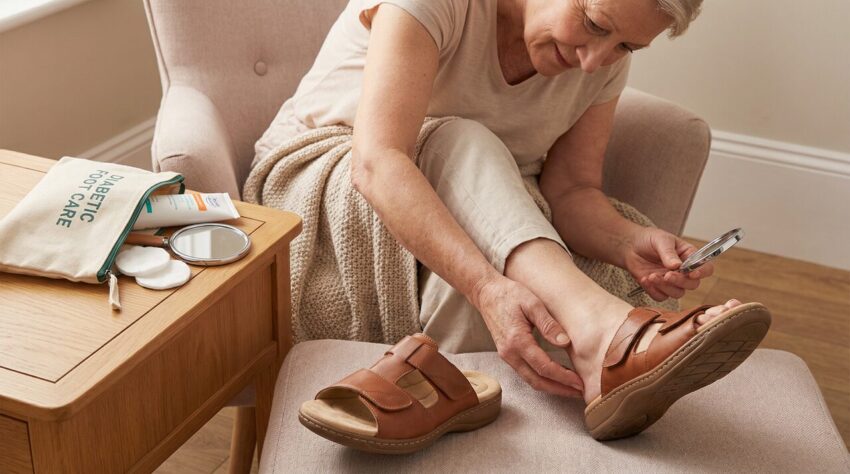
Because of the dual risks of reduced sensation and slower healing, checking your feet every single day is one of the most critical habits for anyone with diabetes. Catching a problem early is the best way to prevent it from becoming a serious health issue.
What to Look For in Your Daily Inspection
- Any changes in the skin: This includes redness, swelling, blisters, cuts, cracks, or hot spots.
- Changes to your toenails: Look for any discoloration, thickening, or signs of an ingrown nail.
- Shifts in sensation: Pay attention to any new feelings of tingling, numbness, or pain.
- Temperature variations: Notice if any part of your foot feels unusually hot or cold to the touch.
Key Takeaways
- Protective Footwear is Non-Negotiable: Always wear shoes to shield your feet from injury.
- Choose Sandals Wisely: Opt for supportive, well-fitting sandals and avoid flimsy, unsupportive styles.
- Keep Feet Dry: Use moisture-wicking socks and breathable shoes to prevent fungal and bacterial infections.
- Inspect Daily: Check your feet every day for any signs of injury or changes in skin or sensation.
- Seek Professional Advice: Don’t hesitate to contact your healthcare provider or podiatrist with any foot-related concerns.
A Proactive Approach to a Healthy Summer
Enjoying a safe and active summer with diabetes is entirely possible with a mindful and consistent foot care routine. By understanding the risks, choosing your footwear carefully, and being vigilant about daily inspections, you can confidently step through the season without compromising your health. Your feet carry you through life, so prioritizing their care is a direct investment in your overall well-being. If you have any questions or notice anything unusual, always reach out to your healthcare team for guidance.
 Urdu
Urdu  English