Your doctor has prescribed semaglutide. Perhaps it is Ozempic for diabetes or Wegovy for weight management. The medication sits in your refrigerator, and you are wondering what the coming weeks will bring. Here is a realistic week-by-week guide to help you prepare.
ℹ️ What to Expect — First Month Overview
| Week | Dose | What’s Happening |
|---|---|---|
| Week 1 | 0.25mg | Body begins adjusting. Mild nausea possible. Appetite may decrease slightly. |
| Week 2 | 0.25mg | Side effects may peak then improve. Smaller meals help. Stay hydrated. |
| Week 3 | 0.25mg | Side effects easing. Appetite suppression more noticeable. Blood sugar improving. |
| Week 4 | 0.25mg → 0.5mg | Preparing for dose increase. Reflect on side effects. Discuss with doctor if needed. |
Before Your First Injection
Semaglutide requires refrigeration until first use. After your first injection, the pen can stay at room temperature below 30°C for up to 56 days. Do not freeze it. Check the expiry date and inspect the liquid, which should be clear and colourless.
Gather supplies: alcohol swabs to clean the injection site and a sharps container for used needles. Your pharmacy may provide a sharps bin, or you can purchase one. Never throw needles directly into household rubbish.
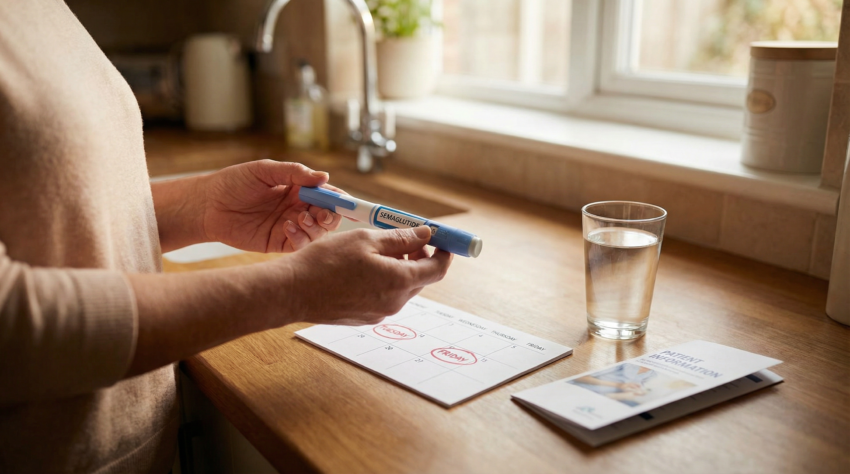
Choose your injection day. Once weekly dosing means picking a consistent day. Many people choose a day when they can rest if side effects occur. Inject at roughly the same time each week, though a few hours variation is acceptable.
Week One: Starting Dose
You begin at the lowest dose: 0.25mg for Ozempic or Wegovy. This dose is deliberately sub-therapeutic. Its purpose is helping your body adjust to the medication gradually. Do not expect dramatic effects yet.
The injection itself is simple. Attach a new needle to the pen. Dial your dose. Pinch a fold of skin on your abdomen, thigh, or upper arm. Insert the needle at 90 degrees and press the button. Hold for several seconds until the dose indicator returns to zero.
Some people notice mild nausea within the first few days. Others feel nothing at all. Keep eating regular meals even if hunger diminishes. Skipping meals can worsen nausea.
Week Two: Adjustment Continues
Your second injection delivers the same 0.25mg dose. Side effects from week one may persist, improve, or appear for the first time. Gastrointestinal symptoms follow no predictable pattern across individuals.
Nausea, if present, often peaks and then gradually improves. Eating smaller meals more frequently helps. Avoiding fatty, greasy, or very rich foods reduces symptoms for many people. Stay hydrated, but avoid drinking large volumes at once.
Constipation affects some users. Semaglutide slows digestive transit. Increase fibre intake gradually and drink plenty of water. A gentle laxative may help if diet changes prove insufficient.
Week Three: Building Tolerance
By the third week, your body has had more time to adapt. Many people find that initial side effects are easing. The medication remains at the starting dose.
Appetite suppression typically becomes more noticeable. You may feel full faster during meals and less interested in snacking. This is the medication working as intended. Some people describe feeling neutral about food rather than actively put off by it.
Blood sugar control continues improving for people with diabetes. Fasting glucose levels often drop. Post-meal spikes may become smaller. Your diabetes team might discuss adjusting other medications if glucose drops too low.
Week Four: Preparing for Dose Increase
The fourth week completes the initial titration period. Your next injection will typically increase to 0.5mg. This dose escalation is standard and necessary to reach therapeutic levels.
Reflect on your experience so far. Note which side effects you experienced and how you managed them. This information helps you anticipate what might happen at higher doses.
If side effects were severe or intolerable, discuss this with your doctor before increasing the dose. Some people benefit from staying at the starting dose longer.
Weight and Blood Sugar Changes
Weight loss in the first month is typically modest: 1 to 3kg on average. Some people lose more, some less, and some nothing at all. The starting dose is low, and significant weight loss usually occurs over months, not weeks.
A1C changes will not show up yet since A1C reflects average glucose over three months. Daily glucose readings provide more immediate feedback. Expect gradual improvement rather than dramatic drops.
Lifestyle During the First Month
✅ Lifestyle Tips for Best Results
- Eat balanced meals — semaglutide is not a substitute for good nutrition. Use reduced appetite to choose nutrient-dense foods.
- Prioritise protein — this helps preserve muscle mass during weight loss.
- Stay active — walking is excellent if exercise is new to you. Continue your existing routine if tolerated.
- Avoid skipping meals — this can worsen nausea and lead to blood sugar swings.
- Track your symptoms — note what you experience each week to share with your healthcare team.
What Comes Next
After the first month, dosing typically increases every four weeks until reaching your target dose. For Ozempic, many people stay at 0.5mg or 1mg. Wegovy continues increasing to 2.4mg over about four months total.
Each dose increase may bring a temporary return of side effects. They usually settle faster than they did initially because your body has some adaptation already. Benefits accumulate over months.
✅ Key Takeaway
The first month on semaglutide involves starting at a low dose (0.25mg) and allowing your body to adjust over four weeks. Nausea and digestive changes are common but usually manageable. Modest weight loss and blood sugar improvements begin, though larger benefits come with higher doses over subsequent months. Track your experience and communicate openly with your healthcare team.
Sources: Ozempic and Wegovy prescribing information, STEP and SUSTAIN clinical trial publications, clinical practice recommendations for GLP-1 initiation.
 Urdu
Urdu  English