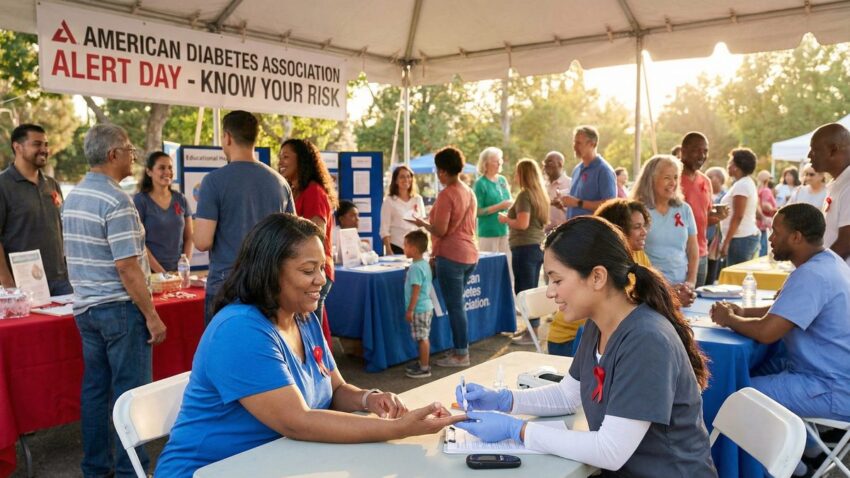
American Diabetes Association Alert Day, observed on the fourth Tuesday of March each year, is a national call to action for diabetes risk awareness. Millions of people are living with undiagnosed type 2 diabetes or prediabetes — and most do not know it. Could you be one of them?
The Scale of Undiagnosed Diabetes
According to the International Diabetes Federation, approximately 240 million people worldwide are living with undiagnosed type 2 diabetes. In the United States alone, the CDC estimates that 8.5 million people have diabetes but have not yet been diagnosed. A further 98 million American adults — more than one in three — have prediabetes, and the vast majority are unaware of it.
This matters because type 2 diabetes and prediabetes cause damage silently. By the time symptoms appear, significant harm may already have been done to the kidneys, eyes, nerves, and cardiovascular system.
The ADA Risk Test
The ADA’s Type 2 Diabetes Risk Test is a simple seven-question screening tool that takes less than two minutes to complete. It assesses the following risk factors:
| Risk Factor | Why It Matters |
|---|---|
| Age (45 or older) | Risk increases significantly with age |
| خاندانی تاریخ | First-degree relative with diabetes doubles risk |
| Gestational diabetes history | 50% lifetime risk of type 2 diabetes |
| Physical inactivity | Sedentary lifestyle reduces insulin sensitivity |
| High blood pressure | Strongly associated with insulin resistance |
| Overweight or obesity | Visceral fat drives insulin resistance |
| Ethnicity | Higher risk in Black, Hispanic, Asian, and Native American populations |
A prediabetes diagnosis is not a life sentence. The landmark Diabetes Prevention Program study demonstrated that lifestyle intervention — losing 5–7% of body weight and achieving 150 minutes of moderate exercise per week — reduced the progression from prediabetes to type 2 diabetes by 58%. Metformin reduced progression by 31%. Early action is transformative.
When to Get Tested
The ADA recommends screening for type 2 diabetes in the following groups:
- Adults aged 35 or older, regardless of risk factors
- Adults of any age who are overweight or obese and have one or more additional risk factors
- Women who had gestational diabetes
- Anyone with prediabetes (retest every one to two years)
Screening involves a simple blood test: a fasting plasma glucose, an HbA1c, or a two-hour oral glucose tolerance test. Any GP can arrange this.
ADA Alert Day is a reminder that millions of people are living with undiagnosed diabetes or prediabetes. Knowing your risk is the first step. If you have risk factors, ask your GP for a simple blood test. If you have prediabetes, lifestyle changes can prevent or significantly delay the development of type 2 diabetes.
 Urdu
Urdu  English