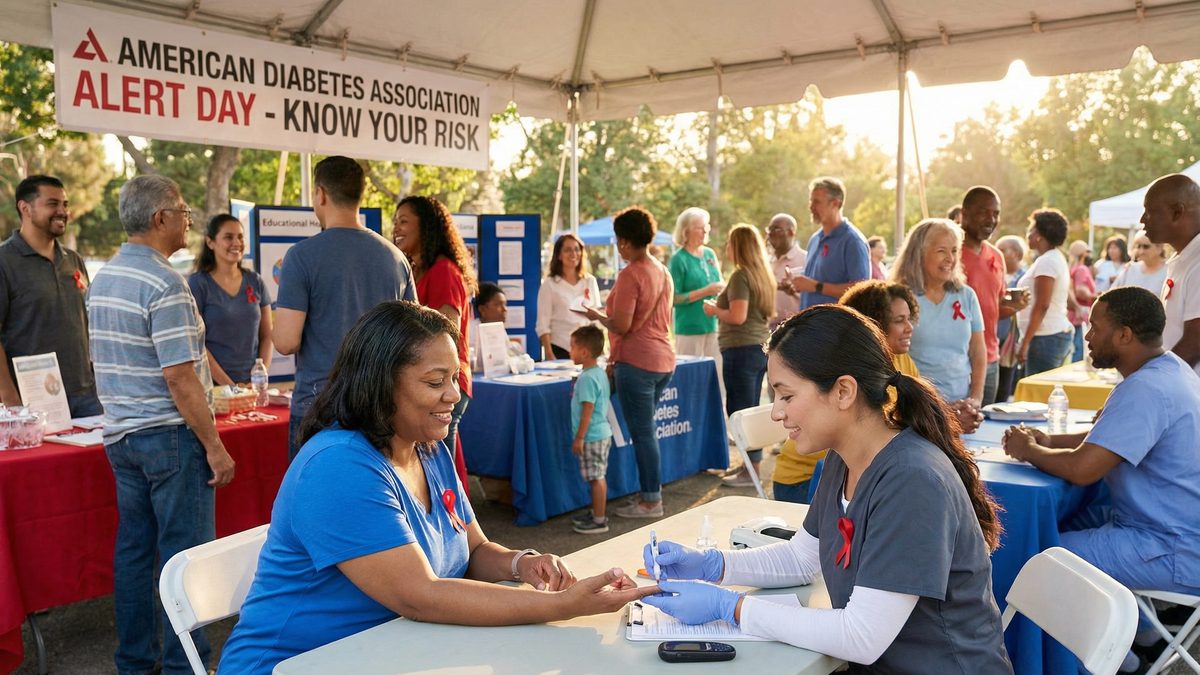
Diabetes Alert Day is observed each year on the fourth Tuesday in March. It is meant to remind people to learn their risk for type 2 diabetes and take the next step if risk is high.
Quick summary
A risk test can be a useful starting point, but it does not diagnose diabetes. Prediabetes and diabetes are diagnosed with blood tests such as A1C, fasting plasma glucose, or an oral glucose tolerance test.
Key takeaways
- Risk tests can help people decide whether to ask about blood testing.
- Type 2 diabetes and prediabetes can be present without obvious symptoms.
- Earlier testing can help people start prevention or treatment sooner.
- Risk is affected by age, family history, pregnancy history, weight, activity, blood pressure, and other factors.
Who should pay attention
- People with a family history of type 2 diabetes.
- People with a history of gestational diabetes.
- People with high blood pressure, abnormal cholesterol, or higher waist-related risk.
- People who are less physically active.
- People with symptoms such as thirst, frequent urination, blurry vision, fatigue, or unexplained weight loss.
What to do after a high-risk result
A high-risk result is a reason to talk with a clinician, not a reason to panic. Ask whether you need A1C, fasting glucose, or another test.
If prediabetes is confirmed, structured lifestyle programs such as CDC-recognized National Diabetes Prevention Program options may help prevent or delay type 2 diabetes for many people.
Practical takeaway
Use Diabetes Alert Day as a nudge: know your risk, confirm with testing when needed, and choose one prevention step you can actually repeat.
Safety note
This article is not a substitute for medical care. Seek prompt care for symptoms of very high glucose, vomiting, dehydration, confusion, or unexplained weight loss.
What to ask your care team
- Should I take a type 2 diabetes risk test?
- Do I need blood testing for prediabetes or diabetes?
- Would a diabetes prevention program fit my risk and schedule?
Related reading
Source summary
- Diabetes Alert Day, American Diabetes Association. Awareness and risk-test information. Accessed June 5, 2026. Source
- Diabetes Alert Day, National Institute of Diabetes and Digestive and Kidney Diseases. Community health outreach. Accessed June 5, 2026. Source
- Diabetes Risk Test, National Institute of Diabetes and Digestive and Kidney Diseases. Risk test. Accessed June 5, 2026. Source
- Preventing Type 2 Diabetes, Centers for Disease Control and Prevention. Patient guidance. Accessed June 5, 2026. Source