
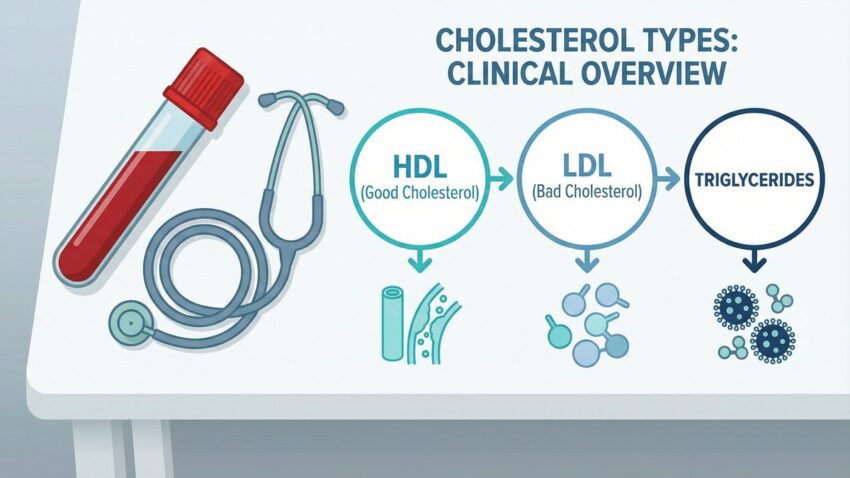
Diabetes profoundly disrupts cholesterol metabolism in ways not always reflected in a standard cholesterol test. Even when total cholesterol appears normal, people with diabetes often have a particularly dangerous lipid profile — one that significantly accelerates cardiovascular disease. Understanding “diabetic dyslipidaemia” is essential for protecting your heart.
What Is Diabetic Dyslipidaemia?
Diabetic dyslipidaemia is characterised by three hallmark features: elevated triglycerides, low HDL cholesterol, and the presence of small, dense LDL particles. This triad is far more atherogenic than elevated LDL alone. Insulin resistance impairs lipoprotein lipase, leading to elevated VLDL production and reduced HDL levels. The resulting small, dense LDL particles penetrate arterial walls more easily and are more susceptible to oxidation.
| Lipid Parameter | High CV Risk | Very High CV Risk |
|---|---|---|
| LDL Cholesterol | <70 mg/dL | <55 mg/dL |
| Triglycerides | <150 mg/dL | <150 mg/dL |
| HDL Cholesterol | >40 mg/dL (men); >50 mg/dL (women) | Higher is better |
Statin Therapy: The Cornerstone of Treatment
Current ADA guidelines recommend statin therapy for all adults with diabetes aged 40–75 years, regardless of LDL level. Multiple large trials — including the Heart Protection Study and CARDS — have demonstrated that statin therapy reduces major cardiovascular events by 20–37% in people with diabetes. For those with established cardiovascular disease, high-intensity statin therapy (atorvastatin 40–80 mg or rosuvastatin 20–40 mg) is recommended.
- Replace saturated fats with unsaturated fats (olive oil, avocado, nuts)
- Increase soluble fibre (oats, barley, legumes) — lowers LDL by 5–10%
- Eat fatty fish 2× per week — lowers triglycerides by 15–30%
- Reduce refined carbohydrates and sugary foods
- Add plant sterols/stanols — lowers LDL by 7–10%
Diabetic dyslipidaemia requires more than simply “lowering cholesterol.” Statin therapy is the cornerstone of treatment, but dietary changes, exercise, and additional medications may be needed to achieve optimal lipid targets. Ask your doctor for a full fasting lipid panel and discuss your individual cardiovascular risk at your next appointment.
 Urdu
Urdu  English