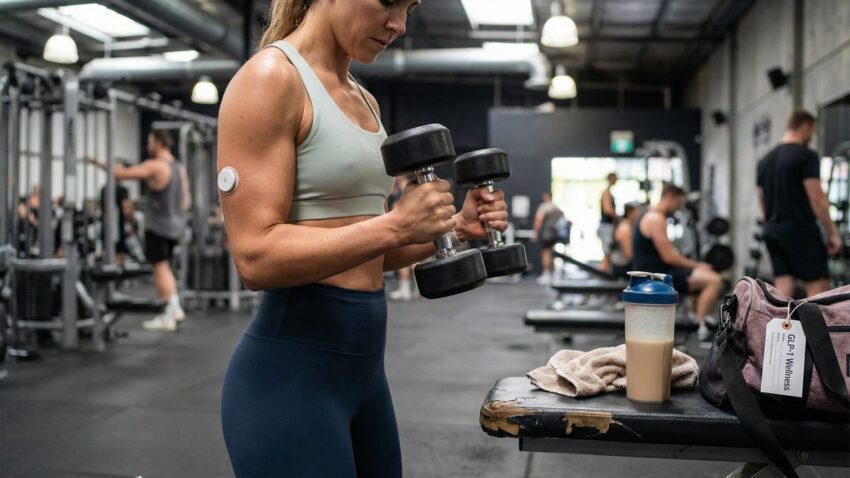
GLP-1 receptor agonists produce impressive weight loss, but a significant proportion of that weight can come from muscle rather than fat. Understanding how to minimise muscle loss while on these medications is essential for long-term metabolic health and functional capacity.
The Muscle Loss Problem
Clinical trials show that approximately 25–40% of weight lost on GLP-1 medications comes from lean mass. Muscle loss is clinically significant: it reduces insulin sensitivity, increases the risk of sarcopenia, reduces functional capacity, and increases the risk of falls and fractures, particularly in older adults.
Strategies to Preserve Muscle Mass
Resistance training is non-negotiable. Aim for at least two to three resistance training sessions per week, targeting all major muscle groups.
Prioritise protein intake. Aim for at least 1.2–1.6g of protein per kilogram of body weight per day. Given the appetite suppression caused by these medications, achieving this target requires deliberate effort.
Distribute protein throughout the day. Muscle protein synthesis is maximised when protein is consumed in regular doses of 25–40g across the day, rather than in one or two large servings.
ℹ️ Best Protein Sources on a Reduced Appetite
Greek yoghurt, cottage cheese, eggs, tinned fish, protein shakes, and nut butters provide substantial protein in compact servings that do not require large meal volumes.
✅ Key Takeaway
Muscle preservation during GLP-1 therapy requires regular resistance training and adequate protein intake (1.2–1.6g/kg/day). These strategies ensure that the weight lost is predominantly fat rather than metabolically valuable muscle tissue.
 Urdu
Urdu  English