
So the U.S. just dropped new dietary guidelines. And honestly? They’re saying what we’ve been saying for years. Eat real food. Put protein first. Stop fearing fat. Cut the processed junk. About time.
What Changed
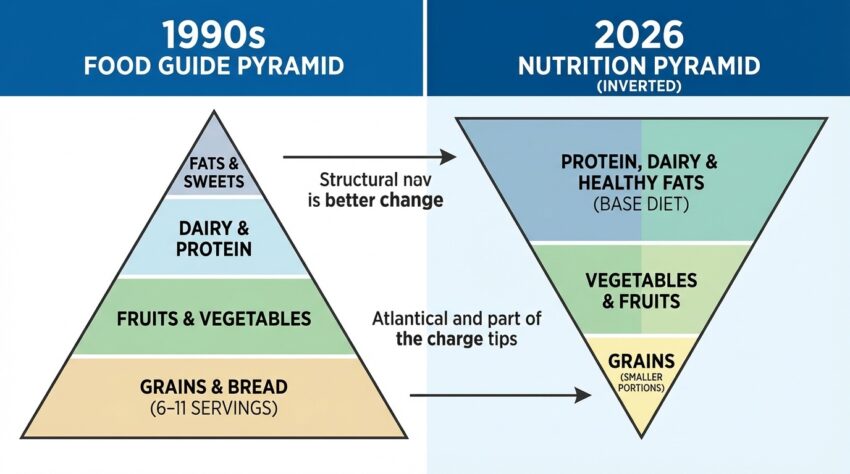
Remember that old food pyramid? The one from the 90s? Bread and cereal at the bottom. Six to eleven servings a day. Fat is evil. Eat more grains.
Yeah. That advice didn’t work out so great for us.
⚠️ The Reality Check
Half of Americans now have prediabetes or diabetes. Half. That’s not a coincidence.
The new pyramid flips everything. Protein, dairy, and healthy fats are now at the base. Grains got bumped to the top. Smaller portion. And they’re calling out ultra-processed foods as dangerous for the first time ever.
Why This Matters If You Have Diabetes
Here’s the thing. When you eat a bunch of refined carbs and processed food, your blood sugar goes nuts. You know this. You’ve lived it. That post-meal spike after pasta. The crash after cereal. The constant hunger when you’re eating “healthy” whole wheat everything.
The new guidelines basically say stop doing that.
ℹ️ New Protein Recommendations
They want Americans eating 1.2 to 1.6 grams of protein per kilogram of body weight daily. That’s way more than most people get. And protein doesn’t spike your blood sugar the way carbs do.
They’re also saying healthy fats are fine. Eggs with the yolks. Full-fat dairy. Avocados. Nuts. Olive oil. All good. These fats slow down digestion. Help with satiety. Keep you from reaching for snacks two hours later.
The Added Sugar Thing
The guidelines say added sugars are “not recommended.” That’s government speak for don’t eat this stuff.
For kids they’re even stronger. No added sugars at all.
Now look. We already know sugar is a problem. But having it in official government guidelines? That’s huge. Schools will pay attention. Food programs will have to adjust. Labels might change.
✅ Validation
What you’ve been doing to manage your blood sugar isn’t weird or extreme. It’s literally what the government now recommends for everyone.
What Real Food Actually Means
They define real food as whole, minimally processed, and recognizable. Few ingredients. No industrial additives. No artificial flavors. No added sugars hiding under fancy names.
Think about it this way:
You get the idea.
Practical Stuff You Can Use
Here’s what I’d take from this if you’re managing diabetes:
Protein at Every Meal
Eggs for breakfast. Meat or fish at lunch and dinner. Nuts between meals. Keeps blood sugar stable and keeps you full.
Three Servings of Vegetables
Non-starchy ones are your friend. Broccoli. Spinach. Peppers. Green beans. Fill you up without spiking glucose.
Two Servings of Fruit
Whole fruit. Not juice. The fiber slows sugar absorption. Berries are especially good. Low glycemic.
Two to Four Servings of Whole Grains
Actually whole. Oats. Quinoa. Brown rice. Watch portions—even whole grains affect blood sugar.
The Fat Thing
For decades we were told fat makes you fat. Avoid egg yolks. Use margarine. Drink skim milk.
Terrible advice. Especially for diabetes.
⚠️ The Low-Fat Trap
When food companies took fat out, they added sugar to make things taste good. Low-fat yogurt? Full of sugar. Fat-free salad dressing? Basically candy. We swapped one problem for a worse one.
The new guidelines say healthy fats are back. And they were never really the enemy.
Fatty fish like salmon. Eggs. Cheese. Full-fat Greek yogurt. Olive oil. These foods don’t cause the blood sugar chaos that low-fat high-carb alternatives do.
What Stays the Same
- Water is still the best drink. No surprise there.
- Vegetables and fruits are still important. Always were.
- This isn’t a strict diet. They’re calling it a flexible framework. Cultural traditions matter. Personal preferences matter. The goal is real food most of the time. Not perfection.
My Take
Look. These guidelines aren’t perfect. Some people will say they don’t go far enough. Others will say the protein recommendations are too high. There’s always debate.
But the direction is right. Away from processed food. Toward real food. Away from fearing fat. Toward prioritizing protein.
✅ Bottom Line
If you’ve been managing diabetes by eating whole foods and watching carbs, you’ve been ahead of the curve. The government just caught up. Keep doing what you’re doing.
The new Dietary Guidelines for Americans are available at realfood.gov if you want to read the full report.
 Urdu
Urdu  English