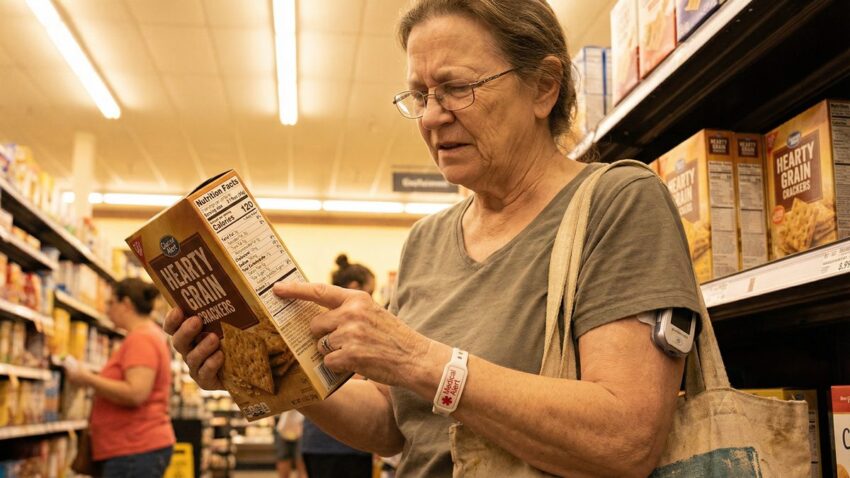
For people with diabetes and kidney disease, the supermarket can feel like a minefield. Food labels hold the key to protecting both your blood sugar and your kidneys — but only if you know what to look for. This guide turns you into a confident label reader.
Why Food Labels Matter for Kidney Health
When kidneys are damaged, they lose their ability to regulate the balance of certain minerals in the blood. Sodium, potassium, and phosphorus can accumulate to dangerous levels, causing serious complications including heart rhythm problems, bone disease, and muscle weakness. At the same time, carbohydrate content directly affects blood glucose levels.
Reading food labels allows you to manage all of these concerns simultaneously, making informed choices that protect both your kidneys and your blood sugar.
The Six Numbers to Check First
| Nutrient | Why It Matters | Target per Serving |
|---|---|---|
| Sodium | Raises blood pressure; worsens kidney damage | <200mg per serving |
| Total Carbohydrates | Directly raises blood glucose | Depends on your plan |
| Potassium | Can accumulate in kidney disease | <200mg if restricted |
| Phosphorus | Damages blood vessels and bones | Avoid phosphate additives |
| پروٹین | High intake stresses damaged kidneys | Moderate if eGFR <45 |
| Added Sugars | Spikes blood glucose rapidly | <5g per serving |
Phosphorus from food additives (listed as “phosphate” in ingredients) is absorbed at a rate of 90–100%, compared to just 40–60% from natural food sources. Processed foods, fast food, cola drinks, and packaged meats are particularly high in phosphate additives. Always check the ingredients list, not just the nutrition panel.
Decoding the Ingredients List
The nutrition panel tells you quantities, but the ingredients list reveals quality. Ingredients are listed in descending order by weight. Here is what to watch for:
- Phosphate additives: Look for any ingredient containing “phosphate” — sodium phosphate, calcium phosphate, potassium phosphate, phosphoric acid. These are highly bioavailable and should be minimised.
- Hidden sodium: Sodium hides under many names: monosodium glutamate (MSG), sodium bicarbonate, sodium nitrate, brine, and “natural flavours” can all contribute significant sodium.
- Added sugars: Glucose, fructose, sucrose, dextrose, maltose, corn syrup, and honey are all added sugars that will raise blood glucose.
Serving Size: The Most Overlooked Number
Every figure on a nutrition label refers to the stated serving size, which is frequently much smaller than what people actually eat. A packet of crisps may state “serving size: 25g” when the packet contains 75g. If you eat the whole packet, you must multiply every figure by three.
This is particularly important for sodium and potassium, where the difference between a single serving and a full portion can be the difference between a safe intake and a dangerous one.
Reading food labels is a skill that directly protects your kidneys and blood sugar. Focus on sodium (under 200mg per serving), phosphate additives (avoid entirely), potassium (restrict if advised), and total carbohydrates. Always check the serving size first, and remember that the ingredients list reveals what the nutrition panel cannot.
 Urdu
Urdu  English