
The glycemic index has become a cornerstone concept in diabetes management and blood sugar control. This numerical ranking system provides valuable insight into how different carbohydrate-containing foods affect blood glucose levels. [1] By understanding and applying the principles of the glycemic index, individuals with diabetes can make more informed dietary choices, leading to better glycemic control and overall health.
What is the Glycemic Index?
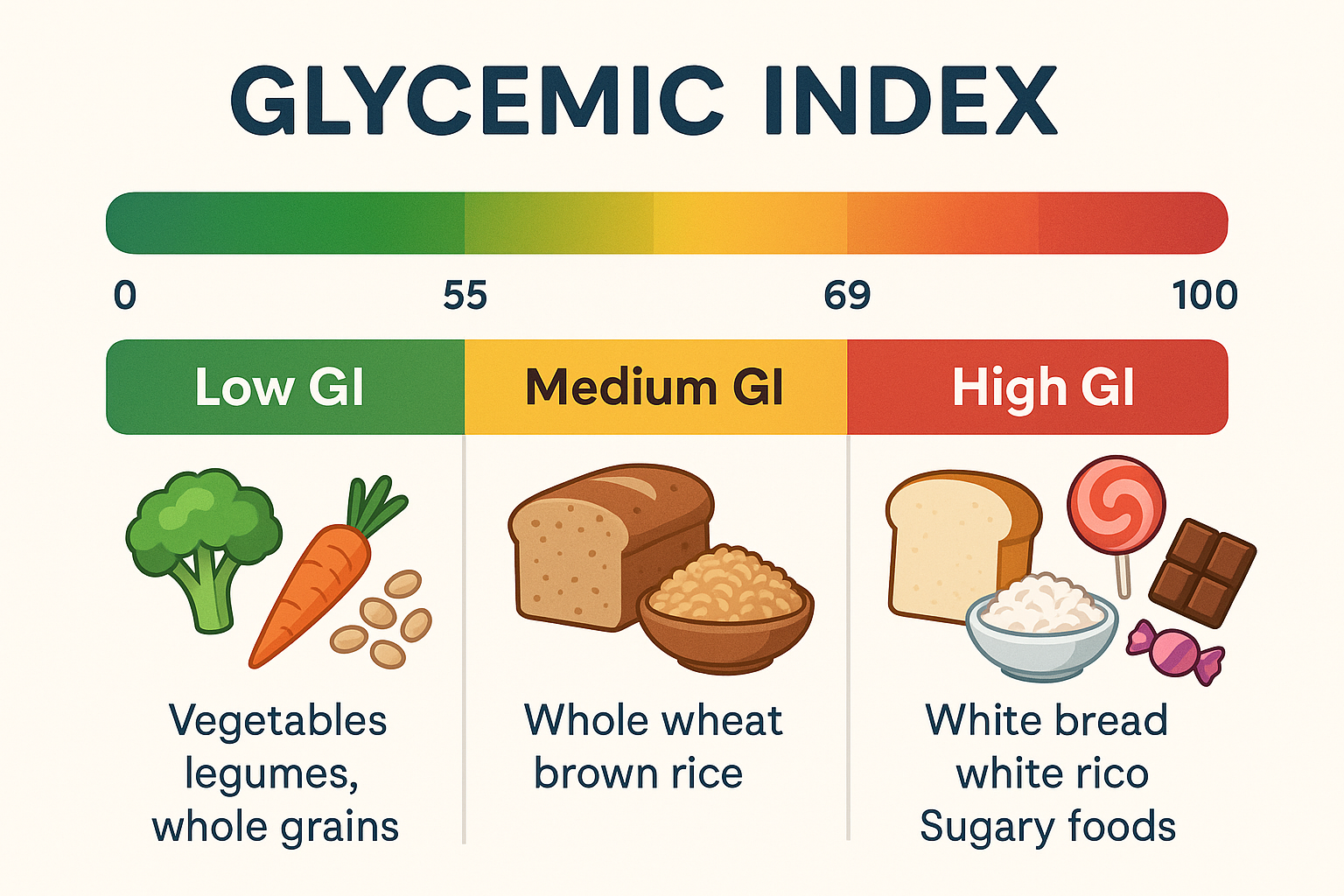
The glycemic index (GI) is a scale from 0 to 100 that ranks carbohydrate-containing foods by how much they raise blood sugar levels after eating. Foods with a high GI are rapidly digested and absorbed, causing a quick and significant rise in blood sugar. In contrast, low-GI foods are digested and absorbed more slowly, resulting in a gradual and smaller increase in blood sugar. [2]
- Low-GI foods (55 or less): Green vegetables, most fruits, raw carrots, kidney beans, chickpeas, and lentils.
- Medium-GI foods (56-69): Sweet corn, bananas, raw pineapple, raisins, cherries, and oat breakfast cereals.
- High-GI foods (70 or more): White bread, potatoes, and cornflakes.
Factors That Influence a Food’s Glycemic Index
Several factors can influence a food’s GI value:
- Processing: The more processed a food is, the higher its GI. For example, whole grains have a lower GI than refined grains.
- Cooking method: The way a food is cooked can alter its GI. For instance, boiled potatoes have a lower GI than baked potatoes.
- Ripeness: The riper a fruit or vegetable, the higher its GI.
- Fiber content: Foods high in fiber tend to have a lower GI because fiber slows down the absorption of sugar.
- Fat and protein content: The presence of fat and protein in a meal can lower the overall GI by slowing down digestion.
Practical Tips for Using the Glycemic Index
Incorporating the glycemic index into your meal planning doesn’t have to be complicated. Here are some practical tips:
- Choose low-GI carbohydrates: Opt for whole grains, legumes, and non-starchy vegetables as your primary sources of carbohydrates.
- Combine high-GI foods with low-GI foods: If you do eat a high-GI food, pair it with a low-GI food to help balance the meal and lessen the impact on your blood sugar.
- Pay attention to portion sizes: The total amount of carbohydrates you eat is just as important as the GI. Even low-GI foods can raise your blood sugar if you eat too much.
Monitoring Your Personal Response
While published GI values provide useful guidelines, individual responses vary. Personal monitoring helps identify which foods work best for your unique metabolism.
Blood glucose monitoring remains the gold standard for understanding your glycemic responses. Testing before and two hours after meals reveals how specific foods affect your blood sugar. Over time, this data helps you identify patterns and make informed choices.
Continuous glucose monitors (CGMs) provide even more detailed information, showing the complete glucose curve after meals and revealing delayed or prolonged glucose elevations that fingerstick testing might miss. CGMs can identify surprising individual responses, such as blood sugar spikes from foods generally considered low GI.
Conclusion: GI as a Tool for Empowerment
The glycemic index is not a rigid rule system but rather a flexible tool that empowers informed food choices. By understanding how different carbohydrates affect blood sugar, you can make strategic decisions that support stable glucose levels, reduce medication requirements, and improve overall metabolic health. [3]
References and Further Reading
- MedlinePlus. (2024, October 11). Glycemic index and diabetes.
- Mayo Clinic. (n.d.). Glycemic index: A helpful tool for diabetes?
- Zafar, M. I., et al. (2019). Low-glycemic index diets as an intervention for diabetes: a systematic review and meta-analysis. The American Journal of Clinical Nutrition, 110(4), 891–902.
 Urdu
Urdu  English