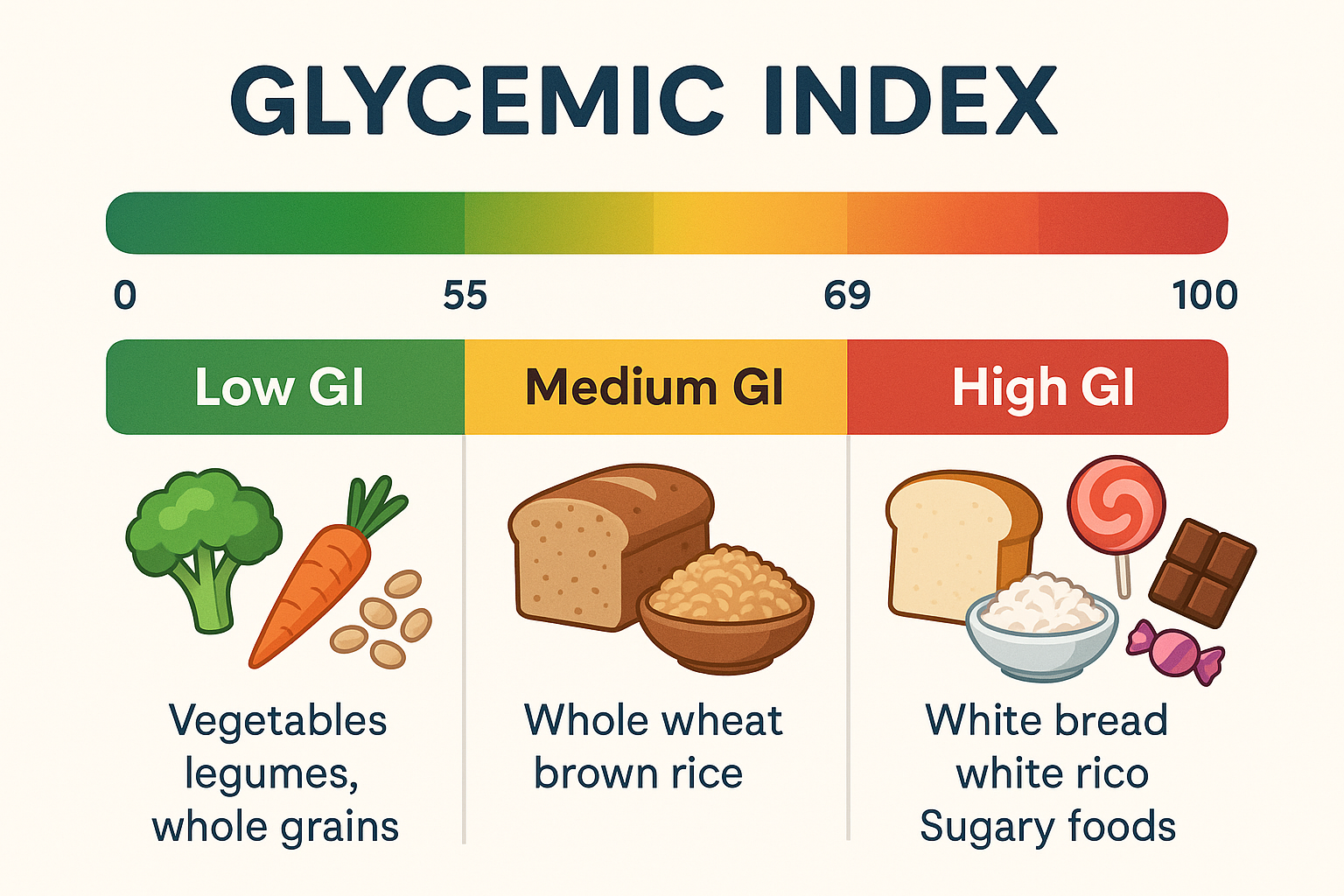
The glycemic index, or GI, ranks carbohydrate foods by how quickly they raise blood glucose compared with a reference food. It can be useful, but it is not the whole story for diabetes meal planning.
Quick summary
GI works best as one tool alongside portion size, total carbohydrate, fiber, protein, fat, food preparation, medication timing, activity, and personal glucose data.
Key takeaways
- Low GI does not automatically mean low carbohydrate or healthy.
- A large portion of a low GI food can still raise glucose.
- Cooking, ripeness, processing, and food combinations can change the glucose response.
- Your own meter or CGM data is more personal than a food chart.
What GI can tell you
GI can help compare similar carbohydrate foods. For example, a less processed grain, beans, lentils, or intact fruit may have a slower glucose effect for many people than refined bread, sugary drinks, or some processed snacks.
The idea is not to memorize every number. The useful pattern is choosing more fiber rich, less processed carbohydrates more often and pairing them with protein, vegetables, and healthy fats.
Where GI falls short
GI does not describe how much carbohydrate you eat. Watermelon can have a higher GI but a normal portion may contain less carbohydrate than a large bowl of rice. Chocolate can have a lower GI because fat slows digestion, but that does not make it an everyday diabetes food.
GI also does not cover sodium, saturated fat, calories, vitamins, cost, culture, appetite, or how a food fits your medication plan. That is why it should support a meal plan, not replace one.
How to use GI practically
- Start with total carbohydrate and portion size.
- Choose higher fiber carbohydrates when possible.
- Pair carbohydrates with protein and nonstarchy vegetables.
- Use glucose checks to learn which foods affect you most.
- Avoid treating GI as a strict good food or bad food list.
Examples of lower GI patterns
Many people do better with oats instead of sugary cereal, lentils instead of a large serving of white rice, whole fruit instead of juice, or whole grain bread paired with protein instead of bread eaten alone. Your response may differ, especially if you use insulin, have delayed stomach emptying, or exercise around meals.
If your readings are repeatedly above your target range after certain foods, discuss meal structure, medication timing, and portion sizes with your diabetes care team.
Practical takeaway
Use GI as a helpful lens, not a rulebook. The strongest approach is still balanced meals, right sized portions, and checking how your own body responds.
Safety note
Do not change insulin, tablets, or prescribed carbohydrate targets based only on GI lists. If you have frequent lows, very high readings, kidney disease, digestive problems, or an eating disorder history, get individualized guidance.
Related Livingdiabetes guides
Sources
- Glycemic Index Search, Glycemic Index Foundation and University of Sydney. GI database and education resource. Accessed May 30, 2026. Source
- Healthy Eating for Diabetes, Centers for Disease Control and Prevention. Patient guidance. Accessed May 30, 2026. Source
- Food and Nutrition, American Diabetes Association. Patient guidance. Accessed May 30, 2026. Source
- Healthy Living With Diabetes, National Institute of Diabetes and Digestive and Kidney Diseases. Patient guidance. Accessed May 30, 2026. Source