
Water Sports and Diabetes Safety: A Comprehensive Guide
Participating in water sports offers numerous health benefits, particularly for individuals managing diabetes. Activities such as swimming, waterskiing, and wakeboarding can improve cardiovascular health, aid in weight management, and enhance overall fitness. However, engaging in these activities with diabetes requires careful planning and management to ensure safety and optimal blood glucose control. This comprehensive guide provides evidence-based recommendations for individuals with type 1 and type 2 diabetes to safely enjoy water sports.
Blood Glucose Management Around Water Activities
Maintaining stable blood glucose levels is paramount when participating in water sports. Exercise, especially intense or prolonged activity, can significantly impact glucose metabolism.
Before Water Sports
- Pre-activity Blood Glucose Check: Always check blood glucose levels approximately 30 minutes before entering the water. If levels are too low, consume a quick-acting carbohydrate snack to prevent hypoglycemia during the activity [1, 3].
- Insulin Adjustments: Individuals using insulin may need to adjust their doses (basal or bolus) on days they engage in water sports. Consult with your healthcare team to determine appropriate adjustments, as insulin sensitivity can increase for up to 48 hours post-activity [1].
- Carbohydrate Intake: For activities lasting over an hour, consider consuming carbohydrates before and during the activity. A snack 1-2 hours prior, such as a cereal bar or fruit, can be beneficial. For longer, more intense sessions, glucose sports drinks or gels may be necessary [1].
During Water Sports
- Frequent Monitoring: Monitor blood glucose levels every couple of hours, especially during prolonged water activities [3].
- Hydration: Despite being in water, dehydration can occur. Keep a water bottle nearby and hydrate regularly before, during, and after your swim [1].
- Hypo Treatment Accessibility: Always have hypo treatments and a glucose monitor readily accessible. Inform a trusted companion or lifeguard about your diabetes and where your supplies are located [1].
After Water Sports
- Post-activity Nutrition: Consume carbohydrates and protein as soon as possible after completing water sports to replenish energy stores. A balanced meal with wholegrain carbs, vegetables, and lean protein is recommended [1].
- Continued Monitoring: Due to increased insulin sensitivity, continue to monitor blood glucose levels for up to 48 hours after water activities to prevent delayed hypoglycemia [1].
Managing Diabetes Technology in Water
Advancements in diabetes technology have made it easier to manage the condition during water sports, but specific precautions are still necessary.
Insulin Pumps
ℹ️ Important Note on Insulin Pumps
Check the manufacturer’s specifications for your insulin pump’s water resistance. Most modern insulin pumps now include waterproof protection which allows them to operate safely under water for specific time periods at particular depths [3]. If your pump is not fully waterproof or if you plan to be submerged for extended periods, temporarily disconnect it and store it safely with a trusted individual or in a dry compartment [2]. Always consult your healthcare team about safe disconnection practices. While infusion sites can often withstand getting wet, prolonged water exposure can weaken the adhesive. You should use extra waterproof tape or hide the site beneath a wetsuit to protect it from falling off [2].
Continuous Glucose Monitors (CGMs)
⚠️ CGM Water Safety Alert
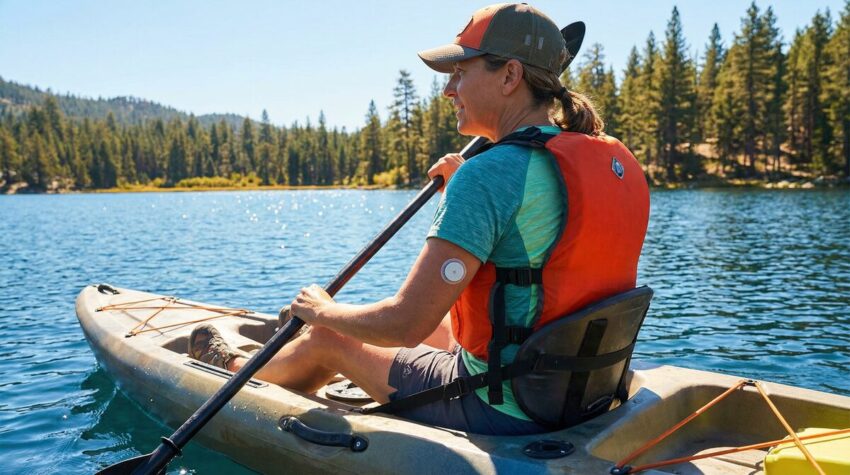
Verify the water resistance of your CGM device. Most Freestyle Libre sensors are water-resistant up to 3 feet for 30 minutes, while Dexcom G6 and G7 sensors are resistant up to 8 feet for 24 hours [3]. Note that salt water use may not be tested. Ensure the CGM sensor and transmitter are securely attached. Use additional waterproof adhesive patches if needed [3]. CGM systems experience two main environmental challenges which cause inaccurate readings and temporary communication breakdowns that result in missing sensor data. Water safety demands that swimmers must not depend on their device to alert them about low glucose levels during their time in the water [3]. People who swim alone should wear medical alert bracelets or identification tags to show their medical condition during emergency situations [3].
Special Considerations for Water Sports
Water Temperature
Cold water creates a powerful effect on how blood sugar levels will change. The body uses its energy stores to produce shivering which leads to blood sugar level reduction. People who swim in cold water need to wear wetsuits for body heat protection while they should check their blood sugar levels more frequently. Cold water prevents blood flow from reaching fingers which creates problems for blood sugar testing so people need to heat their hands before testing [2].
Open Water Swimming
- Increased Intensity: The ocean waves together with river currents make swimming more challenging which might cause your blood sugar to drop more quickly [1].
- Safety: Swim in locations which have lifeguard supervision. Avoid stagnant water, weirs, and locks. People should swim with a companion who understands their diabetes treatment approach [1].
- Hypo Awareness: The body’s effort to stay warm in cold open water can consume more glucose, increasing hypo risk. Exercise causes the body to produce endorphins which make it difficult to identify hypoglycemia symptoms during physical activity [1].
Foot and Eye Care
- Foot Protection: People should wear aqua shoes or flip-flops when they swim in pools and open water to protect their feet from cuts and blisters and infections. People should examine their feet before swimming and then check them again after swimming to detect any new wounds or skin problems [1].
- Eye Safety: People with diabetic eye conditions need to check with their medical team before they attempt diving or any other intense water activities [1].
نتیجہ اخذ کرنا
Water sports become safe exercise activities for diabetic people when they follow proper safety measures and control their diabetes through suitable management approaches. People who have diabetes need to monitor their blood sugar levels actively while they adjust their insulin doses and drink enough water and take care of their diabetes equipment and personal health. Your healthcare team will support you in following these guidelines which help you enjoy water activities safely.
✅ Key Takeaway
People with diabetes need to create detailed plans while they check their blood sugar levels regularly and they should handle their insulin and diabetes equipment actively to participate safely in water sports. You need to get personalized advice from your healthcare provider while your friends should understand how you handle your diabetes condition. You should enjoy your time in the water but make sure to keep your health and safety as your top priority.
 Urdu
Urdu  English