
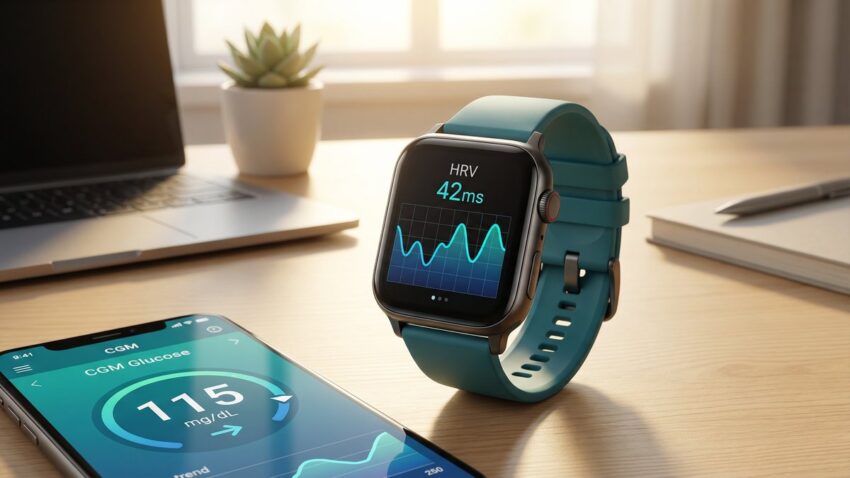
Heart rate variability — the variation in time between consecutive heartbeats — has emerged as one of the most informative biomarkers in modern medicine. For people with diabetes, HRV is particularly significant: it reflects the health of the autonomic nervous system, predicts cardiovascular risk, and responds measurably to blood sugar changes. With wearable technology now making HRV accessible to everyone, understanding what it means has never been more important.
What Is Heart Rate Variability?
Despite what the name might suggest, a healthy heart does not beat with metronomic regularity. The interval between beats varies constantly — influenced by breathing, physical activity, stress, and the balance between the sympathetic (fight-or-flight) and parasympathetic (rest-and-digest) branches of the autonomic nervous system. This variability is HRV, and higher variability generally reflects a healthier, more adaptable autonomic nervous system.
Low HRV indicates that the autonomic nervous system is under stress or has reduced adaptability — a state associated with cardiovascular disease, inflammation, poor recovery from exercise, and in the context of diabetes, cardiac autonomic neuropathy (CAN).
HRV and Diabetes: The Cardiac Autonomic Neuropathy Connection
Cardiac autonomic neuropathy is a serious but underdiagnosed complication of diabetes, affecting approximately 20% of people with type 1 diabetes and up to 30% of people with type 2 diabetes. It results from damage to the autonomic nerve fibres that regulate heart rate and vascular tone, caused by chronic hyperglycaemia and oxidative stress.
CAN manifests as reduced HRV, resting tachycardia, orthostatic hypotension (dizziness on standing), and exercise intolerance. In its advanced stages, it is associated with a 3–5 fold increase in cardiovascular mortality and is a recognised cause of sudden cardiac death in diabetes.
How Blood Sugar Affects HRV in Real Time
Research using simultaneous CGM and HRV monitoring has revealed a direct, real-time relationship between glucose levels and autonomic function. Both hyperglycaemia (high blood sugar) and hypoglycaemia (low blood sugar) acutely reduce HRV. Post-meal glucose spikes trigger sympathetic nervous system activation, reducing parasympathetic tone and lowering HRV. Nocturnal hypoglycaemia causes profound HRV suppression and is associated with cardiac arrhythmias during sleep.
How to Improve Your HRV with Diabetes
- Optimise blood sugar control — reducing glucose variability is the most direct way to improve HRV in diabetes
- Regular aerobic exercise — 150 minutes per week of moderate-intensity exercise significantly improves HRV
- Diaphragmatic breathing — slow, deep breathing at 6 breaths/minute acutely increases HRV
- Sleep quality — HRV is predominantly restored during deep sleep; prioritise 7–9 hours
- Stress management — chronic psychological stress is a major driver of low HRV
- Avoid alcohol — even moderate alcohol consumption suppresses HRV for 24–48 hours
HRV is a window into your autonomic nervous system health — and in diabetes, it is a sensitive early marker of cardiac autonomic neuropathy and cardiovascular risk. If your wearable device shows consistently low HRV, discuss it with your diabetes team. Improving blood sugar control, exercising regularly, sleeping well, and managing stress are all proven ways to improve HRV and protect your heart.
 Urdu
Urdu  English