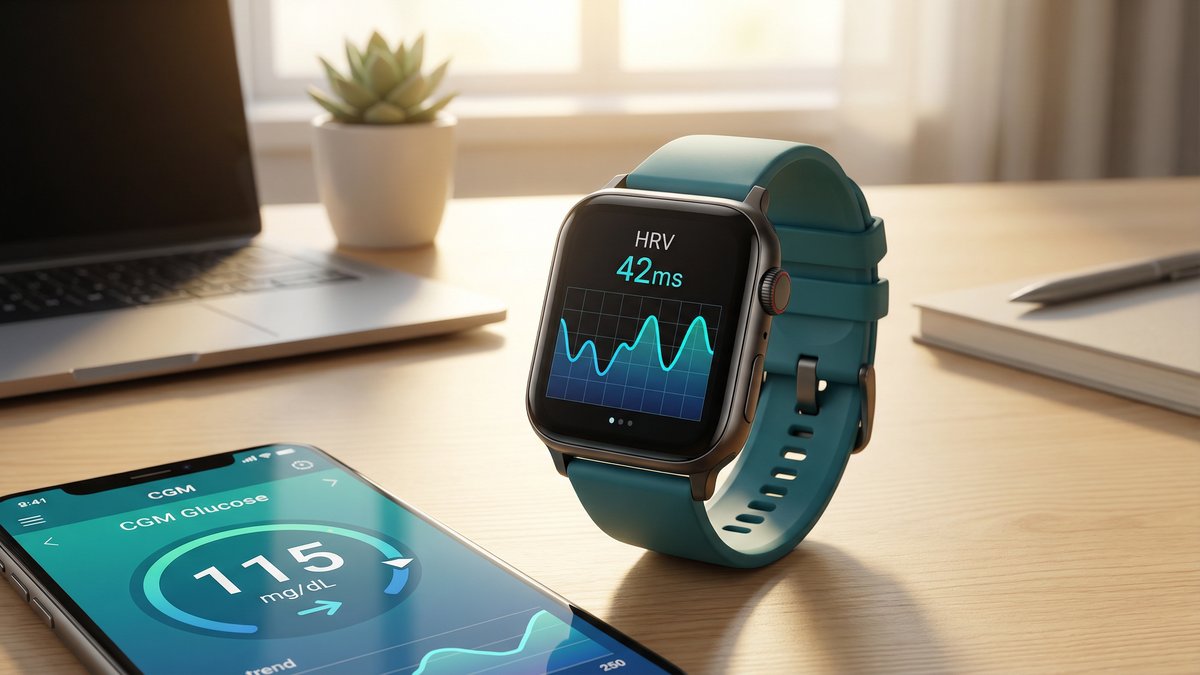
Heart rate variability, often called HRV, is popular on wearables. It can reflect stress, sleep, recovery, illness, alcohol, activity, and autonomic nervous system patterns. It should not be treated as a stand-alone diabetes score.
Quick summary
NIDDK explains that diabetes-related autonomic neuropathy can affect heart rate, blood pressure, sweating, digestion, and low-glucose awareness. Consumer wearable HRV cannot diagnose diabetes control, measure glucose or A1C, diagnose autonomic neuropathy, or guide insulin or medicine changes.
Key takeaways
- HRV is influenced by many factors, not just glucose.
- A wearable HRV trend cannot diagnose autonomic neuropathy, heart disease, or diabetes control.
- Symptoms such as fainting, chest pain, palpitations, or low-glucose unawareness deserve medical review.
- Sleep, alcohol, stress, illness, activity, and medicines can all change HRV patterns.
What HRV means in plain language
HRV describes variation in the timing between heartbeats. In general, the body constantly adjusts heart rhythm in response to breathing, stress, sleep, movement, and recovery. Wearables estimate HRV differently, so numbers from different devices may not match.
Why diabetes is relevant
NIDDK explains that autonomic neuropathy can affect nerves that control heart rate and blood pressure. It can also affect the ability to sense low glucose. Medical evaluation for autonomic neuropathy requires symptom review and clinician assessment. Wearable trends alone are not enough.
What HRV cannot tell you
HRV cannot tell you your A1C, your glucose level, whether insulin is working, whether a meal was good, whether you have autonomic neuropathy, or whether you have heart disease. A lower or higher HRV day may reflect poor sleep, alcohol, stress, illness, overtraining, dehydration, pain, medication effects, or device measurement differences. Do not adjust diabetes medicines based on HRV.
How to use it sensibly
If you track HRV, look for patterns alongside sleep, activity, stress, illness, alcohol, glucose, and symptoms. Bring concerns to the care team, especially if HRV changes come with dizziness, fainting, resting rapid heart rate, chest symptoms, exercise intolerance, or new low-glucose unawareness.
What to ask your care team
- Could my symptoms suggest autonomic neuropathy, heart rhythm issues, low-glucose unawareness, or medication effects?
- Should I track HRV at all, and how should I avoid overreacting to one number?
- What symptoms mean I need heart or nerve evaluation?
- How do sleep, alcohol, activity, stress, and glucose patterns fit together for me?
Practical takeaway
HRV can be a useful conversation starter, but diabetes care still depends on symptoms, glucose data, labs, blood pressure, heart-risk review, and clinician guidance.
Safety note
Seek urgent care for chest pain, fainting, severe shortness of breath, stroke symptoms, severe low glucose, seizure, new confusion, or high glucose with vomiting, ketones, dehydration, confusion, or trouble breathing. This information is general education and is not a substitute for medical care.
Source summary
- NIDDK: Autonomic neuropathy. Explains how diabetes-related autonomic nerve damage can affect heart rate, blood pressure, sleep, stress, and low-glucose awareness. Source
- NIDDK: What is diabetic neuropathy?. Overview of diabetic neuropathy, prevention, and autonomic nerve effects. Source
- AHA: Stress and heart health. Explains stress effects on heart rate, breathing, blood pressure, and heart-health behaviors. Source
- NIH review: Cardiac autonomic neuropathy in diabetes. Medical review of cardiac autonomic neuropathy and tests involving heart rate and blood pressure responses. Source