Alongside GLP-1 agonists, the other superstar class of medications for kidney protection in diabetes is the SGLT2 inhibitors. Drugs like empagliflozin (Jardiance), dapagliflozin (Farxiga), and canagliflozin (Invokana) have fundamentally changed how doctors treat diabetic kidney disease.
How Do SGLT2 Inhibitors Work?
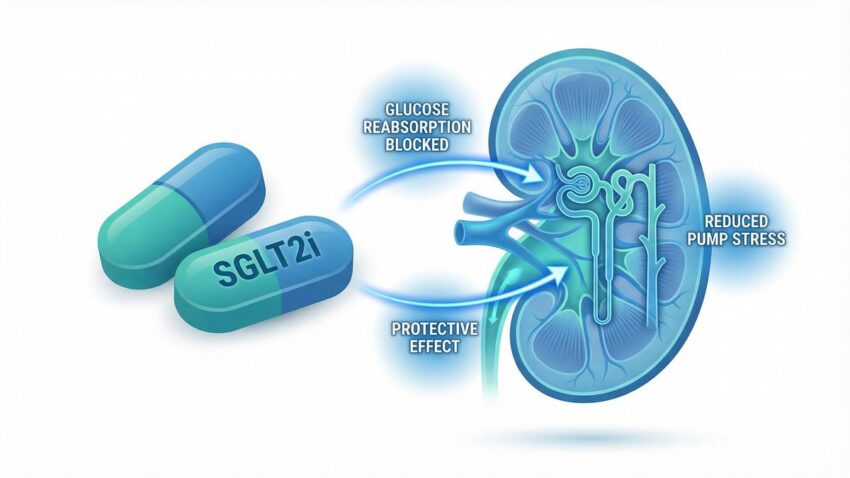
SGLT2 inhibitors work in a unique way. They block a protein called sodium-glucose cotransporter 2 in the kidneys. This protein is responsible for reabsorbing glucose from the urine back into the blood. By blocking it, SGLT2 inhibitors make you excrete excess glucose in your urine.
This has a direct blood-sugar-lowering effect, but their kidney benefits go much deeper. By changing the dynamics of filtration and pressure within the glomerulus, they reduce the state of hyperfiltration—the damaging overwork that characterizes early diabetic kidney disease. They effectively turn down the pressure inside the kidney’s filters.
Landmark Trials: The evidence is overwhelming. Large clinical trials like EMPA-REG OUTCOME (Jardiance), DAPA-CKD (Farxiga), and CREDENCE (Invokana) have all shown that these medications dramatically reduce the risk of kidney function decline, the need for dialysis, and death from kidney disease in people with diabetes.
Who Should Take an SGLT2 Inhibitor?
Based on this powerful evidence, clinical guidelines have been updated. SGLT2 inhibitors are now recommended for most people with type 2 diabetes and established chronic kidney disease (defined as a UACR > 30 mg/g or an eGFR < 60).
They are often prescribed even if blood sugar is already well-controlled, purely for their kidney- and heart-protective benefits. They have also been shown to reduce the risk of hospitalization for heart failure.
Potential Side Effects: The most common side effects are genital yeast and urinary tract infections, due to the increased sugar in the urine. Staying well-hydrated can help mitigate this risk. A rare but serious side effect is diabetic ketoacidosis (DKA), which can sometimes occur even with normal blood sugar levels. It’s crucial to be aware of the symptoms (nausea, vomiting, abdominal pain) and to stop the medication if you are sick, fasting, or having surgery.
Key Takeaway
SGLT2 inhibitors are a cornerstone of modern diabetic kidney disease management. By reducing the pressure within the kidneys’ filtering units, they provide powerful protection that goes beyond their glucose-lowering effects. If you have type 2 diabetes and signs of kidney disease, talk to your doctor about whether an SGLT2 inhibitor is right for you.
 Urdu
Urdu  English