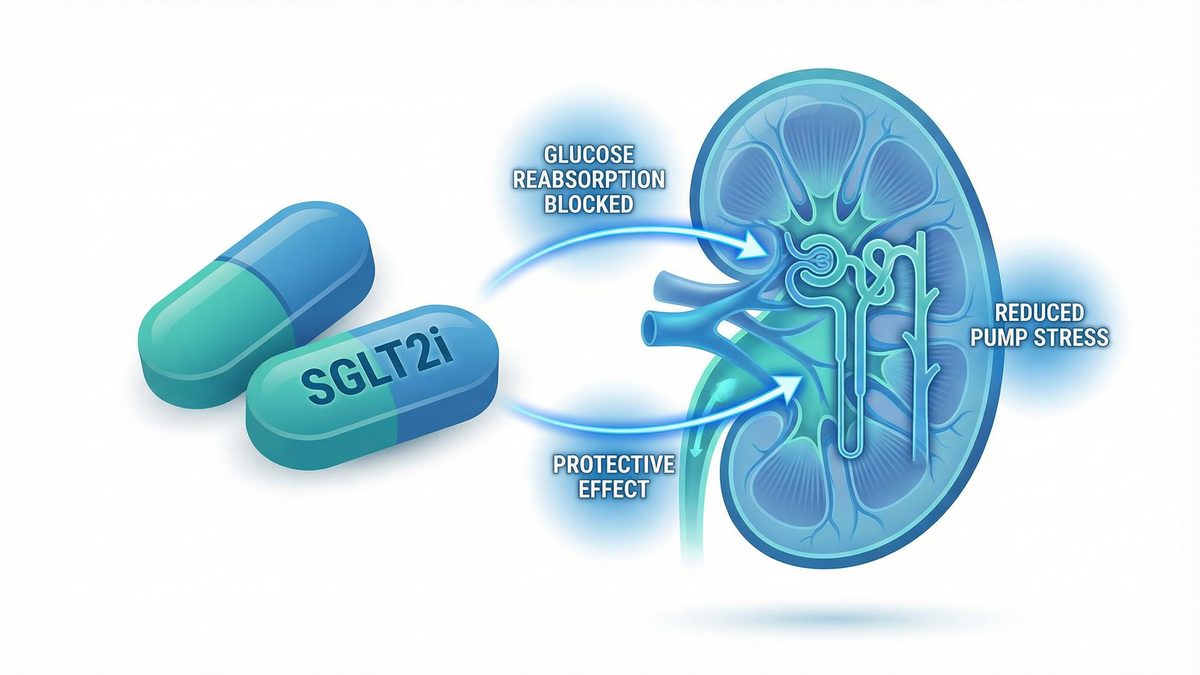
SGLT2 inhibitors started as glucose-lowering medicines, but evidence now supports kidney and heart benefits for selected people with type 2 diabetes, chronic kidney disease, or heart failure. They are not right for everyone.
Quick summary
For kidney protection, the key question is whether the person matches the evidence and guideline criteria, and whether safety risks are understood.
Key takeaways
- SGLT2 inhibitors can slow kidney disease progression in selected patients.
- They may reduce heart failure hospitalization risk in appropriate groups.
- They can increase risk of genital infections and, rarely, ketoacidosis.
- Sick-day rules, surgery plans, hydration, and kidney function monitoring are important.
What the evidence shows
Large kidney outcome trials, including DAPA-CKD and EMPA-KIDNEY, showed kidney and cardiovascular benefits in people with chronic kidney disease, including many participants with diabetes. Guidelines now include SGLT2 inhibitors as kidney-protective options for selected patients.
The benefit is not just from lowering glucose. These medicines affect kidney and heart physiology in ways that can reduce progression risk for some people.
Safety questions to ask
- Is my eGFR in the range where this medicine is recommended?
- Do I have a history of ketoacidosis, frequent genital infections, dehydration, or recurrent low blood pressure?
- What should I do during vomiting, fasting, surgery, or severe illness?
- How will this interact with insulin, diuretics, or blood pressure medicines?
- What symptoms should make me stop and call for advice?
Who needs extra caution
People using insulin, people with low-carbohydrate intake, dehydration, acute illness, surgery, or heavy alcohol use may have higher ketoacidosis risk. Symptoms such as nausea, vomiting, abdominal pain, rapid breathing, or unusual fatigue need urgent assessment.
These medicines should be prescribed and monitored by a clinician who understands kidney function, diabetes type, and sick-day planning.
Practical takeaway
SGLT2 inhibitors can be powerful kidney-protection tools for the right person. The safety plan matters as much as the prescription.
Safety note
This article is not a substitute for medical care. Do not start or stop an SGLT2 inhibitor without medical guidance. Seek urgent care for symptoms of ketoacidosis, severe dehydration, serious infection, fainting, or rapidly worsening illness.
What to ask your care team
- What does this mean for my diabetes, heart, kidney, medicine, or monitoring plan?
- Which symptoms, readings, or side effects should prompt urgent care?
- Do any tests, prescriptions, follow-up visits, or safety instructions need review?
Related reading
Source summary
- Dapagliflozin in Patients with Chronic Kidney Disease, New England Journal of Medicine via PubMed. Randomized trial. Accessed June 3, 2026. Source
- Empagliflozin in Patients with Chronic Kidney Disease, New England Journal of Medicine via PubMed. Randomized trial. Accessed June 3, 2026. Source
- Standards of Care in Diabetes 2026, American Diabetes Association. Guideline overview. Accessed June 3, 2026. Source
- FARXIGA Prescribing Information, DailyMed, National Library of Medicine. FDA label source. Accessed June 3, 2026. Source
- Diabetic Kidney Disease, National Institute of Diabetes and Digestive and Kidney Diseases. Patient guidance. Accessed June 3, 2026. Source