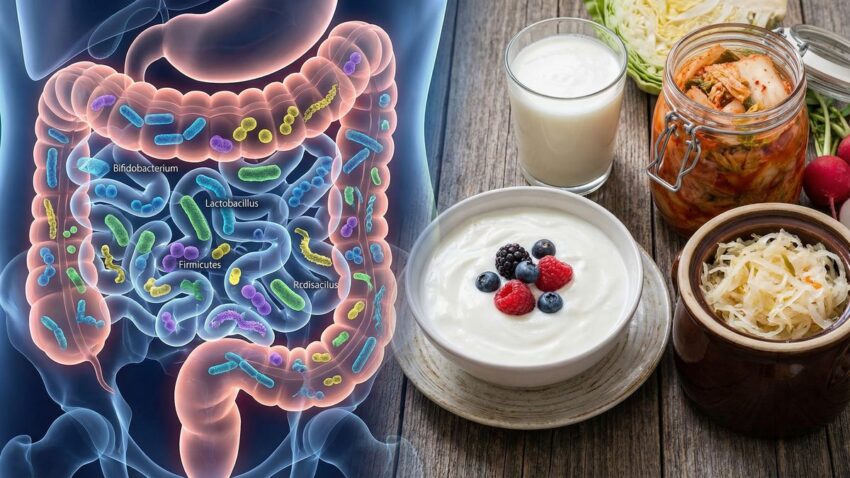
Emerging research is revealing a fascinating and clinically significant relationship between the trillions of bacteria living in the human gut and the development and management of Type 2 diabetes. Understanding this connection opens new avenues for dietary intervention.
The Gut Microbiome and Insulin Resistance
The human gut contains approximately 38 trillion bacteria. Research has consistently shown that people with Type 2 diabetes have a distinct microbiome composition, characterised by reduced diversity and lower levels of beneficial bacteria such as Akkermansia muciniphila and Faecalibacterium prausnitzii. These imbalances contribute to insulin resistance through increased intestinal permeability, altered short-chain fatty acid production, and disrupted GLP-1 production.
Dietary Strategies to Support Gut Health
- Increase dietary fibre. Aim for at least 30g per day from diverse sources including vegetables, legumes, nuts, and seeds.
- Eat a wide variety of plant foods. Eating 30 or more different plant foods per week is associated with significantly greater microbiome diversity.
- Include fermented foods. Yoghurt, kefir, kimchi, sauerkraut, and miso introduce beneficial bacteria.
- Reduce ultra-processed foods. These are associated with reduced microbiome diversity and increased intestinal inflammation.
✅ Key Takeaway
The gut microbiome plays a significant role in insulin resistance and Type 2 diabetes. A diverse, fibre-rich diet that includes fermented foods and a wide variety of plant foods supports a healthier microbiome and may contribute to improved glucose control.
 Urdu
Urdu  English