
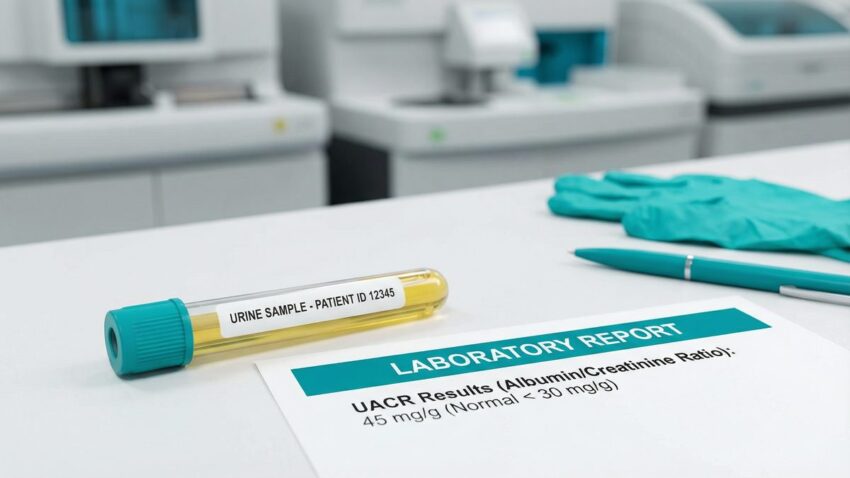
When it comes to protecting your kidneys from the effects of diabetes, early detection is everything. The single most important tool for this is a simple, non-invasive urine test called the Urine Albumin-to-Creatinine Ratio, or UACR.
What is Albumin and Why Does it Matter?
Albumin is a type of protein found in your blood. Healthy kidneys do not let albumin pass from the blood into the urine. However, when the kidneys are damaged, they start to leak small amounts of this protein. This condition is called albuminuria.
The UACR test measures the amount of albumin and compares it to the amount of creatinine (a waste product) in the same urine sample. This ratio provides a precise measurement of how much albumin is escaping through your kidneys over a 24-hour period, without requiring you to collect urine for a full day.
Why not just a simple urine dipstick? A standard dipstick test at a doctor’s office can only detect larger amounts of protein. The UACR is far more sensitive and can detect very small amounts, a condition known as microalbuminuria, which is the earliest detectable stage of diabetic kidney disease.
Understanding Your UACR Results
The results of your UACR test are given in milligrams of albumin per gram of creatinine (mg/g). Here’s what the numbers generally mean:
- Less than 30 mg/g: Normal. This is the goal.
- 30 to 300 mg/g: Moderately increased albuminuria (previously called microalbuminuria). This is an early sign of kidney disease and a crucial window for intervention.
- More than 300 mg/g: Severely increased albuminuria (previously called macroalbuminuria). This indicates more significant kidney damage.
Important Note: A single high reading doesn’t automatically mean you have kidney disease. Things like intense exercise, fever, or a urinary tract infection can temporarily raise albumin levels. Your doctor will typically repeat the test over a 3-to-6-month period to confirm the diagnosis.
What to Do if Your UACR is High
An elevated UACR is not a reason to panic; it is a reason to act. It signals that it’s time to work closely with your healthcare team to intensify your kidney protection strategy. This often includes:
- Stricter blood pressure control, often with medications like ACE inhibitors or ARBs, which are particularly protective of the kidneys.
- Optimizing blood sugar management to get your A1c into the target range.
- Starting or adjusting medications, such as SGLT2 inhibitors or finerenone, which have proven kidney benefits.
- Dietary changes, especially reducing sodium intake.
Key Takeaway
The UACR test is your early warning system for diabetic kidney disease. Don’t skip your annual screening. Knowing your numbers empowers you and your doctor to take decisive action, preserving your kidney health and preventing the progression to more serious complications.
 Urdu
Urdu  English