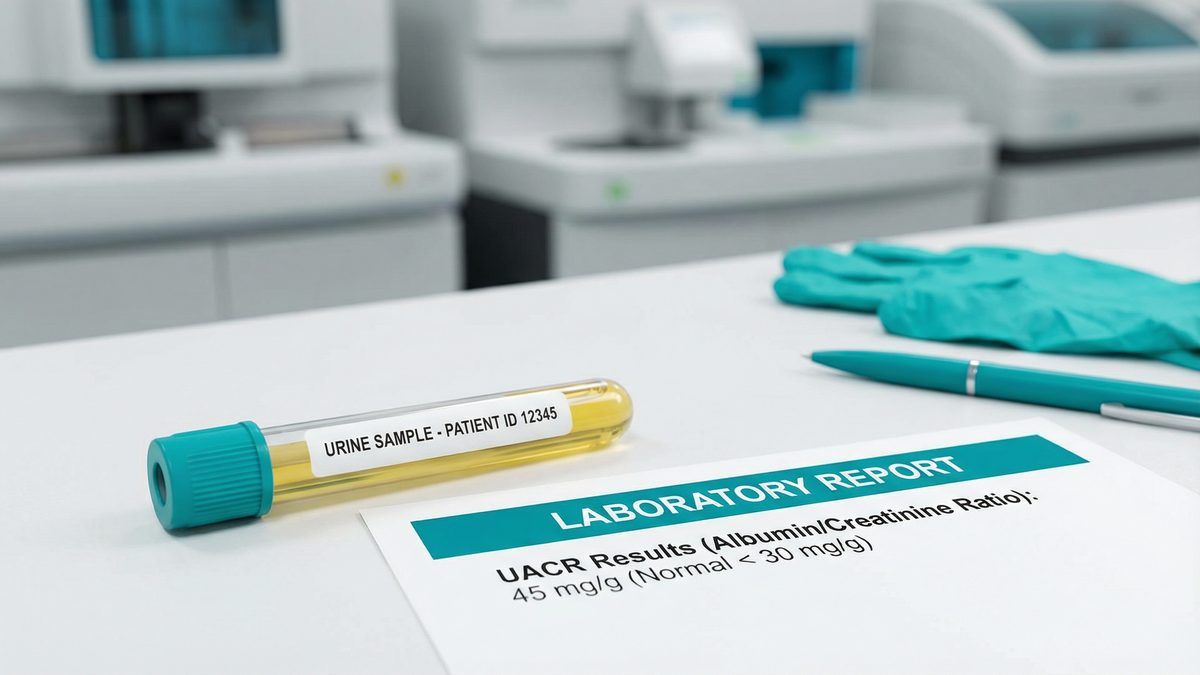
The UACR test is one of the most useful kidney checks for people with diabetes. UACR stands for urine albumin-to-creatinine ratio. It looks for albumin, a protein that can leak into the urine when kidney filters are under stress.
Quick summary
A normal eGFR does not always mean the kidneys are completely safe. UACR can show early kidney damage before symptoms appear.
Key takeaways
- UACR is a urine test that checks for albumin leakage.
- It is often used together with eGFR, a blood-based estimate of kidney filtering.
- High UACR can be temporary, so repeat testing may be needed.
- Blood pressure, glucose, kidney-protective medicines, and smoking cessation can reduce risk for many people.
Why UACR matters
Diabetic kidney disease can be silent for years. Albumin in the urine may appear before a person feels unwell or before eGFR falls. That makes UACR a practical early warning test.
Results need context. Exercise, fever, infection, high blood sugar, uncontrolled blood pressure, and menstruation can affect a urine result. Clinicians often repeat abnormal tests before making long-term decisions.
What to ask about your result
- What was my UACR number?
- Was it normal, moderately increased, or severely increased?
- Should it be repeated?
- What was my eGFR at the same time?
- Should my blood pressure medicine, SGLT2 inhibitor, or other kidney-protection plan be reviewed?
Practical takeaway
Ask for both kidney numbers by name: UACR and eGFR. One urine result is not the whole story, but it can start an important prevention conversation.
Safety note
This article is not a substitute for medical care. Seek medical advice promptly for swelling, shortness of breath, very high blood pressure, low urine output, chest pain, confusion, or severe illness.
What to ask your care team
- What do my latest kidney numbers mean for my diabetes plan?
- Which symptoms, medicine changes, or test results should prompt urgent care?
- Do my blood pressure, glucose, nutrition, or medicine goals need adjustment?
Related reading
Source summary
- Albuminuria, National Kidney Foundation. Patient guidance. Accessed June 5, 2026. Source
- Estimated Glomerular Filtration Rate, National Kidney Foundation. Patient guidance. Accessed June 5, 2026. Source
- Diabetic Kidney Disease, National Institute of Diabetes and Digestive and Kidney Diseases. Patient guidance. Accessed June 5, 2026. Source
- Diabetic Kidney Problems, MedlinePlus, National Library of Medicine. Patient guidance. Accessed June 5, 2026. Source