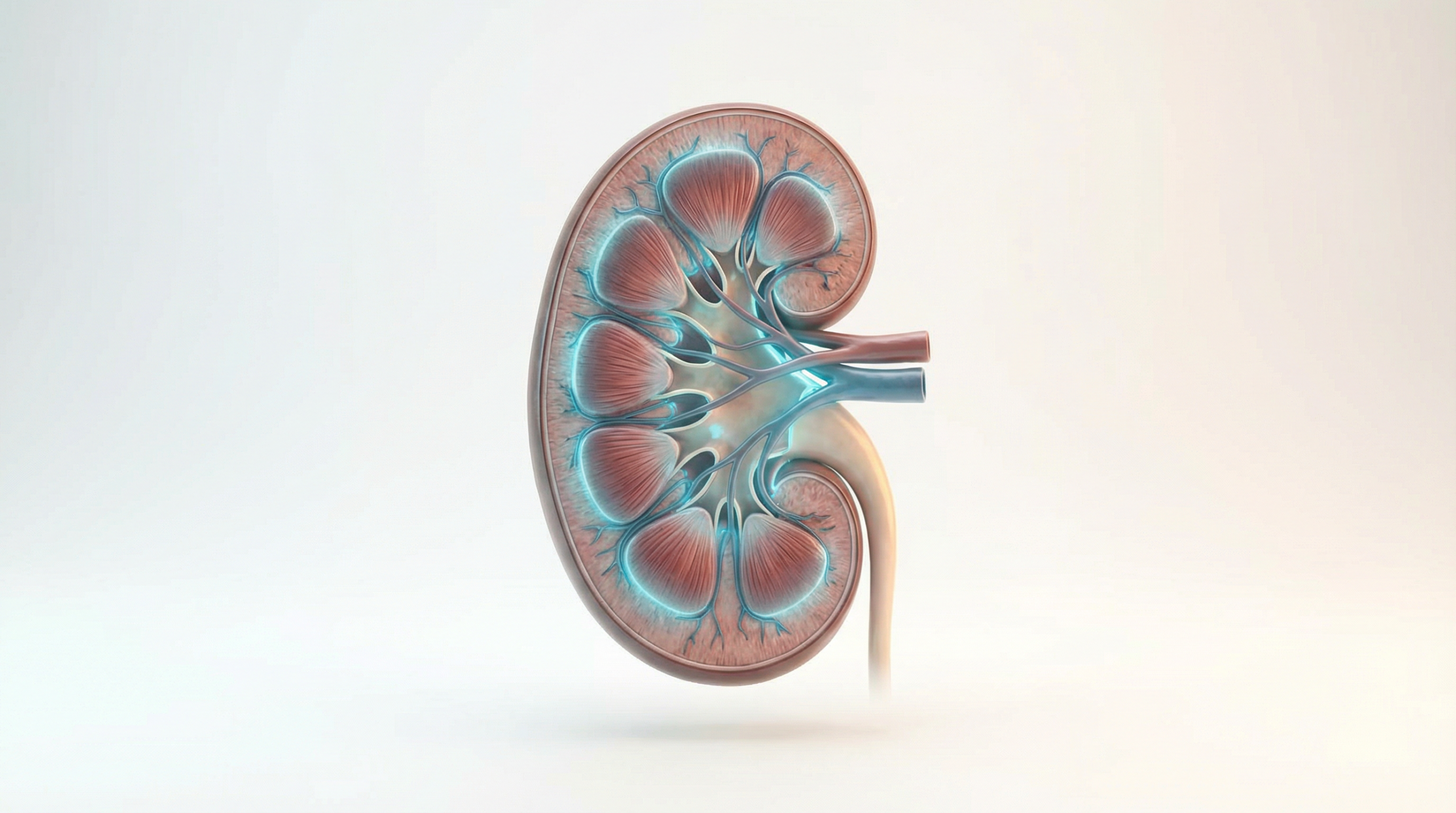
Kidney disease is one of the most important diabetes complications because it can develop quietly. Many people feel well in the early stages, so screening tests matter.
Quick summary
The main early checks are urine albumin and blood eGFR. Together, they help show whether kidneys are leaking protein or losing filtering capacity.
Key takeaways
- Kidney disease can be silent until it is advanced.
- Urine albumin and eGFR are key screening tests.
- Blood pressure, glucose, kidney-protective medicines, and smoking cessation can reduce risk.
- Swelling, shortness of breath, very high blood pressure, or sudden changes in urination need prompt care.
Why screening matters
High blood sugar and high blood pressure can damage small kidney blood vessels over time. Urine albumin may rise before a person feels unwell. eGFR can show reduced filtering capacity.
Finding kidney disease early gives clinicians time to treat blood pressure, review medicines, reduce albuminuria, and consider kidney-protective therapies when appropriate.
What to ask at your visit
- What were my latest eGFR and urine albumin-to-creatinine ratio?
- How often should they be checked?
- Is my blood pressure at the right target for me?
- Do any of my medicines need kidney-dose adjustment?
- Should I be on an ACE inhibitor, ARB, SGLT2 inhibitor, or other kidney-protective therapy?
Everyday kidney protection
Kidney protection is not one thing. It usually includes blood pressure control, glucose management, cholesterol care, avoiding smoking, reviewing NSAID use, and keeping follow-up appointments.
Diet advice should be individualized, especially when kidney disease is moderate or advanced. Protein, sodium, potassium, and phosphorus guidance can differ by stage.
Practical takeaway
Ask for your kidney numbers by name: eGFR and urine albumin. If you know the numbers, you can track risk earlier.
Safety note
This article is not a substitute for medical care. Seek medical help for swelling, sudden shortness of breath, chest pain, confusion, very high blood pressure, low urine output, vomiting, or symptoms of severe illness.
What to ask your care team
- What does this mean for my diabetes, heart, kidney, medicine, or monitoring plan?
- Which symptoms, readings, or side effects should prompt urgent care?
- Do any tests, prescriptions, follow-up visits, or safety instructions need review?
Related reading
Source summary
- Diabetic Kidney Disease, National Institute of Diabetes and Digestive and Kidney Diseases. Patient guidance. Accessed June 3, 2026. Source
- Diabetes and Your Heart, Centers for Disease Control and Prevention. Patient guidance. Accessed June 3, 2026. Source
- Standards of Care in Diabetes 2026, American Diabetes Association. Guideline overview. Accessed June 3, 2026. Source
- Managing Diabetes, National Institute of Diabetes and Digestive and Kidney Diseases. Patient guidance. Accessed June 3, 2026. Source