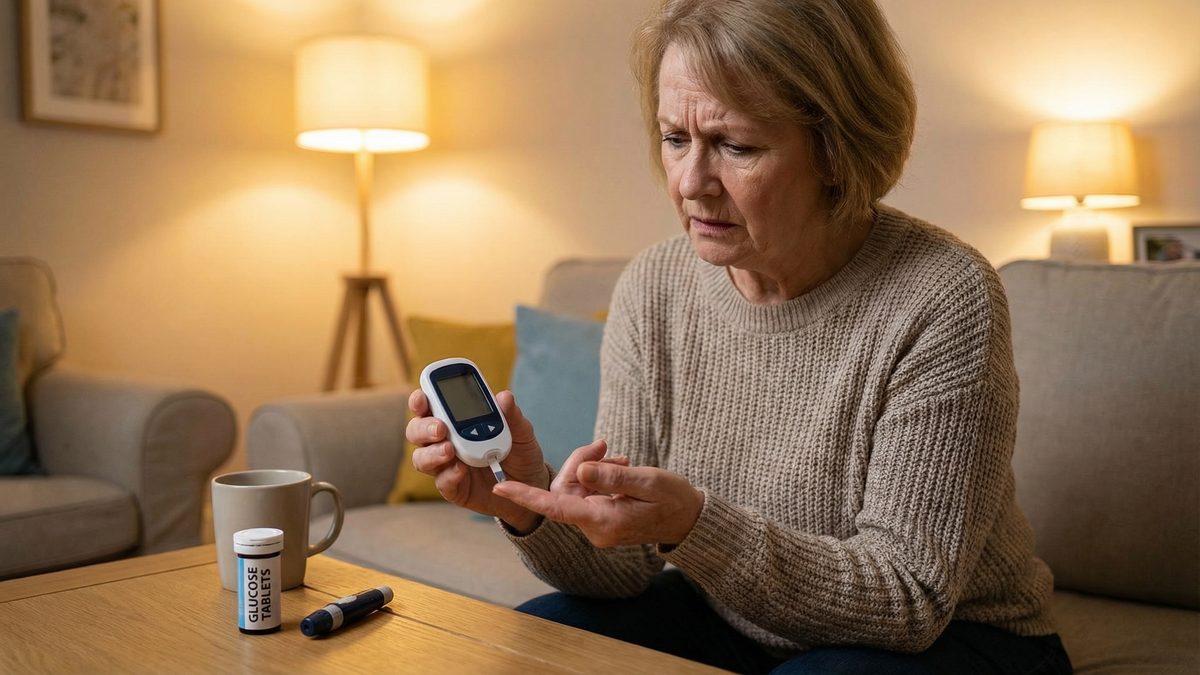
Fear of hypoglycemia can be protective when it leads to planning, but it can become harmful when it causes constant anxiety, intentional high glucose, skipped activity, or avoidance of insulin that is needed.
Quick summary
This fear is understandable, especially after severe lows, nighttime lows, driving lows, or episodes where help was needed.
Key takeaways
- Hypoglycemia fear is common in people at risk for lows.
- A safety plan can reduce fear and real risk.
- CGM, glucagon, medicine review, meal planning, and activity planning may help some people.
- Persistent fear deserves mental health support, not judgment.
Safety plan pieces
- Know your personal low threshold and symptoms.
- Carry fast-acting carbohydrate.
- Ask whether glucagon should be prescribed and taught to others.
- Review insulin, sulfonylurea, exercise, alcohol, and meal timing.
- Use CGM alerts carefully if appropriate.
When fear takes over
If fear keeps glucose intentionally high most of the time, stops you from sleeping, driving, exercising, eating normally, or taking prescribed medicine, ask for help. The plan may need safer targets, technology, dose review, or therapy for anxiety.
Do not treat anxiety symptoms as low blood sugar without checking when possible, because panic and hypoglycemia can feel similar.
Practical takeaway
Fear of lows should lead to a better safety plan, not a life built around panic.
Safety note
This article is not a substitute for medical care. Seek urgent care for severe low blood sugar, seizure, loss of consciousness, chest pain, self-harm thoughts, or symptoms that feel unsafe.
What to ask your care team
- What is my low prevention plan?
- Should I have glucagon and CGM alerts?
- Could therapy help fear after severe lows?
Related reading
Source summary
- Low Blood Sugar, Centers for Disease Control and Prevention. Patient guidance. Accessed June 5, 2026. Source
- Diabetes and Mental Health, Centers for Disease Control and Prevention. Patient guidance. Accessed June 5, 2026. Source
- Psychosocial Care for People With Diabetes, American Diabetes Association. Position statement. Accessed June 5, 2026. Source
- Healthy Living With Diabetes, National Institute of Diabetes and Digestive and Kidney Diseases. Patient guidance. Accessed June 5, 2026. Source