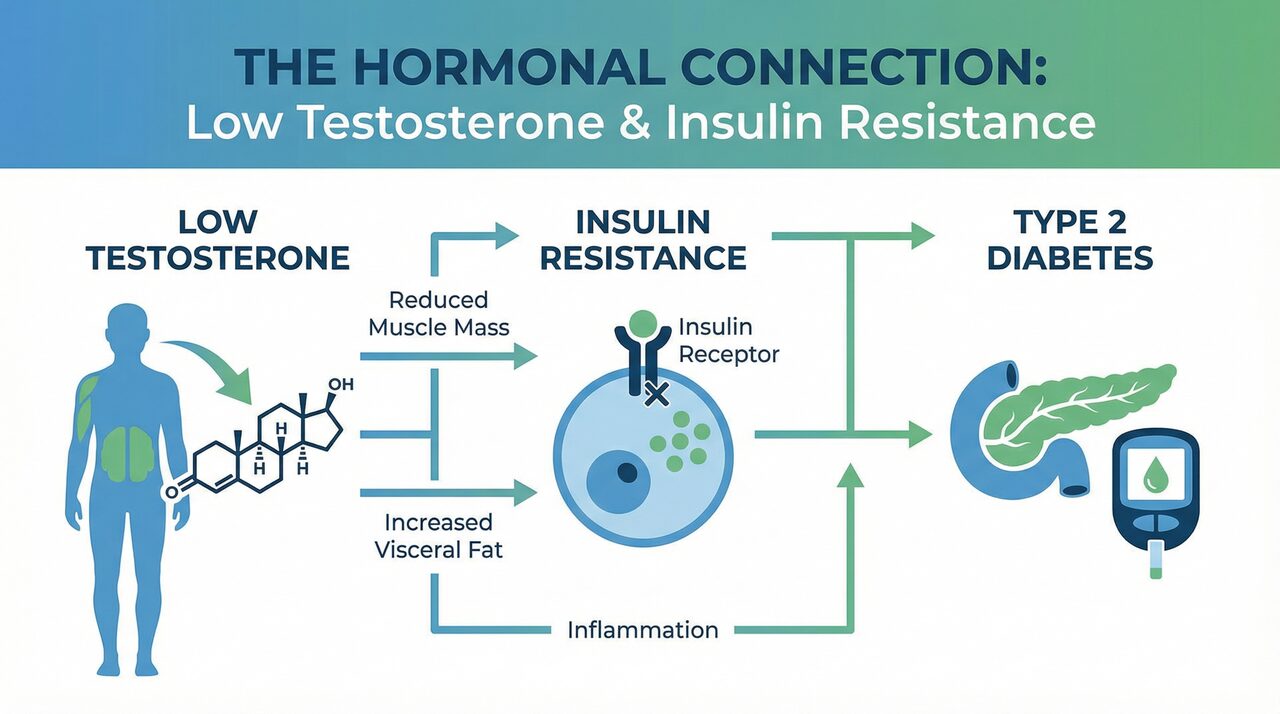
Low testosterone conversations can become confusing because symptoms are common and marketing is loud. Diabetes, sleep apnea, depression, medicines, thyroid disease, weight change, and aging can all overlap with low-testosterone symptoms.
Quick summary
Before treatment, the important steps are careful history, appropriate blood testing, repeat confirmation when needed, and a discussion of risks.
Key takeaways
- Symptoms alone are not enough to diagnose low testosterone.
- Low testosterone is usually confirmed with repeat morning testing when appropriate.
- Testosterone therapy can reduce sperm production and needs monitoring.
- Some people should avoid testosterone or use it only with specialist guidance.
Treatment questions
- Was low testosterone confirmed with repeat morning testing when appropriate?
- Could another condition explain my symptoms?
- Will treatment affect fertility or sperm production?
- How will testosterone response, blood count, prostate or urinary symptoms, sleep apnea, and heart risk be monitored?
- What benefits should I realistically expect, and when should we reassess?
Why diabetes matters
Diabetes and higher body weight can overlap with low testosterone, ED, sleep apnea, depression, and heart risk. Improving sleep, activity, glucose patterns, blood pressure, and weight when appropriate may also improve some symptoms, even when testosterone treatment is not used.
Treatment should be individualized. People with prostate or breast cancer history, fertility goals, untreated severe sleep apnea, elevated red blood cell counts, or recent cardiovascular concerns need careful review before treatment.
Practical takeaway
If testosterone treatment is being considered, ask what diagnosis is being treated, what monitoring is required, and what risks apply to you.
Safety note
This article is not a substitute for medical care. Seek urgent care for chest pain, stroke symptoms, severe shortness of breath, blood clot symptoms, severe mood changes, or symptoms that feel unsafe.
What to ask your care team
- What diagnosis supports testosterone treatment?
- What risks apply because of my heart, prostate, sleep, or fertility status?
- How will treatment be monitored?
Related reading
Source summary
- Could You Have Low Testosterone?, MedlinePlus, National Library of Medicine. Patient guidance. Accessed June 5, 2026. Source
- Testosterone, MedlinePlus, National Library of Medicine. Drug information. Accessed June 5, 2026. Source
- Diabetes and Men, Centers for Disease Control and Prevention. Patient guidance. Accessed June 5, 2026. Source
- Diabetes, Sexual, and Bladder Problems, National Institute of Diabetes and Digestive and Kidney Diseases. Patient guidance. Accessed June 5, 2026. Source