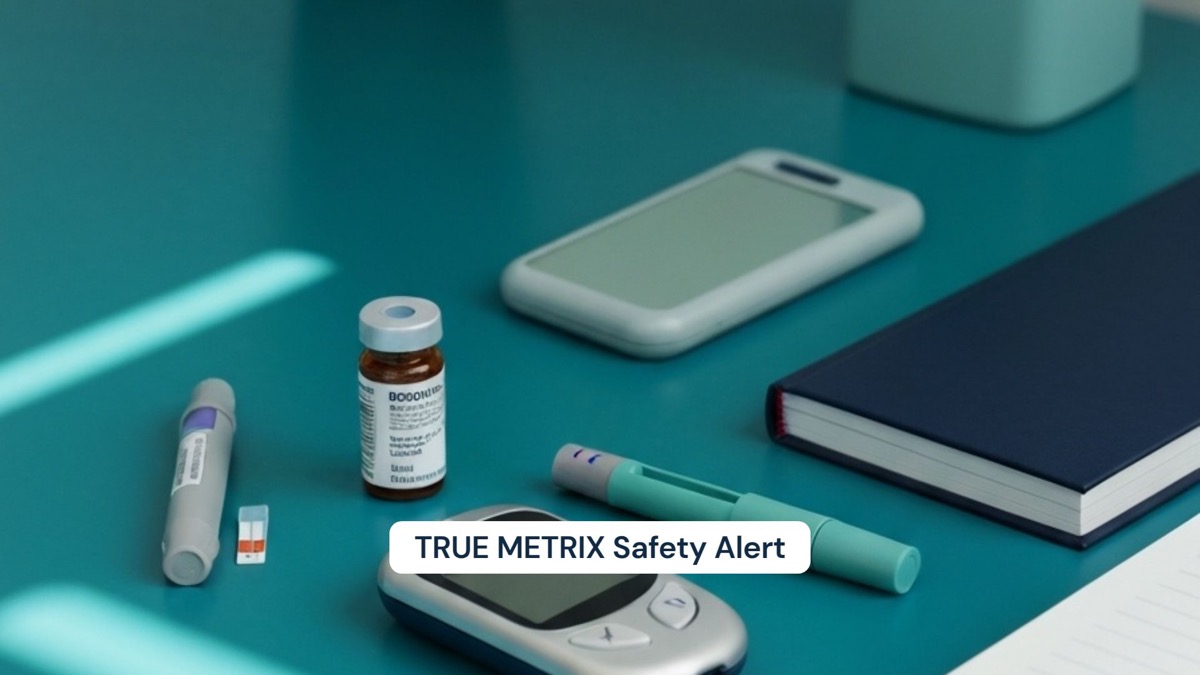
FDA has issued safety communications and recall information for TRUE METRIX blood glucose monitoring systems related to an E-5 error issue and updated instructions.
Quick summary
The FDA safety communication says affected TRUE METRIX systems can display an E-5 error when glucose is 600 mg/dL or higher. Users should follow updated instructions, continue glucose testing, and seek medical help for severe symptoms or dangerously high readings.
Key takeaways
- FDA identified the TRUE METRIX recall as Class I, the most serious recall category.
- The issue involves instructions for interpreting an E-5 error at very high glucose levels.
- Users should not stop checking glucose without an alternative monitoring plan.
- Very high glucose with symptoms, ketones, dehydration, or vomiting needs urgent care.
What the alert means
The FDA safety communication and recall pages describe updated instructions for TRUE METRIX, TRUE METRIX AIR, TRUE METRIX GO, and TRUE METRIX PRO systems. The key concern is that an E-5 error can appear when glucose is very high, and users may need clearer instructions on what to do.
Why this matters
If a person misunderstands an error message, very high glucose may be missed or treatment may be delayed. For people using insulin, during illness, or with symptoms of dehydration or ketones, delay can be dangerous.
What users should do
Read the updated instructions from Trividia or FDA. Contact the manufacturer, pharmacy, or clinician if you are unsure whether your meter instructions are current. Keep testing blood glucose unless your clinician gives you a different monitoring plan. If you need a replacement or backup meter, ask how to bridge safely while waiting so treatment decisions are not made without glucose information.
When to get help
Very high glucose is not just a number. Symptoms such as vomiting, dehydration, confusion, deep or rapid breathing, fruity-smelling breath, severe weakness, or ketones should be treated as urgent. If a meter result or error message does not match how you feel, repeat the test with clean hands, use a backup meter if available, and follow your clinician’s sick-day or emergency instructions.
What to ask your care team
- Does my TRUE METRIX system need updated instructions?
- What should I do if I see an E-5 error?
- When should I check ketones or seek urgent care?
- Do I need a backup meter or replacement plan?
Practical takeaway
Keep testing, read the updated instructions, and treat very high glucose symptoms as urgent.
Safety note
Seek urgent help for glucose that may be very high with vomiting, ketones, dehydration, rapid breathing, confusion, chest pain, severe weakness, or symptoms that do not match the meter result. This information is general education and is not a substitute for medical care.
Source summary
- FDA: TRUE METRIX safety communication. FDA safety communication on risks and user recommendations. Source
- FDA: TRUE METRIX recall early alert. FDA recall and early alert page for TRUE METRIX systems. Source
- FDA: Trividia labeling correction. FDA-posted company announcement about updated instructions. Source
- FDA device recall database: TRUE METRIX GO. Recall database entry for TRUE METRIX GO systems. Source