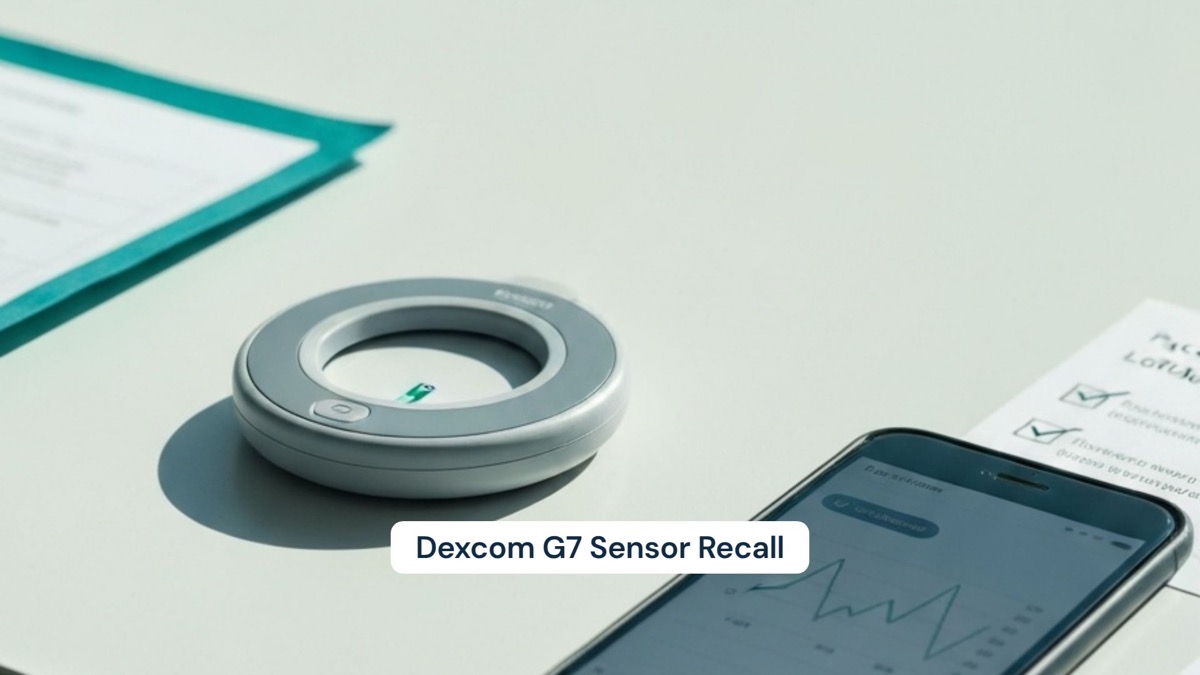
Dexcom reported that two lots of Dexcom G7 sensors that were intended for destruction were stolen and sold through unauthorized channels. FDA posted the company announcement as a safety alert.
Quick summary
The FDA-posted notice identifies lots 1725204004 and 1725069002. One lot has incomplete sterilization concerns, and the other has an elevated testing failure risk. Users should check official Dexcom instructions and not rely on unofficial sellers.
Key takeaways
- Affected lot numbers listed in the FDA-posted notice are 1725204004 and 1725069002.
- Dexcom says authorized distributors provide Dexcom G7 sensors to major pharmacy retailers and medical distributors.
- Do not use a sensor from an affected lot unless official Dexcom instructions say otherwise.
- If CGM readings are missing or questionable, confirm with a fingerstick meter according to your care plan.
What happened
According to the FDA-posted company announcement, Dexcom found that scrapped G7 sensors had been stolen and sold to third parties through unauthorized supply channels. This is different from an ordinary sensor-performance complaint.
Why it matters
Lot 1725204004 is linked with incomplete sterilization concerns, which raises infection concerns. Lot 1725069002 is linked with an elevated internal testing failure rate, which may increase the risk of no sensor readings. Either situation can disrupt diabetes decisions.
What users should do
Check the lot number on the sensor box if available. Follow Dexcom’s official recall or customer-support instructions. Avoid buying sensors from unknown marketplaces or sellers, even if the price is attractive. If an affected sensor has been used, ask Dexcom or your clinician what follow-up is needed. Keep packaging when possible because it may contain lot and product information needed for replacement or reporting.
Glucose safety
A CGM is a helpful tool, but treatment decisions should follow the user’s training and care plan. If symptoms do not match the CGM, if readings are missing, or if a sensor fails, confirm with a blood glucose meter when instructed.
What to ask your care team
- Is my sensor lot affected?
- Should I stop using this sensor and request a replacement?
- What fingerstick backup plan should I use while waiting?
- Should I report symptoms, infection concerns, or sensor problems to Dexcom, my clinician, or FDA MedWatch?
Practical takeaway
Check the lot number, use official Dexcom channels, and keep a backup glucose-checking plan in place.
Safety note
Seek medical help for signs of infection at the sensor site, severe low blood sugar, ketones, repeated vomiting, dehydration, confusion, or glucose readings that remain dangerously high or low despite your care plan. This information is general education and is not a substitute for medical care.
Source summary
- FDA: Dexcom stolen G7 sensors announcement. FDA-posted company announcement with affected lots and risks. Source
- Dexcom: G7 sensor recall FAQ. Dexcom recall FAQ listing affected lots and user steps. Source
- FDA: Medical device recalls and early alerts. FDA page explaining device recalls and early alerts. Source
- CDC: Low blood sugar. Hypoglycemia safety context for glucose monitoring disruptions. Source