
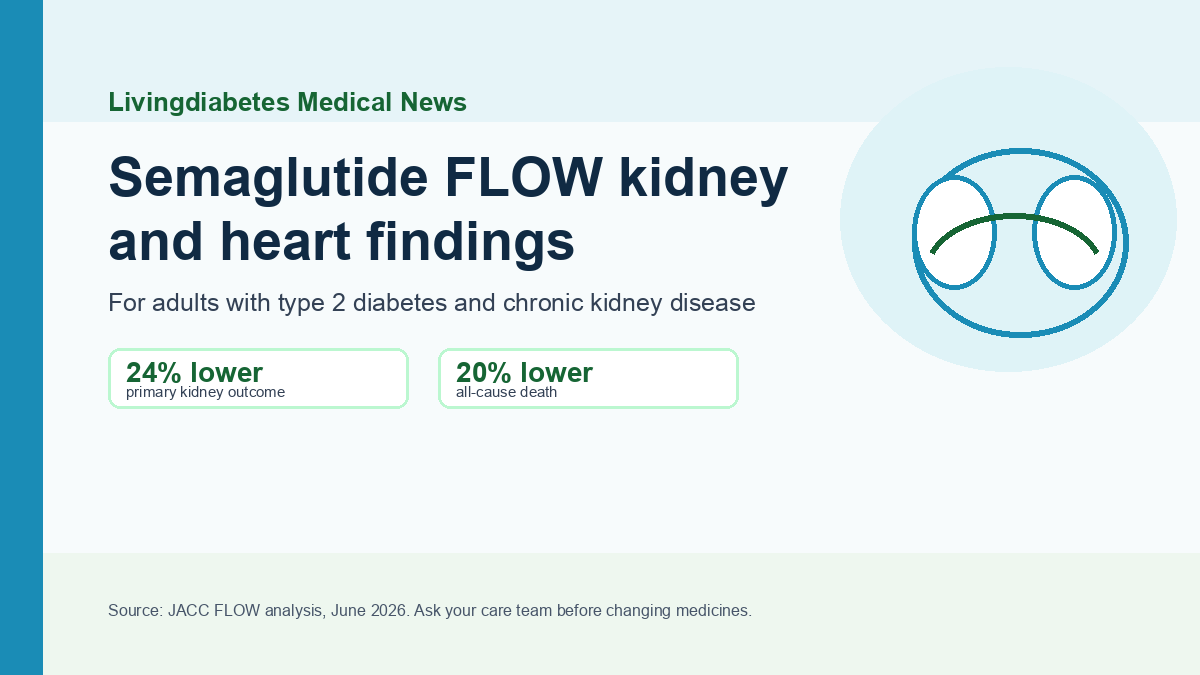
A new JACC analysis of the FLOW trial gives more detail about semaglutide for adults with type 2 diabetes and chronic kidney disease who also have atherosclerotic cardiovascular disease, heart failure, or high total cardiovascular risk.
The message is not that every person with diabetes should take semaglutide. The practical point is narrower: in this high-risk trial population, the kidney and all-cause death benefits seen with once-weekly semaglutide 1.0 mg appeared consistent across several cardiovascular-risk groups.
Quick summary
The JACC analysis, published June 2, 2026, looked at people from FLOW who had type 2 diabetes and chronic kidney disease. Semaglutide was linked with fewer major kidney outcomes and lower all-cause death, and the pattern looked similar whether people had known atherosclerotic cardiovascular disease, heart failure, or high calculated cardiovascular risk. For patients, the practical question is how this evidence fits with their own kidney function, cardiovascular history, current medicines, side effects, and access.
Key takeaways
- FLOW enrolled adults with type 2 diabetes and chronic kidney disease.
- Participants were assigned to once-weekly injected semaglutide 1.0 mg or placebo, alongside usual care.
- The new analysis focused on whether atherosclerotic cardiovascular disease, heart failure, or high total cardiovascular risk changed the kidney and all-cause death findings.
- The benefits appeared broadly consistent across those groups, but this was still a subgroup analysis.
- The findings can support a care-team discussion. They are not a reason to start, stop, or change medication on your own.
What the new analysis asked
The parent FLOW trial had already reported that semaglutide lowered the risk of a major kidney outcome or death from cardiovascular causes in adults with type 2 diabetes and chronic kidney disease. The new JACC subgroup analysis asked a more practical question: did the effect look different depending on a person’s cardiovascular-risk status at the start of the trial?
That matters because many people with diabetic kidney disease also have atherosclerotic cardiovascular disease, heart failure, or multiple cardiovascular risk factors. In real life, treatment decisions rarely involve the kidneys alone.
Who was included
The analysis included 3,533 FLOW participants. According to the ACC summary, the average age was 67, about one third were women, the mean estimated glomerular filtration rate was 47 mL/min/1.73 m2, and the median urine albumin-to-creatinine ratio was 568 mg/g.
At the start of the trial, 34 percent had atherosclerotic cardiovascular disease, 20 percent had heart failure, and 67 percent had high total cardiovascular risk without established cardiovascular disease.
What researchers found
In the overall FLOW population, semaglutide reduced the risk of the primary kidney-related outcome by 24 percent and all-cause death by 20 percent, based on the ACC summary of the JACC analysis. The primary outcome included a large sustained decline in kidney filtration, very low estimated filtration, dialysis, transplantation, and kidney or cardiovascular death.
The new analysis reported that the relative benefit was consistent in people with and without atherosclerotic cardiovascular disease, with and without heart failure, and in people with high cardiovascular risk. This conclusion came from subgroup estimates and interaction testing, not from a separate new randomized trial. The ACC summary also reported estimated numbers needed to treat over three years of 22 in the atherosclerotic cardiovascular disease group, 13 in the heart failure group, and 17 in the high-risk group to prevent one primary kidney outcome.
Why this matters for patients
For someone living with type 2 diabetes and chronic kidney disease, the findings may make the semaglutide conversation more specific. It is not only about glucose or weight. In the FLOW population, semaglutide was studied for kidney and cardiovascular outcomes in people who were already at high risk.
This may be especially relevant if you already have albumin in the urine, reduced kidney filtration, atherosclerotic cardiovascular disease, heart failure, or several cardiovascular risk factors. It may help you ask whether your current treatment plan is addressing blood pressure, glucose, kidney protection, heart protection, cholesterol, smoking, weight, and medication access together.
What this does not mean
This study does not mean semaglutide is right for everyone. It does not prove the same benefit for people with type 1 diabetes, people without chronic kidney disease, or people using different doses for weight management. It also does not mean that other kidney-protective treatments can be ignored.
Many people with diabetic kidney disease need a layered plan that may include blood pressure treatment, an SGLT2 inhibitor when appropriate, cholesterol management, glucose management, smoking support, nutrition care, and regular kidney monitoring. Which medicines belong in that plan depends on kidney function, heart history, side effects, pregnancy plans, cost, insurance coverage, and personal goals.
What to ask your care team
- Do my latest estimated glomerular filtration rate and urine albumin results show chronic kidney disease?
- Do I look similar to the type of patient studied in FLOW?
- Where would semaglutide fit with my current medicines, including an SGLT2 inhibitor, blood pressure medicines, insulin, or other diabetes medicines?
- What side effects or warning signs should I know about before starting a GLP-1 medicine?
- How will we track kidney function, urine albumin, glucose, weight, and symptoms after any medicine change?
Practical takeaway
If you have type 2 diabetes and chronic kidney disease, ask your clinician whether your plan is built around both kidney and heart protection. The FLOW analysis gives another reason to make that conversation concrete, but medication choices still need to be individualized.
Safety note
Do not start, stop, or change semaglutide, insulin, SGLT2 inhibitors, blood pressure medicines, or kidney medicines based on this article. Semaglutide can cause side effects and may not be appropriate for every person. Seek medical advice promptly for severe or persistent vomiting, dehydration, severe abdominal pain, signs of pancreatitis, symptoms of low blood sugar if you use insulin or sulfonylureas, or rapidly worsening illness. This information is general education and is not a substitute for medical care.
Source summary
This article is based on the June 2026 JACC FLOW cardiovascular subgroup analysis, the American College of Cardiology summary of that analysis, the original New England Journal of Medicine FLOW trial report, the current DailyMed Ozempic prescribing information, and the American Diabetes Association Standards of Care resource page.
Sources
- JACC: Kidney and Survival Benefits of Semaglutide in Diabetes With Chronic Kidney Disease
- American College of Cardiology summary of the FLOW subgroup analysis
- New England Journal of Medicine: Effects of Semaglutide on Chronic Kidney Disease in Patients With Type 2 Diabetes
- DailyMed: Ozempic prescribing information
- American Diabetes Association Standards of Care resource page