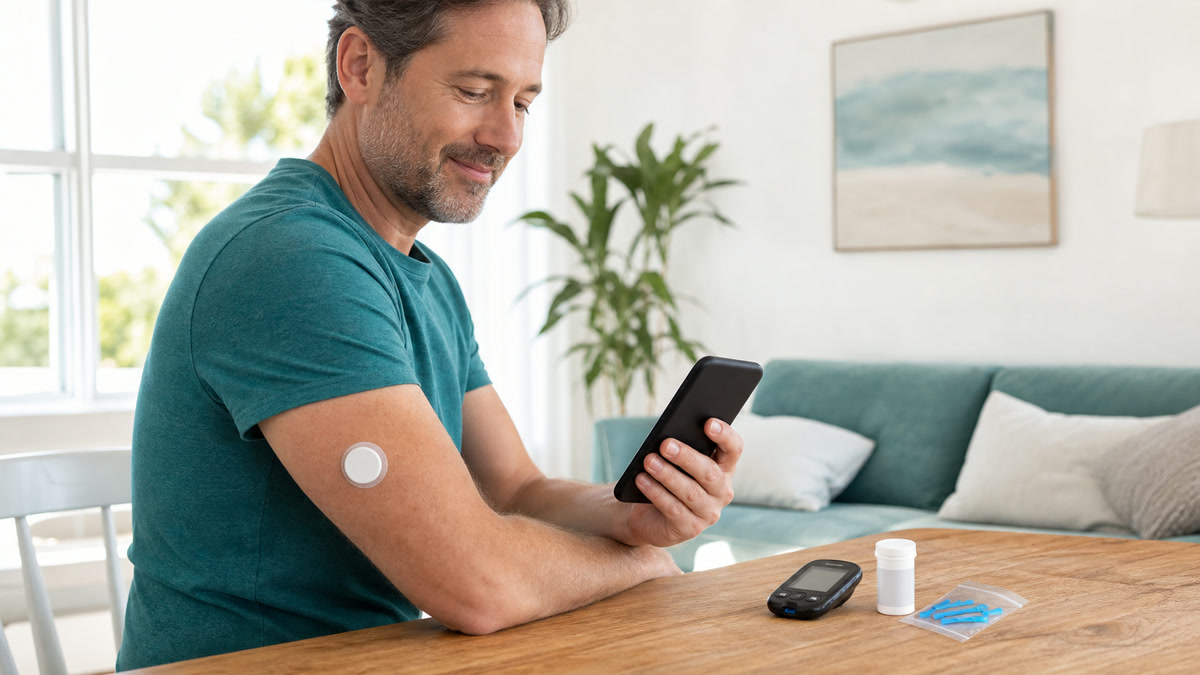
The US Food and Drug Administration (FDA) has authorized the Libre Duo 10 Day Continuous Dual Glucose Ketone Monitoring System for people aged 2 years and older who are living with diabetes. It is the first wearable authorized in the United States to continuously monitor ketones, and the first device worldwide designed to monitor glucose and ketones together in one sensor.
This is an important diabetes-technology development because rising ketones can be an early warning of diabetic ketoacidosis (DKA), a serious and potentially life-threatening emergency. However, the device is an additional source of information, not a replacement for symptoms, an individual sick-day plan, professional advice, or emergency care.
Quick answer
Libre Duo 10 Day measures glucose and ketones in fluid just beneath the skin every minute. Readings and trends are sent to a compatible smartphone, and the system can alert users when ketones reach a concerning threshold.
The FDA authorized the system for people aged 2 years and older with diabetes after reviewing clinical and performance data from six studies involving more than 600 participants. The studies assessed glucose and ketone performance across different levels and throughout the 10-day wear period.
Continuous ketone information may help a person or caregiver notice that ketones are rising earlier than a single urine or blood ketone check would. It does not diagnose DKA on its own, and users still need a clear plan for what to do when readings rise or symptoms appear.
What did the FDA authorize?
On 25 August 2026, the FDA granted marketing authorization to Abbott Diabetes Care for the Libre Duo 10 Day system through the De Novo pathway. This pathway is used for a new type of low- to moderate-risk medical device when there is no legally marketed device of the same type that can serve as a direct comparison.
The authorization allows the device to be marketed in the United States for people aged 2 years and older with diabetes. The FDA also established special controls covering areas such as labelling and performance testing. These controls are intended to provide reasonable assurance of safety and effectiveness when used alongside the FDA’s general device requirements.
FDA authorization is not the same as saying that every person with diabetes needs the device. Suitability will depend on factors such as the type of diabetes, treatment, DKA risk, age, the ability to respond to alerts, and the plan agreed with the diabetes team.
Why do ketones matter in diabetes?
Ketones are acids produced when the body uses fat for energy. Small amounts can occur in several situations, but ketones may rise dangerously when the body does not have enough effective insulin. If ketones accumulate, the blood can become too acidic and DKA can develop.
DKA is most common in type 1 diabetes, although people with type 2 diabetes can also be affected. Common triggers include illness, infection, missed insulin, an interrupted insulin-pump delivery, dehydration, and some medicines. People taking an SGLT2 inhibitor need an individual ketone plan because DKA can sometimes occur without the very high glucose level many people expect.
Early symptoms may include marked thirst and frequent urination. More serious symptoms can include nausea, vomiting, abdominal pain, deep or difficult breathing, fruity-smelling breath, severe tiredness, confusion, and difficulty keeping fluids down. Suspected DKA requires urgent medical assessment.
How does Libre Duo 10 Day work?
The wearable sensor measures glucose and ketones in interstitial fluid, the fluid between cells just beneath the skin. According to the FDA, it takes a measurement every minute, day and night, for up to 10 days.
The readings are transmitted wirelessly to a compatible smartphone. The user can see current glucose and ketone values, whether the measurements are trending up or down, and automatic alerts when ketones reach a concerning threshold.
This combination matters because glucose and ketone trends answer different questions. Glucose monitoring supports everyday diabetes decisions. Ketone monitoring can provide an additional warning that the body may not have enough effective insulin or is under metabolic stress.
A trend can also provide context that a single result cannot. One isolated ketone reading shows the level at that moment. Continuous measurements may show whether ketones are stable, falling, or rising. That could help a patient or caregiver follow the person’s agreed action plan more promptly.
What evidence did the FDA review?
The FDA reported that the clinical programme included six studies involving more than 600 participants aged 2 years and older. The studies evaluated the accuracy of the glucose and ketone functions across a range of levels.
The FDA said the system tracked clinically meaningful differences in ketone levels throughout the 10-day wear period and identified elevated ketones before DKA developed in the study setting.
That evidence supported authorization, but it should not be interpreted as proof that the device will prevent every episode of DKA. Real-world outcomes depend on whether alerts are received, understood, and acted upon; whether the sensor is working as expected; and whether the person has access to insulin, fluids, back-up testing, clinical advice, and urgent care.
What could continuous ketone monitoring change?
For some people, the main benefit may be earlier awareness. Ketone testing has traditionally required a separate blood or urine test, often after illness, high glucose, pump failure, or symptoms have already raised concern. A dual sensor may reduce the gap between ketones starting to rise and the user becoming aware of that change.
Continuous ketone information may be particularly relevant during illness, vomiting, suspected pump interruption, prolonged fasting, or other situations included in an individual’s ketone plan. Caregivers may also value having glucose and ketone information in one system when supporting a young child or another person who cannot manage every step independently.
The technology may also support more informed conversations with the diabetes team. A record of glucose and ketone trends could help clarify what happened during illness or a suspected insulin-delivery problem. Whether that changes treatment or monitoring should be decided by a qualified clinician.
Important limits to understand
Libre Duo should not create a false sense of security. No sensor can replace awareness of DKA symptoms or the need to seek urgent care when a person is seriously unwell.
Key limitations include:
- A ketone value must be interpreted together with glucose, symptoms, recent insulin delivery, illness, hydration, medicines, and the person’s written plan.
- Sensor readings may not always match a blood result at the same moment because interstitial-fluid measurements and blood measurements are not identical.
- A missing alert does not prove that DKA is absent.
- A high or rising reading does not provide a complete diagnosis by itself.
- Users still need access to back-up glucose and ketone testing if the diabetes team or product instructions recommend it.
- The device cannot correct an insulin-delivery problem, provide fluids, or treat DKA.
People considering the system should receive training on alerts, trend arrows, back-up checks, sensor problems, and the exact point at which they should contact their diabetes team or seek emergency care.
What should someone do when ketones rise?
The correct action depends on the person’s age, diabetes type, treatment, symptoms, and individual ketone-management plan. People should not invent an insulin adjustment from a news article or a sensor trend.
General safety principles include:
- Follow the written sick-day or ketone plan provided by the diabetes team.
- Check that insulin has been taken and that a pump or infusion set is working as expected.
- Use a back-up ketone or glucose check when the care plan or device instructions advise it, especially if readings do not match symptoms.
- Maintain fluids when it is safe to drink and follow the person’s plan for insulin and carbohydrate intake.
- Contact the diabetes team if ketones persist, rise, or do not respond as expected.
- Seek urgent medical help for vomiting, difficulty drinking, deep or difficult breathing, severe abdominal pain, increasing drowsiness, confusion, worsening ketones, or other signs of DKA.
Never stop basal insulin solely because a person is eating less unless a qualified clinician has specifically instructed this as part of the individual’s plan.
Questions to ask the diabetes team
Before using continuous ketone monitoring, useful questions include:
- Is continuous ketone monitoring appropriate for my or my child’s diabetes treatment and DKA risk?
- What ketone level or trend should trigger a back-up test?
- What should we do if glucose looks acceptable but ketones are rising?
- How should alerts be handled overnight, at school, during sport, or while travelling?
- What is the plan if the sensor fails or readings do not match symptoms?
- Which symptoms mean we should seek emergency help without waiting for another reading?
- How do medicines such as SGLT2 inhibitors affect our ketone plan?
These answers should be written down and shared with relevant caregivers, school staff, or family members where appropriate.
Frequently asked questions
Is Libre Duo the same as a standard continuous glucose monitor?
It includes continuous glucose monitoring, but it also continuously measures ketones. The ketone channel is the main new feature compared with a glucose-only sensor.
Does Libre Duo prevent diabetic ketoacidosis?
The system may provide earlier warning that ketones are rising, which may support faster action. It cannot guarantee that DKA will be prevented. Outcomes still depend on recognising symptoms, following the ketone plan, maintaining insulin delivery, and obtaining urgent care when needed.
Can people with type 2 diabetes use it?
The FDA authorization applies to people aged 2 years and older living with diabetes; it is not limited to type 1 diabetes in the FDA announcement. Individual usefulness will vary, and a clinician can help assess whether continuous ketone monitoring is appropriate.
Does a normal glucose reading rule out DKA?
No. Glucose and ketones should be interpreted together with symptoms and treatment. DKA can occasionally occur with glucose that is not extremely high, particularly in some people taking SGLT2 inhibitors. A person who is unwell should follow the clinical plan rather than relying on one number.
Can the sensor replace blood or urine ketone testing?
Not automatically. Users should follow the product instructions and their diabetes team’s advice about when a back-up blood or urine test is needed.
The bottom line
The FDA authorization of Libre Duo 10 Day is a meaningful step in diabetes monitoring. Combining glucose and ketone trends in one wearable may help some patients and caregivers recognise rising ketones earlier and act on a personalised safety plan.
The most important message is still human rather than technological: know the symptoms of DKA, keep insulin and back-up supplies available, have a written sick-day and ketone plan, and seek urgent help when symptoms or readings suggest an emergency.
Sources and further reading
- US Food and Drug Administration: FDA Authorizes First Wearable Device That Continuously Monitors Both Ketone Levels and Blood Sugar
- US Centers for Disease Control and Prevention: Diabetic Ketoacidosis
- American Diabetes Association: DKA – Signs, Symptoms, and Treatment
- American Diabetes Association: Managing Ketones With Diabetes
This article is for general education. It does not replace an individual diagnosis, ketone-management plan, product instructions, or advice from a qualified healthcare professional.