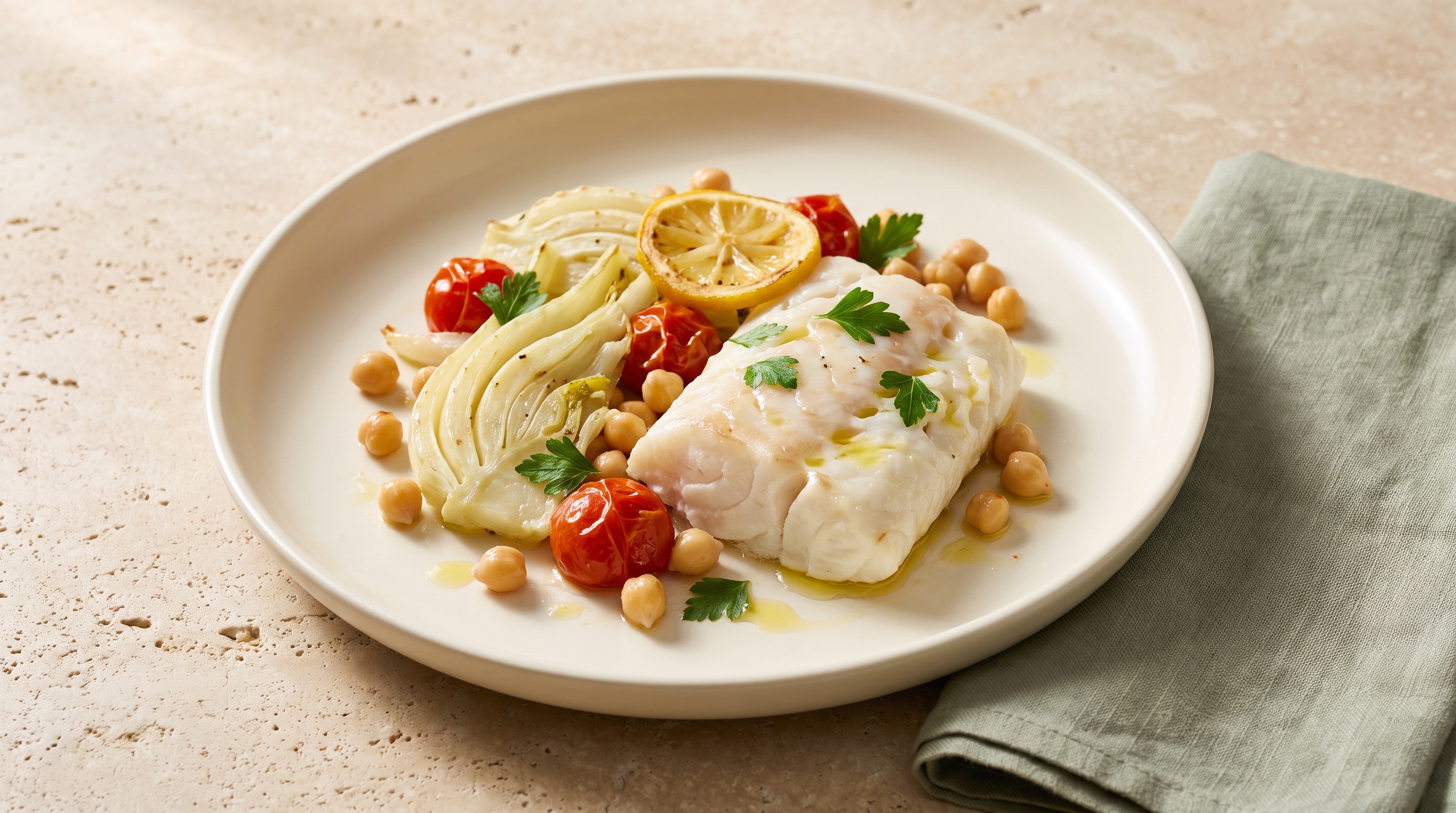
Thinly sliced fennel softens in the oven before cod joins the tray. Chickpeas and cherry tomatoes sit underneath, catching the lemon and olive-oil juices. Staggering the cooking helps the vegetables become tender while keeping the fish from spending too long in the oven.
Quick summary
A lemony cod tray bake with fennel, cherry tomatoes and a small chickpea portion.
Recipe snapshot
Serves 4. Prep: 15 minutes. Cook: about 35 minutes. Total: about 50 minutes. Portion: 1 cod fillet plus one quarter of the vegetables, chickpeas and tray juices.
Ingredients
- 4 raw cod fillets, about 140 g each (560 g total), fully thawed if frozen
- 1 fennel bulb, trimmed to about 250 g edible weight and sliced very thinly
- 150 g cherry tomatoes (about 1 cup), washed
- 165 g canned chickpeas (about 1 cup), drained and rinsed
- 1 tablespoon olive oil (about 14 g)
- 1 lemon: 2 tablespoons juice (30 ml), plus a few thin slices
- 1 teaspoon dried oregano
- 2 tablespoons chopped parsley
- Black pepper to taste
Instructions
- Heat the oven to 200 C conventional, 180 C fan (about 400 F). Use a large roasting tray so the vegetables can spread out rather than pile up.
- Toss the thinly sliced fennel, tomatoes and chickpeas with the olive oil, oregano and lemon slices. Spread them across the tray.
- Roast for 15-20 minutes, then turn the vegetables. If the fennel is still quite firm, give it another 5 minutes before adding the fish.
- Pat the cod dry, check for bones and place it on the vegetables. Roast for about 10-15 minutes, depending on thickness. Check the thickest part of each fillet reaches 63 C (145 F); the flesh should be opaque and separate easily.
- Pour over the lemon juice, scatter with parsley and black pepper, and divide the fish, vegetables, chickpeas and juices evenly between four plates.
Nutrition note
Approximate per serving: 205 kcal; 9 g carbohydrate (excluding fibre); 29 g protein; 6 g fat. Calculated with raw cod and vegetable weights, drained chickpeas, all the oil and tray juices, and 30 ml lemon juice. Oregano, parsley, pepper and the decorative lemon slices are excluded. Salmon or a larger chickpea serving changes the estimate. These are ingredient-based estimates, rounded to the nearest 5 kcal and whole gram, not laboratory measurements. Carbohydrate is an approximate UK-style value excluding fibre, not US total carbohydrate. Fibre is not reported because some reference values are missing. Brand, preparation and portion differences matter; do not use these estimates alone to calculate an insulin dose.
Blood sugar context
Chickpeas contribute carbohydrate and protein. There is about one quarter cup of drained chickpeas per serving in this version. Choose any bread, potatoes or rice alongside it according to your usual meal plan.
Portion and swap guidance
- Haddock or pollock can be used in place of cod, with the same temperature check.
- Salmon also works, but its fat and calorie content differ.
- Use thinly sliced courgette or peppers if you do not enjoy fennel; cooking time may change.
- Add a side salad, or a measured carbohydrate side if you want a larger meal.
Allergens and precautions
Contains fish. Check for bones before serving, especially to children. Keep raw fish separate from ready-to-eat foods and use fully cooked fish during pregnancy and for people at increased risk from foodborne illness. Follow local fish-choice advice. Kidney disease and prescribed protein, potassium or sodium restrictions may require different portions. Follow your agreed medication plan if you change the meal's carbohydrate amount.
Storage
Refrigerate leftovers promptly in shallow covered containers and use within 2 days. Reheat throughout to 74 C (165 F). The fish may become drier on reheating, so freshly cooked is best for texture. Refrigerate perishable food within 2 hours, or within 1 hour if the room or outdoor temperature is above 32 C (90 F). Keep the fridge at 4 C (40 F) or below.
Practical takeaway
Start the vegetables first, then use the fish temperature to decide when dinner is ready.
Sources
- CDC: diabetes meal planning
- CDC: carbohydrate counting
- NIDDK: healthy living with diabetes
- FoodSafety.gov: safe cooking temperatures
- FoodSafety.gov: four steps to food safety
- Food Standards Agency: cooking and reheating
- CoFID 2021 food composition dataset
AI-generated recipe illustration. Follow the ingredient weights and serving instructions, not the image, for portions.