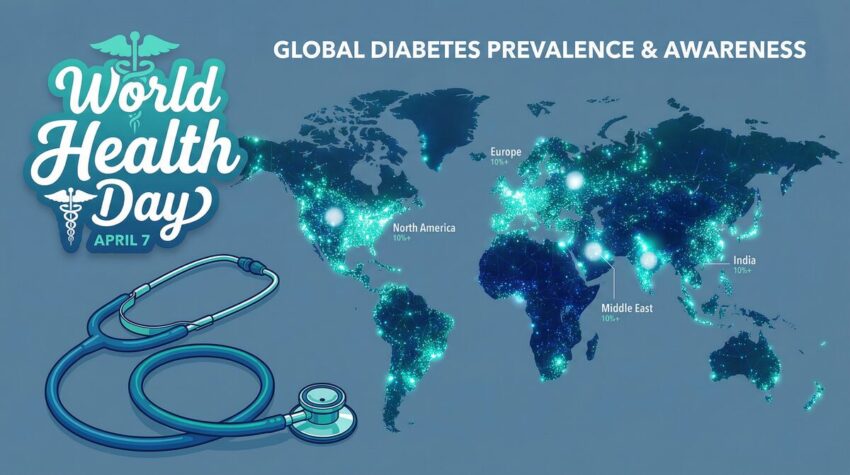
Each year on 7 April, World Health Day marks the anniversary of the World Health Organization’s (WHO) founding, serving as a global call to action on a specific health theme. While often overshadowed by World Diabetes Day in November, World Health Day provides a crucial opportunity to examine diabetes within the broader context of global health, universal health coverage, and scientific advancements. This year, as we reflect on themes such as ‘Together for health. Stand with science’ and ‘Global Action for Universal Health Coverage’, it is imperative to consider how diabetes, a chronic condition affecting millions worldwide, intersects with these vital initiatives.
World Health Day: Global Diabetes Perspectives
Diabetes is a rapidly growing global health challenge. According to the International Diabetes Federation (IDF), approximately 537 million adults aged 20-79 years were living with diabetes in 2021, a number projected to rise to 643 million by 2030 and 783 million by 2045 [1]. This escalating prevalence places immense strain on healthcare systems and economies globally, particularly in low- and middle-income countries where the majority of people with diabetes reside. The condition is a leading cause of blindness, kidney failure, heart attacks, strokes, and lower limb amputation, significantly impacting quality of life and life expectancy.
The Global Burden of Diabetes
The burden of diabetes is not evenly distributed. While ذیابیطس 2 ٹائپ کریں accounts for the vast majority of cases, its rise is closely linked to lifestyle factors such as unhealthy diets, physical inactivity, and obesity. However, genetic predispositions and socioeconomic determinants also play significant roles. In many regions, access to diagnosis, treatment, and education remains a significant barrier. This disparity highlights the urgent need for equitable healthcare access, a core tenet of universal health coverage.
Universal Health Coverage and Diabetes Care
Universal Health Coverage (UHC) means that all people have access to the health services they need, when and where they need them, without financial hardship. For individuals with diabetes, UHC is not merely about access to insulin or oral medications; it encompasses comprehensive care, including early screening, accurate diagnosis, ongoing education for self-management, access to healthy food options, and regular monitoring for complications. Without these integrated services, managing diabetes effectively becomes an insurmountable challenge for many.
ℹ️ Understanding Universal Health Coverage
Universal Health Coverage (UHC) aims to ensure that everyone can obtain the health services they need without suffering financial hardship. This includes a full spectrum of essential health services, from health promotion to prevention, treatment, rehabilitation, and palliative care.
Standing with Science: Innovations in Diabetes Management
The theme ‘Stand with science’ on World Health Day underscores the critical role of research and innovation in combating diseases like diabetes. Scientific advancements have transformed diabetes care, from the development of new medications and insulin delivery systems to continuous glucose monitoring (CGM) technologies and artificial intelligence-driven insights. These innovations offer improved blood glucose control, reduced complications, and enhanced quality of life. However, ensuring these scientific breakthroughs are accessible and affordable to all who need them, especially in resource-limited settings, remains a significant hurdle.
Challenges and Opportunities
The global fight against diabetes faces numerous challenges:
- Awareness and Education: Many people remain undiagnosed or lack adequate knowledge about diabetes prevention and management.
- Access to Care: Disparities in access to essential medicines, technologies, and healthcare professionals persist, particularly in rural and underserved areas.
- Affordability: The cost of diabetes care, including insulin, medications, and monitoring supplies, can be prohibitive for many families.
- Policy and Infrastructure: Robust public health policies and infrastructure are needed to promote healthy lifestyles and support diabetes prevention programmes.
Despite these challenges, there are significant opportunities for progress. Collaborative efforts between governments, healthcare providers, non-governmental organisations, and communities are vital. Investing in primary healthcare, strengthening health education, and leveraging digital health solutions can make a profound difference. Furthermore, integrating diabetes care into broader non-communicable disease (NCD) prevention and control programmes can yield more efficient and effective outcomes.
⚠️ The Silent Epidemic
A significant proportion of people with diabetes, particularly Type 2, remain undiagnosed. This ‘silent epidemic’ means many individuals are unaware of their condition until complications arise, making early detection and screening programmes critically important.
Moving Forward: A Collective Responsibility
World Health Day reminds us that health is a fundamental human right and a collective responsibility. Addressing the global diabetes crisis requires a multi-faceted approach that combines scientific innovation with equitable access to care and robust public health strategies. By working together, standing with science, and striving for universal health coverage, we can create a future where diabetes is no longer a barrier to health and well-being for millions.
✅ Key Takeaway
World Health Day provides a crucial platform to highlight the global diabetes crisis. By focusing on universal health coverage and scientific advancements, we can collectively work towards a future where effective diabetes prevention, diagnosis, and management are accessible to all, reducing its devastating impact worldwide.
References:
- [1] International Diabetes Federation. IDF Diabetes Atlas, 10th Edition. Brussels, Belgium: International Diabetes Federation, 2021. Available at: https://idf.org/our-network/regions-members/europe/our-members/6-europe/diabetes-atlas.html
 Urdu
Urdu  English