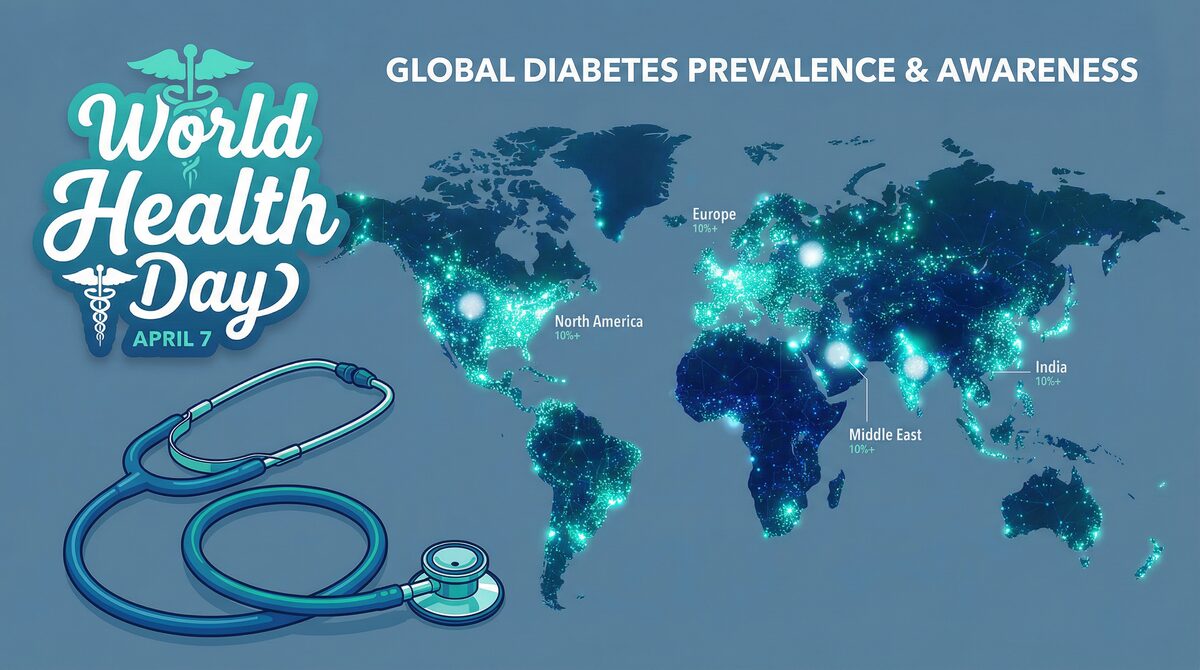
World Health Day is a useful moment to step back from one person’s glucose reading and look at the bigger picture. Diabetes is not only an individual condition. It is also a public-health, access, food, medicine, prevention, and equity issue.
Quick summary
WHO describes diabetes as a major cause of blindness, kidney failure, heart attacks, stroke, and lower-limb amputation. CDC and NIDDK data show the U.S. burden is also large, with current figures available in the cited profiles. World Health Day is awareness context, not clinical guidance.
Key takeaways
- Diabetes care is shaped by food access, medicines, insurance, safe places to be active, education, and clinic access.
- Prevention and early treatment matter, but blame is not a public-health strategy.
- Complication prevention includes glucose, blood pressure, cholesterol, kidney, eye, foot, and heart care.
- Global awareness should lead to practical local questions about access and support.
The global picture
WHO describes diabetes as a serious chronic condition and a major cause of several complications. It also highlights access challenges, including basic technologies and care in lower-resource settings. This matters because diabetes outcomes are not determined by motivation alone. They are shaped by whether people can get medicines, monitoring tools, healthy food, follow-up, and respectful care.
The U.S. picture
CDC’s national diabetes profile and NIDDK’s statistics page provide the current U.S. estimates and cost context. This article does not repeat detailed numbers because those reports are updated over time. The larger point is that the burden represents clinic time, medicine decisions, work stress, family support, and prevention opportunities.
What awareness should do
Awareness is useful only if it leads to action. For individuals, that may mean scheduling an eye exam, asking about kidney tests, learning low-glucose treatment, or reviewing blood pressure. For communities, it may mean supporting access to primary care, safe walking routes, affordable medicines, diabetes education, and culturally respectful nutrition support.
Avoid blame-based messages
Diabetes risk and outcomes are influenced by genetics, age, pregnancy history, income, food environment, sleep, stress, medicines, weight, activity, and other conditions. Public messages that rely on shame can push people away from care. Better messages help people get screened, treated, supported, and protected from complications.
What to ask your care team
- Am I up to date on A1C, blood pressure, cholesterol, kidney, eye, and foot checks?
- Do cost, transport, food access, language, or insurance barriers affect my diabetes care?
- What local diabetes education or support resources are available?
- What prevention steps make sense for my family or community?
Practical takeaway
World Health Day is a reminder that diabetes care works best when personal habits, medical treatment, and access to support all improve together.
Safety note
Seek urgent care for severe low glucose, confusion, ketones, repeated vomiting, chest pain, stroke symptoms, severe shortness of breath, or high glucose with vomiting, ketones, dehydration, confusion, or trouble breathing. This information is general education and is not a substitute for medical care.
Source summary
- WHO: Diabetes. Global public-health overview of diabetes, complications, care access, and prevention. Source
- WHO: World Diabetes Day. WHO campaign context for diabetes awareness and global response. Source
- CDC: National diabetes profile. U.S. national diabetes profile with diagnosed diabetes, prediabetes, costs, and public-health context. Source
- NIDDK: Diabetes statistics. U.S. diabetes statistics and links to CDC national reporting. Source