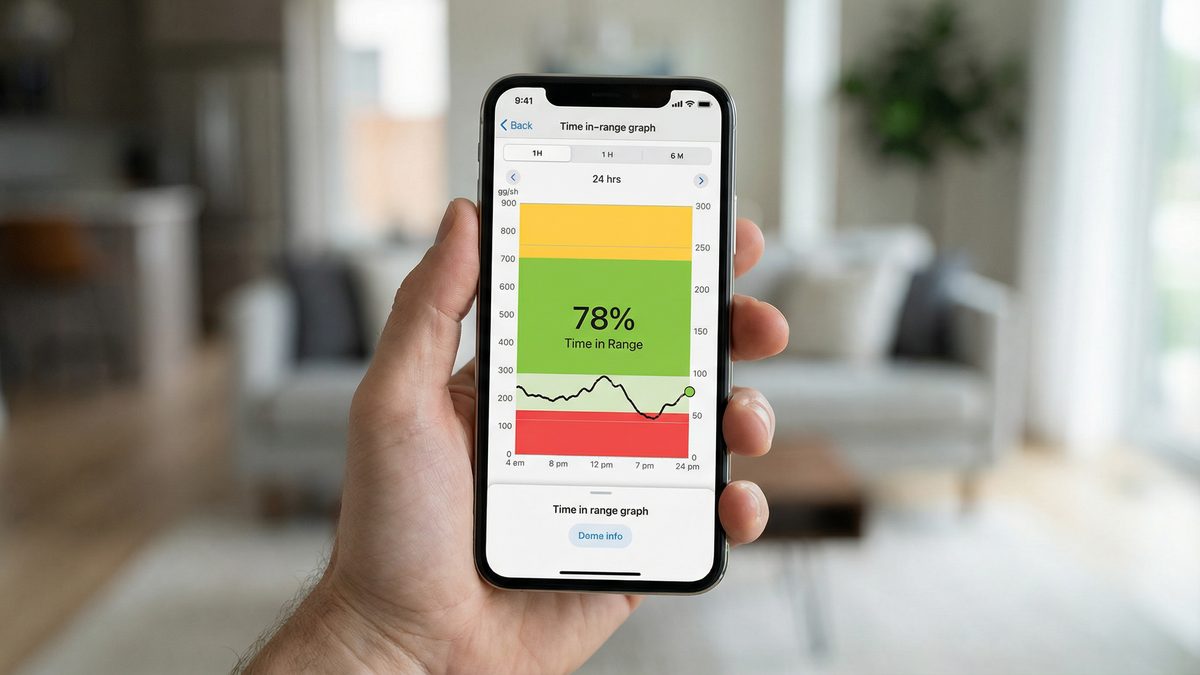
Time in range is a CGM metric that estimates how much time glucose spends within a target range over a period of days. It can be helpful because it shows patterns that A1C alone can miss.
Quick summary
Time in range should never be read without time below range. A higher time in range is not a success if it comes with dangerous lows.
Key takeaways
- Time in range is based on CGM data.
- Targets can differ by pregnancy, age, frailty, hypoglycemia risk, and clinical situation.
- Enough CGM data is needed for a meaningful report.
- The pattern behind the number matters more than the number alone.
How to use it
- Review time below range first if lows are happening.
- Look for patterns by time of day.
- Compare with meals, exercise, sleep, and medicine timing.
- Ask whether the report period was typical.
- Use it with A1C, symptoms, and clinical judgment.
Common mistakes
Do not chase a perfect number. Glucose targets should be individualized, and people at high risk of severe lows may need safer, less aggressive goals.
If CGM readings do not match symptoms, use a meter when appropriate. Bad data can lead to bad decisions.
Practical takeaway
Time in range is useful when it leads to safer decisions, especially fewer lows and clearer patterns.
Safety note
This article is not a substitute for medical care. Seek urgent care for severe low blood sugar, confusion, fainting, vomiting with high glucose or ketones, or symptoms that feel unsafe.
What to ask your care team
- What target range is right for me?
- How much time below range is too much?
- Which pattern should we address first?
Related reading
Source summary
- Diabetes Technology: Standards of Care in Diabetes 2026, American Diabetes Association. Clinical guideline. Accessed June 5, 2026. Source
- Continuous Glucose Monitoring, National Institute of Diabetes and Digestive and Kidney Diseases. Patient guidance. Accessed June 5, 2026. Source
- Continuous Glucose Monitors, Centers for Disease Control and Prevention. Patient guidance. Accessed June 5, 2026. Source
- Blood Glucose Monitoring Devices, U.S. Food and Drug Administration. Device information. Accessed June 5, 2026. Source