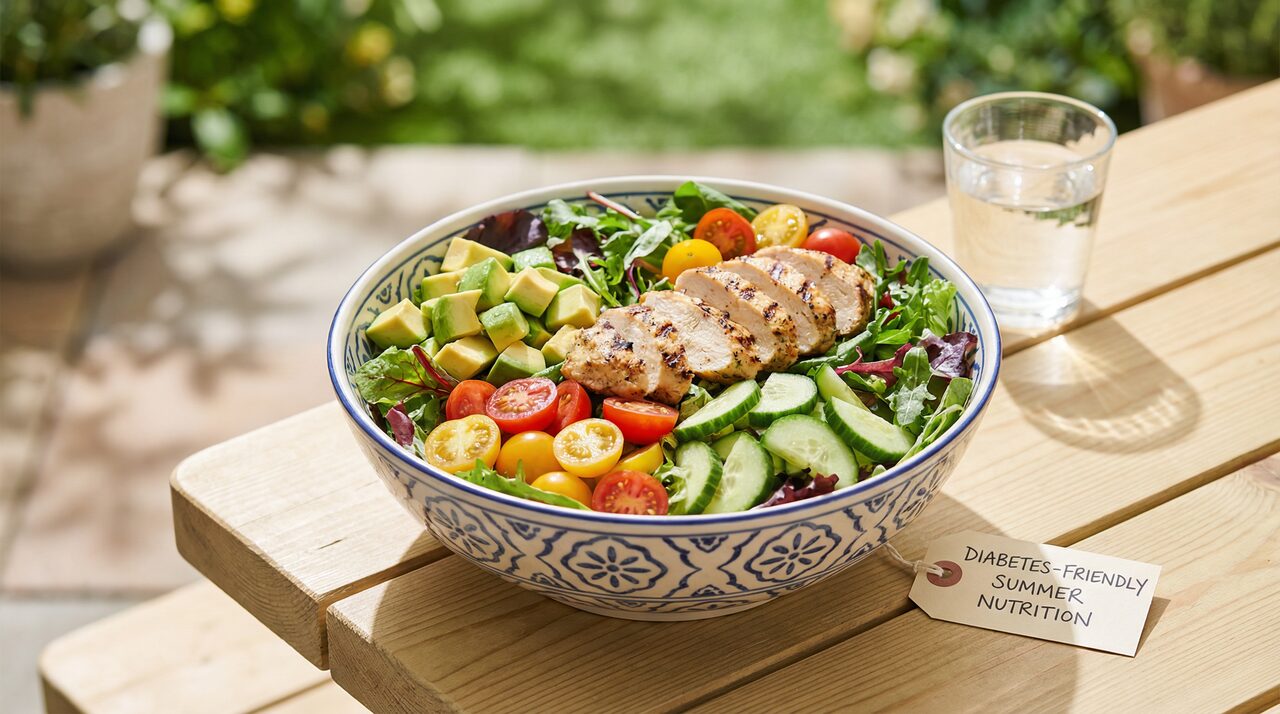
Summer salads can be a practical way to build a filling meal with vegetables, protein, healthy fats, and carbohydrate portions that fit your own diabetes plan. The goal is not to make one perfect salad. It is to build a plate that tastes good, keeps you satisfied, and lets you see how your own glucose responds.
Key takeaways
- Focus on portions, fiber, protein, and how the meal affects your own glucose pattern.
- Nutrition numbers are estimates and can change with brands, ingredients, and serving size.
- Ask your care team how to match meals with medicines if you use insulin or drugs that can cause lows.
Why this matters when you live with diabetes
Salads can be helpful because they often start with non-starchy vegetables, which add volume, fiber, color, and texture. The glucose effect changes when you add grains, fruit, beans, croutons, sweet dressings, or large portions of starchy ingredients. Protein and unsaturated fats can make a salad more satisfying, but portions still matter because calories, sodium, and carbohydrate can add up quickly.
Build a balanced summer salad
Use this as a flexible template, not a fixed prescription. Choose ingredients that fit your culture, budget, preferences, and care plan.
- Start with vegetables: leafy greens, cucumbers, tomatoes, peppers, cabbage, radishes, or broccoli slaw.
- Add protein: grilled chicken, fish, eggs, tofu, beans, lentils, or plain Greek yogurt-based toppings.
- Choose carbohydrate portions thoughtfully: beans, corn, fruit, quinoa, pasta, potatoes, and whole grains can fit, but they should be counted if you track carbohydrates.
- Use fats for flavor: avocado, nuts, seeds, olives, or olive-oil vinaigrette can add taste and fullness. Small portions are usually enough.
- Check the dressing: bottled dressings can contain added sugar, sodium, and saturated fat. Compare labels or make a simple vinaigrette with oil, vinegar, lemon, herbs, and spices.
Practical steps you can use this week
- Try one large salad bowl with a clear protein source and one measured carbohydrate choice, then note your glucose pattern afterward.
- Keep dressing on the side so you can control the amount and keep leftovers fresh.
- If you use insulin or medicines that can cause low glucose, ask your care team how to match salad ingredients, carbohydrate counts, and medication timing.
- For meal prep, store greens, dressing, protein, and crunchy toppings separately until serving.
- Use food labels for packaged toppings such as croutons, dressings, cheese, deli meats, and canned beans.
Simple combinations to try
For steadier meals, avoid building a salad from vegetables alone and then feeling hungry soon afterward. A protein source, a measured carbohydrate choice, and a flavorful dressing can make the meal more satisfying. If you use insulin or count carbohydrates, write down the ingredients once or save the recipe so you are not estimating from scratch each time you make it.
For a Mediterranean-style bowl, try greens, cucumber, tomato, grilled chicken or chickpeas, a small portion of quinoa, olives, and lemon-olive oil dressing. For a picnic-style bowl, try cabbage slaw, grilled fish or tofu, beans, peppers, herbs, and vinegar-based dressing. For a quick work lunch, keep washed greens, canned beans, boiled eggs, and a measured dressing ready so you can build a meal without guessing portions.
Food safety and storage
Summer heat can make food safety more important. Keep perishable ingredients cold, refrigerate leftovers promptly, and avoid leaving salads with meat, fish, eggs, dairy, or mayonnaise-based dressing out in warm weather. If food smells unusual, looks spoiled, or has been held at unsafe temperatures, throw it away.
When to call your healthcare professional
Contact your diabetes care team if you notice repeated high or low glucose readings after meals, have trouble matching food with insulin or medicines, or need help building a meal plan that supports blood glucose, cholesterol, blood pressure, kidney health, weight goals, or pregnancy.
Questions to ask at your next visit
- How should I count carbohydrates from beans, fruit, grains, or starchy vegetables in salads?
- What sodium or saturated-fat limits should I follow when choosing dressings, cheese, or deli meats?
- Can I meet with a registered dietitian or diabetes care and education specialist for meal planning?
Medical note: This article is for education only and does not replace care from your healthcare professional. If you use insulin or medicines that can cause low blood glucose, are pregnant, have kidney disease, heart disease, vision problems, neuropathy, or other diabetes-related complications, discuss changes to food, activity, medicines, devices, or travel plans with your diabetes care team.