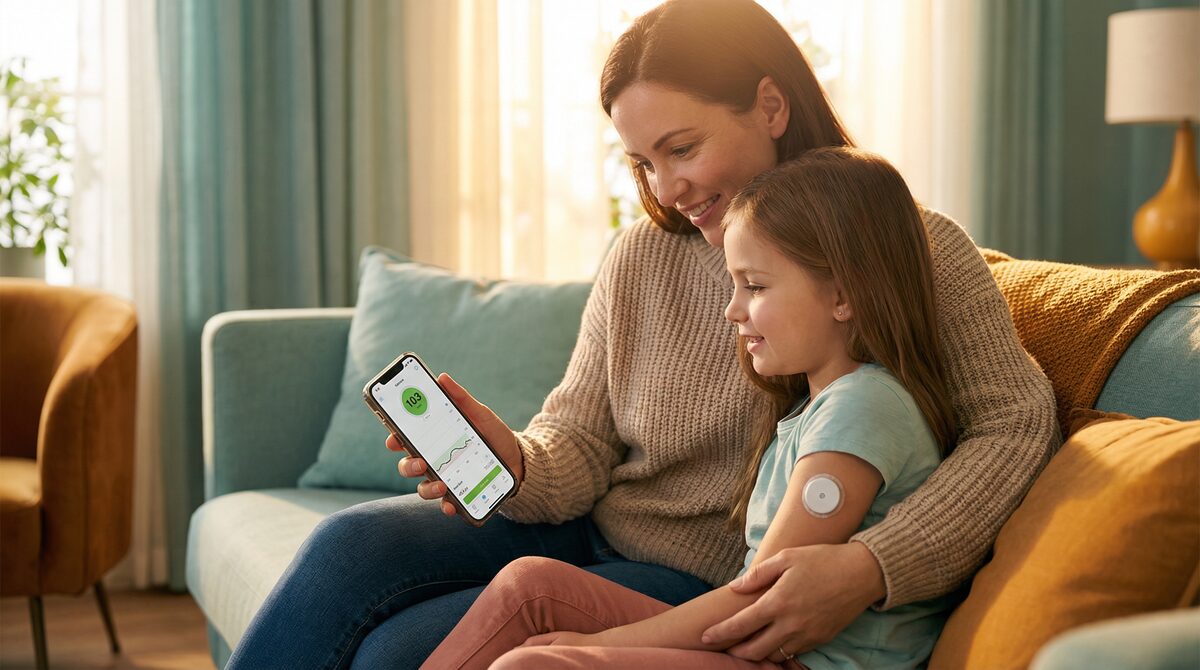
For families, students, school staff and clinicians
A school nurse often coordinates diabetes care, but safe support depends on a wider team. Clear communication helps the nurse understand the clinical plan and helps the family understand what the school can provide.
Quick answer
The DMMP should be the shared clinical reference. It should be supported by trained backup staff and a communication route for changes. Technology can improve information flow, but school staff still need a plan for lost connectivity, device failure and situations where the sensor reading does not match symptoms.
Key points
- Schedule a pre-term review of the DMMP, medications, supplies and contact details.
- List trained staff and define who covers the nurse’s absence, trips, transport and after-school activities.
- Agree how glucose events, insulin doses, ketones, illness and supply shortages are documented.
Why school diabetes care matters
School diabetes care is strongest when the clinical plan and the education plan say the same thing. Families provide the current medical instructions; the school identifies trained staff, access arrangements and backup cover. This matters because the school day includes more than lessons. Transport, breaks, physical education, examinations, trips, clubs and unexpected timetable changes can all affect access to food, medication, monitoring and help.
A written plan should describe responsibilities rather than relying on goodwill or memory. It should also protect the student’s dignity. Diabetes-related checks, alarms, food, toilet access or temporary difficulty concentrating should be handled promptly and without punishment or unnecessary attention.
A practical step-by-step plan
1. Schedule a pre-term review of the DMMP, medications, supplies and contact details
Schedule a pre-term review of the DMMP, medications, supplies and contact details. Put the agreed action in writing and name the person responsible. A plan is easier to follow when staff can see exactly what should happen, who should be contacted and what must be documented. A useful check is to ask: Who is the named backup if the nurse is away?
2. List trained staff and define who covers the nurse’s absence, trips, transport and after-school activities
List trained staff and define who covers the nurse’s absence, trips, transport and after-school activities. Test the arrangement in the real school environment. Check that supplies, trained staff and contact details are available where the student actually spends time, not only in the nurse’s office. A useful check is to ask: How will the family be contacted during a high or low reading?
3. Agree how glucose events, insulin doses, ketones, illness and supply shortages are documented
Agree how glucose events, insulin doses, ketones, illness and supply shortages are documented. Include the student in an age-appropriate way. Their experience of alarms, privacy, symptoms and routines can reveal practical gaps that adults may miss. A useful check is to ask: Where are emergency supplies stored and checked?
4. Review recurring problems jointly and update the plan when treatment or school circumstances change
Review recurring problems jointly and update the plan when treatment or school circumstances change. Set a review date. A plan should change when treatment, technology, staffing, activities or the student’s level of independence changes. A useful check is to ask: How are new staff trained?
What good support looks like
Good school support is clear enough to use on a busy day. The plan identifies what the student can manage independently, what trained staff must do and who provides backup when the usual person is absent. It covers the whole timetable, protects access to learning and avoids singling the student out unnecessarily.
Communication should be brief, current and written. Repeated problems belong in a review with the family, school and diabetes team rather than being managed through blame or improvised treatment changes.
A real-life test for the plan
Imagine that the circumstances around working with the school nurse change at short notice. The usual routine is disrupted, a key person is unavailable, a device or supply cannot be used, or the symptoms do not match what was expected. A robust arrangement should still show where the current instructions are kept, who can make the next decision, how essential information will be shared and when professional advice is needed. It should not depend on memory or an improvised treatment change.
Rehearse the plan by asking Who is the named backup if the nurse is away? and How will the family be contacted during a high or low reading? The answers should name a person, place, communication route or decision point. If they only describe what normally happens, add a backup for delays, absences, technology failure and unexpected symptoms. A written fallback does not need to be long, but it should be clear to someone who does not know the usual routine. This short rehearsal often finds practical gaps before they become stressful or unsafe.
Common mistakes to avoid
- Using an old plan after treatment, staff or timetable changes.
- Assuming the school nurse will always be immediately available.
- Treating device use, food, water or toilet access as a classroom behaviour issue.
- Planning for lessons but forgetting transport, trips, clubs and emergencies.
Questions to discuss
- Who is the named backup if the nurse is away?
- How will the family be contacted during a high or low reading?
- Where are emergency supplies stored and checked?
- How are new staff trained?
Bring the answers together in the current diabetes medical management plan and any applicable education-access plan. Record the named contacts, backup staff and review date.
Frequently asked questions
Who is the named backup if the nurse is away?
Schedule a pre-term review of the DMMP, medications, supplies and contact details. The answer should be specific to the person and setting rather than copied from a general checklist. Confirm who will act, what information or supplies are needed, and what the backup will be if the usual arrangement fails. Review that answer whenever the circumstances affecting working with the school nurse change.
How will the family be contacted during a high or low reading?
List trained staff and define who covers the nurse’s absence, trips, transport and after-school activities. The answer should be specific to the person and setting rather than copied from a general checklist. Confirm who will act, what information or supplies are needed, and what the backup will be if the usual arrangement fails. Review that answer whenever the circumstances affecting working with the school nurse change.
Where are emergency supplies stored and checked?
Agree how glucose events, insulin doses, ketones, illness and supply shortages are documented. The answer should be specific to the person and setting rather than copied from a general checklist. Confirm who will act, what information or supplies are needed, and what the backup will be if the usual arrangement fails. Review that answer whenever the circumstances affecting working with the school nurse change.
When to get urgent help
Follow the emergency instructions for severe low glucose, suspected ketoacidosis, altered consciousness or other serious illness. Escalate when the student cannot be kept safe within the school plan.
Do not wait for a routine appointment if there is severe hypoglycaemia, loss of consciousness, a seizure, repeated vomiting, marked dehydration, difficulty breathing, significant ketones, suspected diabetic ketoacidosis or another immediate safety concern. Use the person’s emergency plan and local emergency services.
The bottom line
For working with the school nurse, clarity matters more than an exhaustive checklist. Schedule a pre-term review of the DMMP, medications, supplies and contact details. A useful next action is straightforward: List trained staff and define who covers the nurse’s absence, trips, transport and after-school activities. Record anything that still needs clarification. The strongest plan is one that a patient, family member, clinician or staff member can actually follow when the day becomes busy or unexpected.
Related Livingdiabetes guides
- Explaining diabetes to children: a parent’s guide
- Building diabetes independence and self-management skills
- Understanding and treating low blood sugar
Sources and further reading
- ADA: Diabetes Care in the School Setting
- ADA: Diabetes Medical Management Plan
- CDC: Managing Diabetes at School
- ADA Standards of Care 2026: Diabetes Technology
This article is for general education. It does not replace an individual diabetes medical management plan, diagnosis or advice from a qualified healthcare professional.