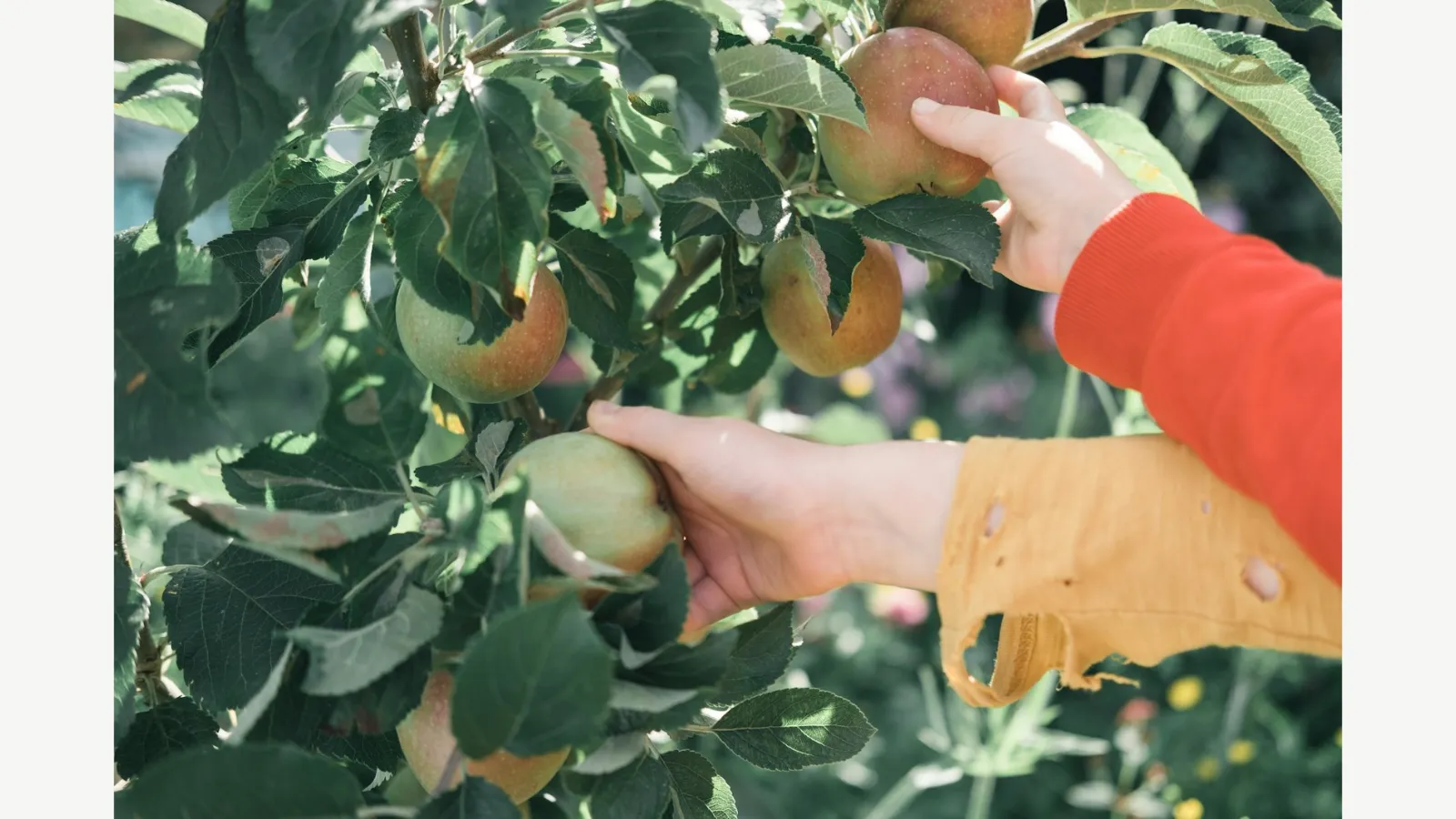
For people with diabetes planning a seasonal day outdoors.
Apples contain carbohydrate, but they also provide fibre, water and enjoyment. For most people with diabetes, the question is not whether an apple is allowed. It is how the fruit, walking, timing and medication fit together during a day that may be less predictable than usual.
Quick answer
Apple picking can fit safely into life with diabetes. Carry usual monitoring and treatment supplies, plan for extra walking, keep fast-acting carbohydrate separate from recreational food, and estimate the apples or sweet non-alcoholic cider you consume. Whole fruit generally raises glucose more slowly than juice, but portion and individual response still matter.
Key points
- An orchard visit may involve more activity than it appears.
- Whole apples and sweet non-alcoholic apple cider affect glucose differently.
- Food sampling can add up when there is no clear portion.
- Footwear, weather and access to toilets or help deserve attention.
Apples, carbohydrate and portion awareness
The carbohydrate in an apple varies with size and variety. If you count carbohydrates, use a reliable database, label or your diabetes team’s method. Eating the skin adds fibre. Pairing fruit with nuts, cheese, yoghurt or another protein may make a snack more satisfying, although it does not remove the carbohydrate.
Apple juice and sweet non-alcoholic cider are easier to drink quickly and contain little or no intact fibre. Sweetened doughnuts, caramel apples and pies combine concentrated carbohydrate and fat. They can still be enjoyed, but they are not nutritionally equivalent to the fruit picked from the tree.
Plan the day before leaving home
Check the site’s practical details
Look at walking distance, terrain, toilets, seating, mobile signal, opening hours and whether outside food is permitted. If bags must be searched, keep medicines and devices clearly organised and bring supporting documentation if your local setting requires it.
Pack for activity and delay
Carry glucose monitoring supplies, fast-acting carbohydrate, water, identification and any medicine needed during the trip. Bring a backup if you rely on a phone or sensor. Insulin must be protected from temperature extremes according to its storage instructions.
Use your personal activity plan
Walking on uneven ground, carrying bags and spending several hours outdoors may affect glucose during and after the visit. Follow your plan for checks, food and insulin. Do not make an unfamiliar dose change based on a generic online rule.
Decide what you most want to enjoy
Choosing intentionally can be easier than tasting everything automatically. You might eat an apple in the orchard and take pie home, or share a sweet non-alcoholic cider. The aim is enjoyment with awareness, not food guilt.
Foot care at the orchard
Wear supportive shoes and socks that reduce rubbing. Check for stones, wet socks or new blisters, particularly if you have neuropathy or reduced circulation. People with an active foot ulcer or significant balance problems should ask their clinician whether the terrain is appropriate.
After the visit
Extra activity can affect glucose later, including overnight for some insulin users. Continue monitoring according to your plan. Wash produce before eating, refrigerate cut apples and store harvested fruit safely. If you make sauce, use plain fruit and add sweetness only if needed rather than assuming every recipe requires sugar.
A sample orchard-day timeline
Before leaving
Eat and take medicines as you normally would unless your personal activity plan says otherwise. Check that the kit is physically in the bag, not still on the kitchen counter. Tell your companion where fast-acting carbohydrate is kept and what severe hypoglycaemia may look like.
At arrival
Note the location of toilets, first aid, seating and the quickest route back to the car or exit. If the site is large, decide how far you will walk before reassessing. A planned pause is easier than trying to manage a low reading on an isolated path.
During picking
Keep hypo treatment separate from snacks and purchased food so it remains available for an emergency. If you taste fruit, count it as part of what you eat rather than treating repeated bites as zero. Stop if symptoms, a device alert or a foot problem needs attention.
Before travelling home
Check how you feel and follow your monitoring plan. Driving immediately after strenuous walking or a treated low may be unsafe. Confirm that glucose has recovered according to your individual guidance and that you can concentrate normally.
Preserving apples without turning every batch into dessert
Apples can be refrigerated, sliced and frozen, or cooked into an unsweetened sauce. Cinnamon, ginger, lemon and vanilla add flavour without requiring large amounts of sugar. When making crumble or pie, keep the serving size visible and pair it with the meal rather than eating from the baking dish over several hours.
Home-preserving methods must follow tested food-safety instructions. Do not improvise a canning recipe to change its sugar content; choose a tested lower-sugar recipe or freeze the fruit instead.
Common mistakes to avoid
- Treating whole apples and sweet non-alcoholic cider as equal portions.
- Leaving hypo treatment in the car while walking far into the orchard.
- Wearing new or poorly fitting shoes for a long outdoor day.
- Stacking insulin corrections during a day of unusual activity without following the personal plan.
- Turning one seasonal food choice into a judgement about the entire day.
Frequently asked questions
Are green apples better than red apples for diabetes?
Varieties differ in taste and composition, but size and portion often matter more than colour. Choose the apple you enjoy and account for it within your plan.
Can I drink sweet non-alcoholic apple cider?
Sweet non-alcoholic cider contains rapidly available carbohydrate. Check the portion and added sugar, and use your usual approach for carbohydrate-containing drinks.
What about alcoholic cider?
Alcoholic cider can contain both alcohol and carbohydrate. Alcohol may increase the risk of delayed hypoglycaemia in people using insulin or sulfonylureas and can make warning symptoms harder to recognise. Follow your individual alcohol plan, do not drink on an empty stomach and never use alcohol to correct high glucose.
What should I do if glucose drops while walking?
Stop, follow your hypoglycaemia treatment plan and recheck as advised. Do not continue into a remote part of the orchard until you are safe to do so.
When to get urgent help
Seek help for severe hypoglycaemia, loss of consciousness, a seizure, chest pain, serious injury, heat illness, repeated vomiting, significant ketones or suspected diabetic ketoacidosis.
The bottom line
An orchard day is not a nutrition examination. Plan for the activity, count the foods that matter to your treatment, protect your feet and choose the seasonal experience you actually want.
Related Living Diabetes guides
Sources and further reading
- CDC: Diabetes meal planning
- ADA Standards of Care 2026: Physical activity and nutrition
- USDA FoodData Central
This article is for general education. Individual carbohydrate, insulin and activity plans vary.