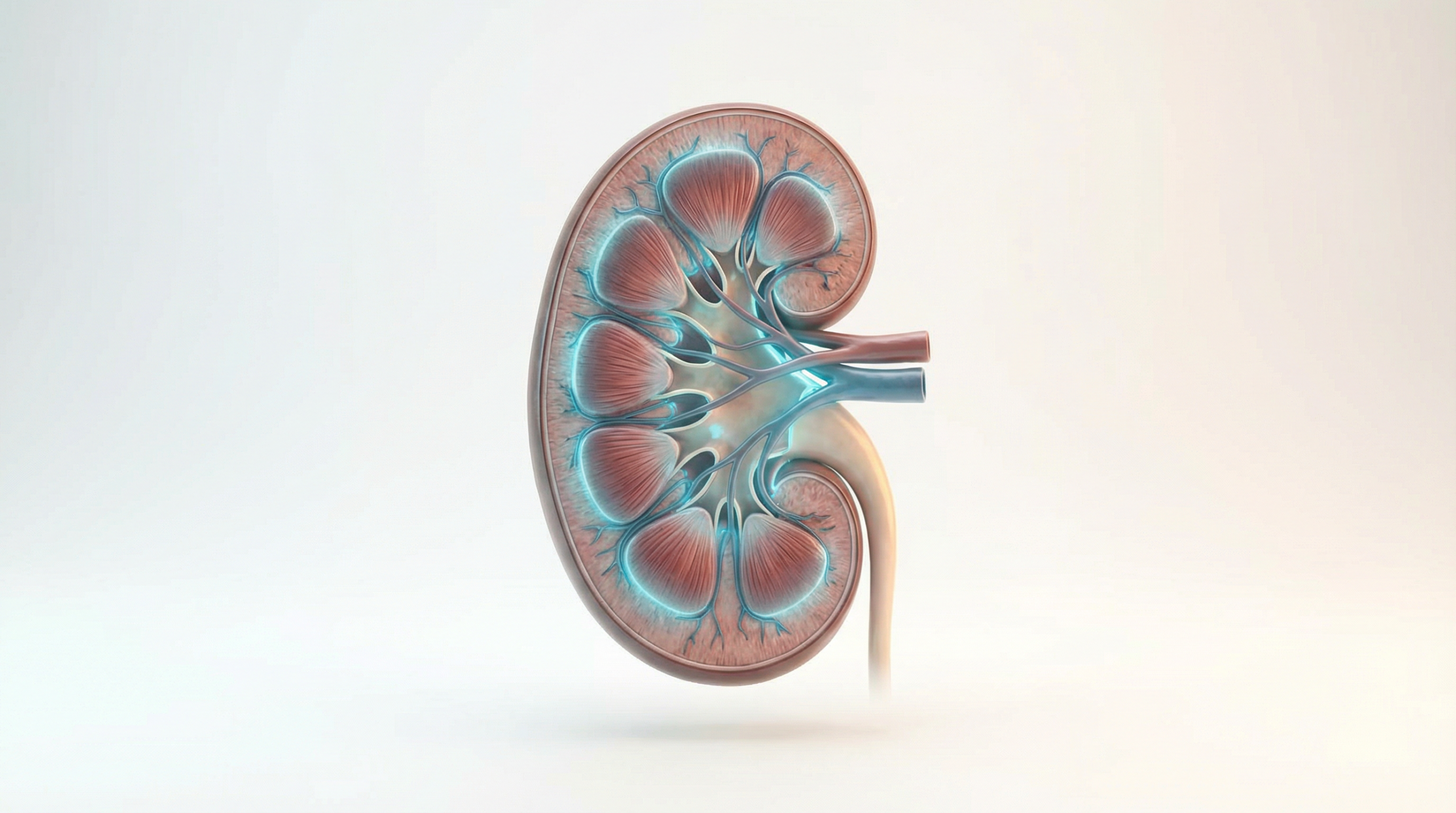

Managing diabetes becomes more complicated when kidney function is significantly reduced. Insulin needs can change, glucose levels may be less predictable, and treatment decisions often require close coordination between diabetes and kidney specialists.
A small randomized study published in Diabetologia examined whether automated insulin delivery could improve glucose control in adults with diabetes and advanced chronic kidney disease. The results are encouraging for glucose management, but they do not show that the technology slows kidney disease or prevents heart problems.
What the study looked at
The trial included adults with type 1 diabetes or insulin-treated type 2 diabetes and advanced chronic kidney disease, defined as stage 3b or worse. Some participants were receiving dialysis. The study was carried out in specialist centres in Australia and Denmark.
Participants completed two eight-week periods in random order. During one period, they used automated insulin delivery with continuous glucose monitoring. During the other, they continued their usual insulin treatment with glucose monitoring. The automated system studied was the MiniMed 780G.
The study was open-label, meaning participants and researchers knew which treatment was being used. This type of design can affect behaviour and treatment decisions, so the findings need to be interpreted with care.
What researchers found
The main outcome was time in range: the percentage of time glucose stayed between 3.9 and 10.0 mmol/L (70 to 180 mg/dL). Time in range improved from about 60% during usual care to about 73% during automated insulin delivery.
Other measures of high glucose also improved. Time spent in low glucose did not increase. In fact, time below 3.9 mmol/L decreased modestly in the automated-delivery period.
No serious adverse events were attributed to the study devices. However, the trial was small and short, and people with advanced kidney disease can become unwell for many reasons unrelated to diabetes technology.
Why kidney disease makes insulin care complex
Advanced kidney disease can affect how the body handles insulin and can make meals, illness, dialysis, and medication changes harder to predict. This does not mean automated insulin delivery is suitable for everyone. It means that any technology decision needs to account for kidney function, insulin requirements, dialysis schedules, vision and dexterity, training, and access to follow-up support.
People with diabetes and advanced kidney disease should not start an automated insulin delivery system, change insulin doses, or stop existing treatment based on a news report. These decisions should be made with a healthcare team familiar with both diabetes technology and kidney disease.
What the study does not show
This study measured glucose control over two eight-week periods. It did not establish whether automated insulin delivery:
- slows the decline in kidney function
- reduces heart attacks, strokes, or heart failure
- improves survival
- reduces hospital admissions over the long term
- is equally effective outside specialist centres
The results also may not apply to people with earlier kidney disease, people who are not using insulin, or people who cannot access regular specialist support.
Questions to discuss with your care team
- Is my kidney function stable enough for this type of technology?
- How would dialysis days, illness, or changing insulin needs affect the system?
- What backup plan should I use if the sensor, pump, phone, or algorithm stops working?
- Who should I contact about insulin changes or repeated high or low readings?
- How often should my glucose data, kidney tests, and medicines be reviewed?
The bottom line
In this small randomized study, automated insulin delivery improved time in range for adults with diabetes and advanced chronic kidney disease without increasing hypoglycemia over the short study period. It is an important technology result, but it is not proof of long-term kidney or cardiovascular protection.
For people with advanced kidney disease, diabetes technology is best considered as part of coordinated care. The right choice depends on individual health, treatment goals, training, safety planning, and ongoing support.
Sources
- Lu JC and colleagues. The impact of automated insulin delivery on glucose management in people with diabetes and advanced chronic kidney disease. Diabetologia. 2026.
- PubMed record for the trial.
This article explains published research for general information. It is not a substitute for personal medical advice.