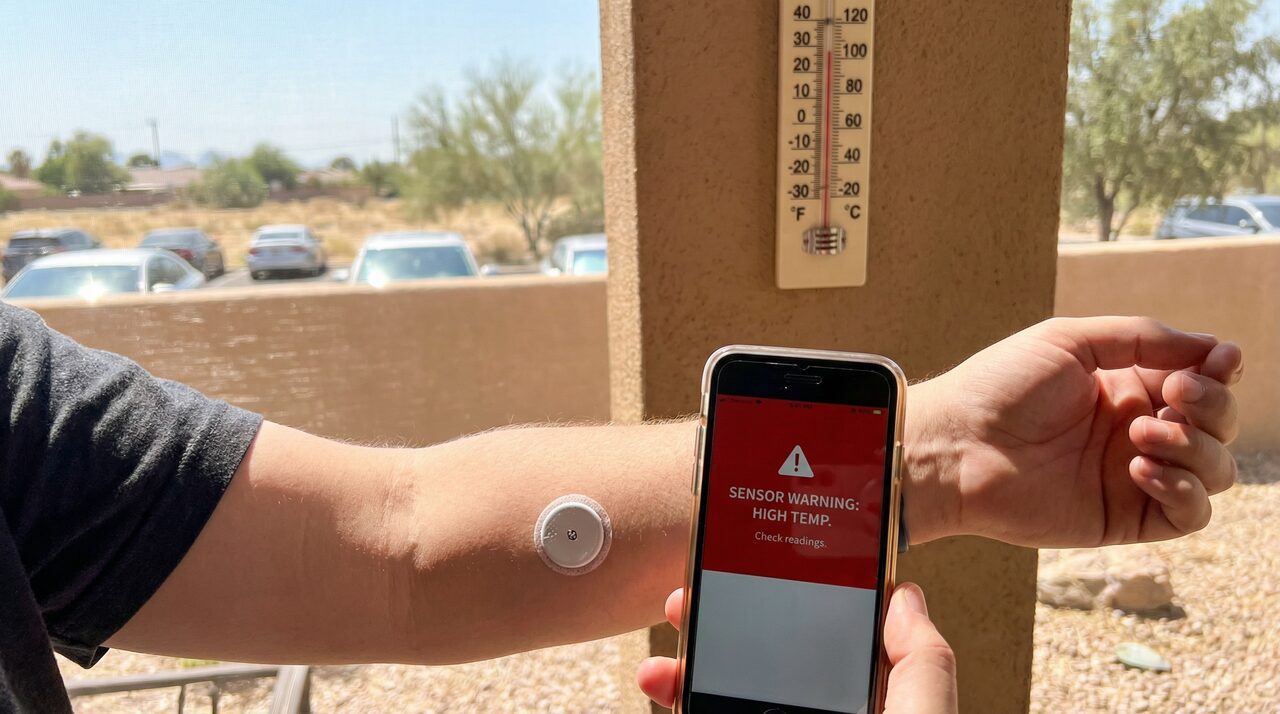
Continuous glucose monitors can be very helpful during summer, but heat, sweat, dehydration, travel, and device storage can all create practical problems. The key is to follow the instructions for your specific CGM system and to confirm readings when they do not match how you feel.
Key takeaways
- Pack extra diabetes supplies and keep medicines, devices, snacks, and treatment for lows accessible.
- Check manufacturer instructions for heat, water, scanner, and storage limits on your specific products.
- Make a backup plan for delays, illness, lost supplies, and local medical care.
Why this matters when you live with diabetes
A CGM reads glucose in interstitial fluid, not directly from blood. Most of the time, trends are useful for day-to-day decisions. In very hot weather, the bigger concerns are often adhesive failure, device storage outside labeled limits, dehydration, sweat, beach or pool exposure, and missed alerts. Temperature and water guidance varies by brand and model, so a general article should not replace the user manual.
What to check before heat or travel
- User manual: check operating, storage, water, scanner, and altitude instructions for your exact CGM.
- Adhesion plan: ask your care team or device company about approved overpatches or skin-prep products if sweat loosens sensors.
- Backup supplies: carry a fingerstick meter, strips, lancets, and treatment for low glucose in case a sensor fails.
- Alert settings: review alerts before travel, hiking, swimming, or long outdoor events.
- Storage: do not leave sensors, transmitters, receivers, or phones in a hot car or direct sun.
When to confirm with a fingerstick
Hot weather can also change behavior around a CGM. You may swim, sweat more, use sunscreen near adhesive, carry the receiver in direct sun, or rely on a phone with a low battery. These are practical problems, not reasons to stop using a CGM. They are reasons to plan ahead, protect the device within labeled limits, and keep a blood glucose meter available when the reading seems surprising.
Follow your CGM instructions for when to confirm with a blood glucose meter. Common reasons include symptoms that do not match the CGM reading, rapidly changing glucose, missing trend data, a new sensor warm-up period, suspected compression lows, or a reading that seems unusual after heat, sweat, or water exposure.
Why backup supplies still matter
A CGM is a tool, not the whole safety plan. Heat, travel delays, water exposure, dead batteries, lost phones, and loose sensors can leave you without reliable trend information. A small backup kit with a meter, strips, lancets, extra adhesive if recommended, snacks, and low-glucose treatment gives you options while you troubleshoot the device or contact support.
If you are traveling, place backup supplies where you can reach them quickly rather than in checked luggage or a hot car. If you use insulin or medicines that can cause low glucose, make sure someone with you knows where your low-glucose treatment is stored.
For long outdoor days, consider checking that alerts are audible, charging cables are packed, and the phone or receiver is protected from direct sun. Small steps like these reduce the chance that a technology problem becomes a diabetes safety problem during travel or exercise.
Practical steps you can use this week
- Save the CGM manufacturer support number and user guide on your phone.
- Pack backup glucose-checking supplies when you will be outside for several hours.
- Keep your receiver or phone shaded and within its labeled temperature range.
- Check the site after swimming, heavy sweating, or sunscreen use near the adhesive.
- Contact your diabetes care team if readings repeatedly do not match symptoms or if you are unsure whether to trust a reading.
If you are at risk for hypoglycemia, do not swim alone. Make sure a capable adult or companion knows how to help and where you keep fast-acting carbohydrate or glucagon if prescribed.
When to call your healthcare professional
Seek urgent help for severe low glucose, confusion, vomiting, suspected ketones, or symptoms that do not improve with your usual plan. Contact your diabetes care team or the device company if sensors repeatedly fail in heat, alarms are unreliable, or readings often do not match symptoms.
Medical note: This article is for education only and does not replace care from your healthcare professional. If you use insulin or medicines that can cause low blood glucose, are pregnant, have kidney disease, heart disease, vision problems, neuropathy, or other diabetes-related complications, discuss changes to food, activity, medicines, devices, or travel plans with your diabetes care team.