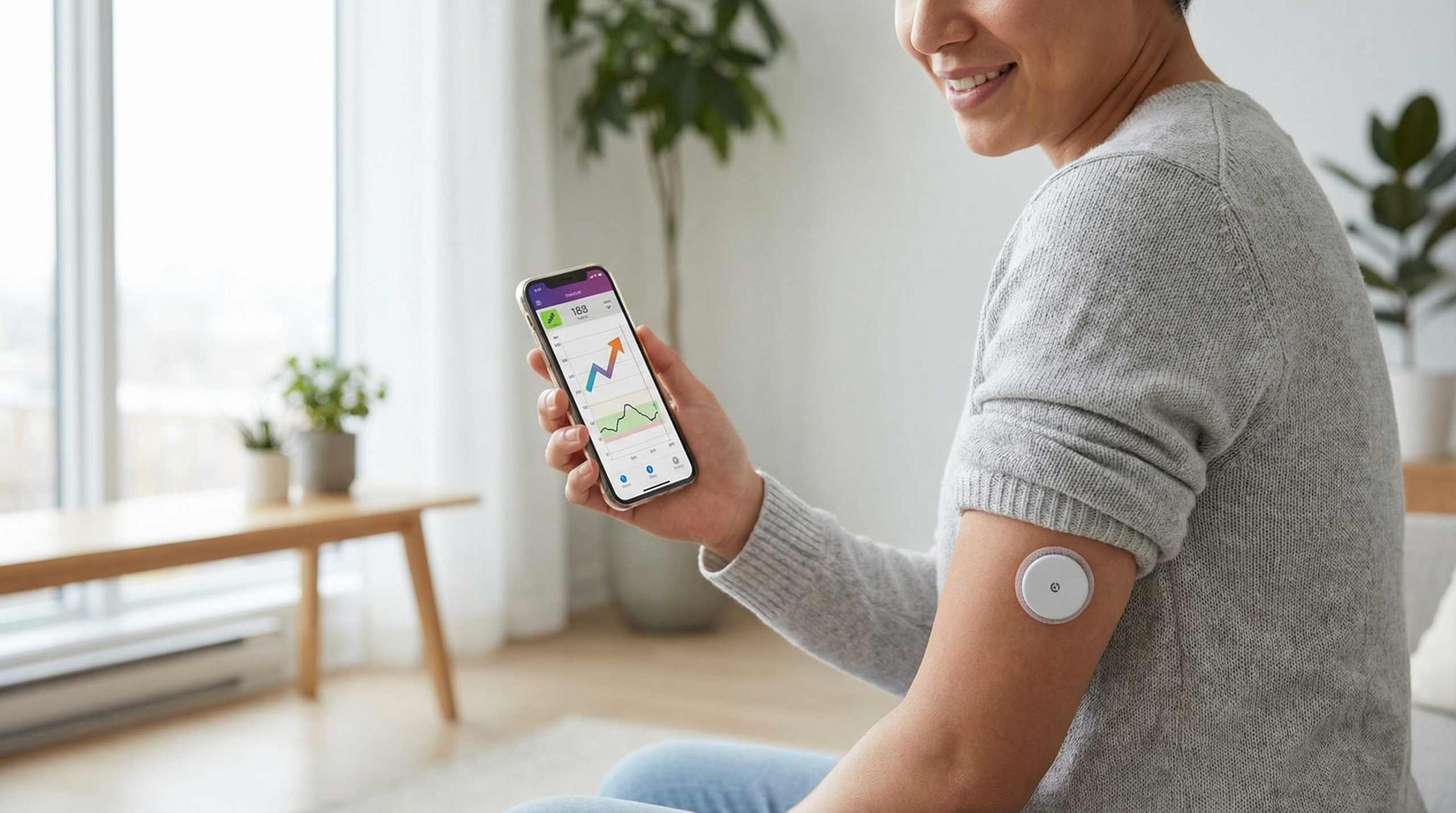
Starting a CGM can make glucose patterns easier to see, but the first week can also feel noisy. New users may see alerts, trend arrows, sensor lag, skin questions, and more data than they expected.
Quick summary
CGM is a tool for pattern recognition and safety. It is not a test of personal worth, and it is not perfect.
Key takeaways
- CGMs estimate glucose in fluid under the skin.
- Readings can lag behind blood glucose, especially when glucose changes quickly.
- Alerts should be set with your risk level and sleep safety in mind.
- A backup meter is still useful.
First-week basics
- Learn what trend arrows mean for your device.
- Ask when to confirm with a fingerstick.
- Check that alerts can be heard or felt.
- Watch for skin irritation.
- Do not overreact to every small rise or fall.
When CGM data feels overwhelming
More data can help, but it can also create anxiety. If you are checking constantly or changing food, insulin, or activity too aggressively, ask for help interpreting patterns.
Caregivers should also balance safety with alert fatigue. The goal is useful alerts, not constant alarm stress.
Keep a meter, strips, fast-acting carbohydrate, and written instructions available while learning the device. A CGM is helpful, but the backup plan is what keeps small device problems from becoming dangerous.
Practical takeaway
CGM works best when beginners learn the limits first: lag time, alerts, confirmation checks, and pattern review.
Safety note
This article is not a substitute for medical care. Seek urgent care for severe low blood sugar, confusion, fainting, vomiting with high glucose or ketones, or symptoms that feel unsafe.
What to ask your care team
- When should I confirm a CGM reading?
- How should I set alerts?
- How often should we review reports?
Related reading
Source summary
- Continuous Glucose Monitoring, National Institute of Diabetes and Digestive and Kidney Diseases. Patient guidance. Accessed June 5, 2026. Source
- Continuous Glucose Monitors, Centers for Disease Control and Prevention. Patient guidance. Accessed June 5, 2026. Source
- Diabetes Technology: Standards of Care in Diabetes 2026, American Diabetes Association. Clinical guideline. Accessed June 5, 2026. Source
- Blood Glucose Monitoring Devices, U.S. Food and Drug Administration. Device information. Accessed June 5, 2026. Source