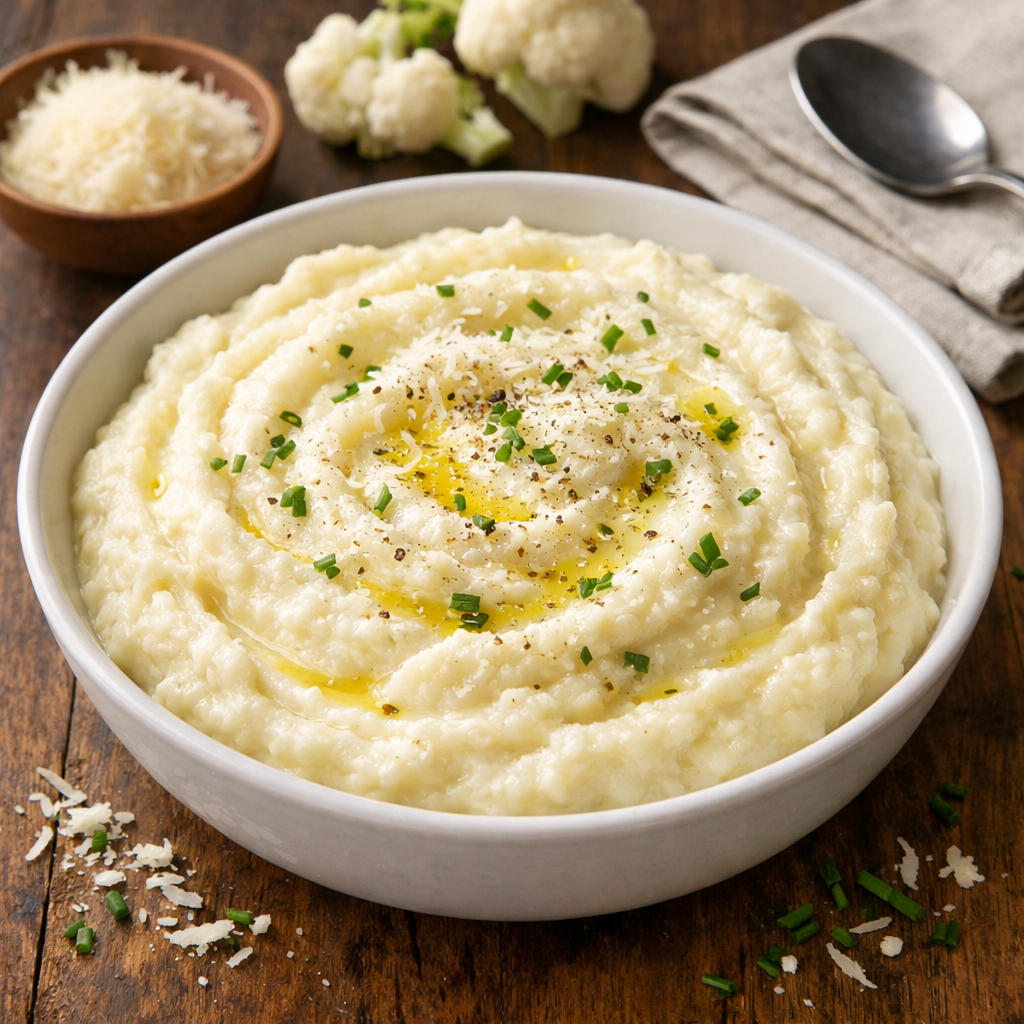
Creamy cauliflower mash can be a helpful alternative to a large serving of mashed potatoes when you want a warm, comforting side with fewer carbohydrates. It works best when it is seasoned well and served as part of a balanced plate.
Quick summary
Cauliflower mash is lower in carbohydrate than potato mash, but the full meal still matters. Butter, cream, cheese, gravy, and portion size can change the nutrition quickly.
Key takeaways
- Cauliflower is a nonstarchy vegetable and is generally lower in carbohydrate than potatoes.
- Use measured fat and cheese to keep calories and saturated fat reasonable.
- Pair with protein and other vegetables for a satisfying meal.
- If you miss potato flavor, blend mostly cauliflower with a small amount of potato and count the carbohydrate.
Ingredients
- 1 large head cauliflower, cut into florets
- 1 tablespoon olive oil or butter
- 2 tablespoons plain Greek yogurt or light cream cheese
- 1 garlic clove, minced
- Black pepper to taste
- Optional: chives, parsley, lemon zest, or 1 tablespoon grated parmesan
Instructions
- Steam or simmer cauliflower until very tender, then drain well.
- Let it sit for 2 minutes so excess moisture can escape.
- Blend or mash with olive oil or butter, yogurt or cream cheese, garlic, and pepper.
- Taste and add herbs or a small amount of parmesan if desired.
- Serve warm beside protein and vegetables.
Nutrition note
Estimated per serving: about 80 to 130 calories, 7 to 10 grams total carbohydrate, 3 to 4 grams fiber, and 3 to 5 grams protein. Amounts vary with cheese, butter, and serving size.
Texture tips
- Drain cauliflower very well to avoid watery mash.
- Use a food processor for a smoother texture.
- Use a hand masher for a rustic texture.
- Add herbs, roasted garlic, mustard, or lemon for flavor before adding extra salt.
Practical takeaway
Use cauliflower mash as a flexible side dish. It can reduce the carbohydrate load of a meal, but it works best with a balanced plate and realistic portions.
Safety note
If you have kidney disease, potassium restrictions, dairy allergy, or a prescribed meal plan, adapt the ingredients with your care team. If you use insulin, count the carbohydrate in the whole meal.
Related Livingdiabetes guides
Sources
- Healthy Eating for Diabetes, Centers for Disease Control and Prevention. Patient guidance. Accessed May 30, 2026. Source
- Food and Nutrition, American Diabetes Association. Patient guidance. Accessed May 30, 2026. Source
- Healthy Living With Diabetes, National Institute of Diabetes and Digestive and Kidney Diseases. Patient guidance. Accessed May 30, 2026. Source