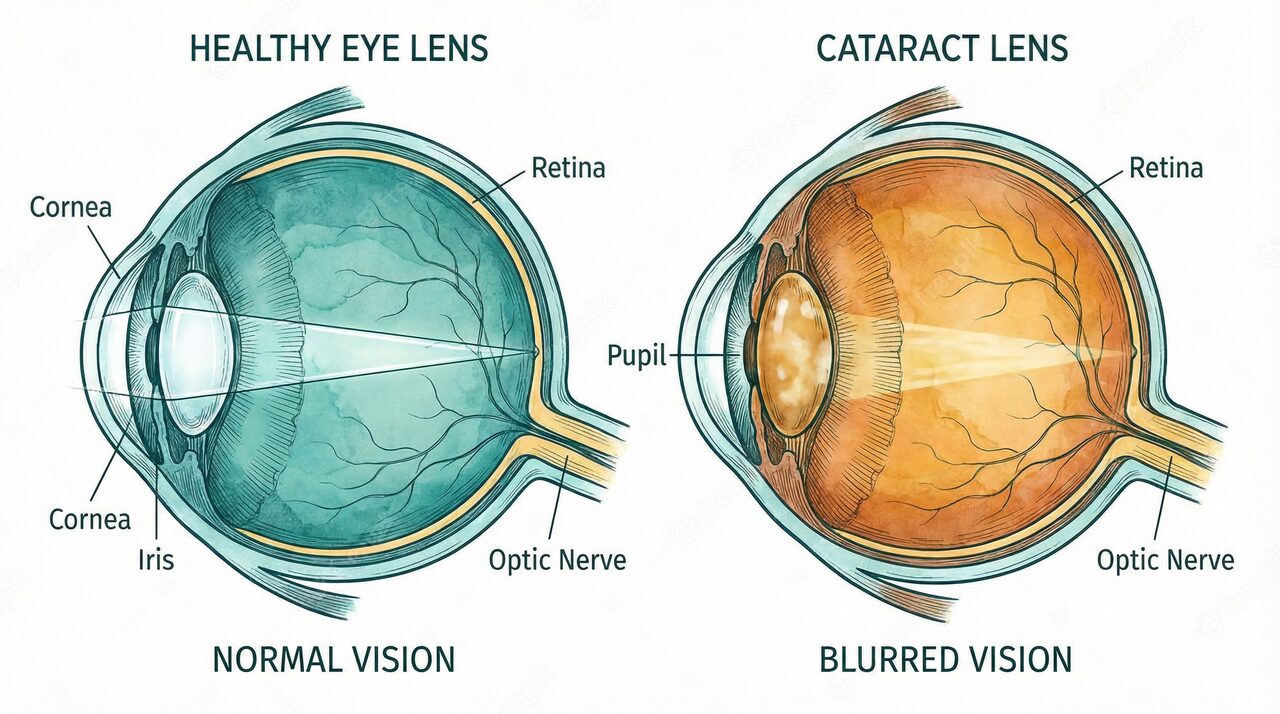
A cataract is clouding of the eye lens. Cataracts are common with aging, but diabetes is one factor that can raise risk and may make cataracts appear earlier.
Quick summary
Blur, glare, faded colors, night-driving difficulty, and frequent glasses changes can come from cataracts, but they can also come from other eye problems.
Key takeaways
- Diabetes is linked with higher cataract risk.
- A dilated eye exam can check for cataracts and other diabetes-related eye disease.
- Surgery is the treatment for cataracts when symptoms and exam findings show that cataract is interfering with daily activities.
- Glucose and medicine planning around surgery should be individualized by the surgical and diabetes care teams.
Cataract symptoms to discuss
- Cloudy or blurry vision.
- More glare from headlights or sunlight.
- Faded colors.
- Trouble seeing at night.
- Frequent changes in glasses prescription.
Warning signs of other eye disease
If vision is changing quickly, one eye is much worse, or there are floaters, flashes, pain, or a curtain-like shadow, cataract may not be the whole explanation. Those symptoms need urgent eye care rather than waiting for a routine surgery discussion.
Before surgery
Ask whether diabetic retinopathy or macular edema is present before cataract surgery. Existing retinal disease can affect how much vision improves after surgery, and some people need retina evaluation or closer follow-up around the operation.
Also ask exactly how to manage diabetes medicines on the day of surgery, especially if fasting is required. Do not stop or change medicines without a specific plan from the surgical or diabetes care team.
Practical takeaway
Cataracts are treatable, but diabetes adds planning. Make sure the retina, glucose plan, and surgery instructions are all clear.
Safety note
This article is not a substitute for medical care. Seek urgent eye care for sudden vision loss, severe eye pain, flashes, many new floaters, a curtain over vision, or symptoms that feel unsafe.
What to ask your care team
- Is cataract the main reason my vision changed?
- Do I also have retinopathy or macular edema?
- How should I handle diabetes medicines before surgery?
Related reading
Source summary
- Cataracts, National Eye Institute. Patient guidance. Accessed June 5, 2026. Source
- Vision Loss and Diabetes, Centers for Disease Control and Prevention. Patient guidance. Accessed June 5, 2026. Source
- Diabetic Eye Disease, National Institute of Diabetes and Digestive and Kidney Diseases. Patient guidance. Accessed June 5, 2026. Source
- Get a Dilated Eye Exam, National Eye Institute. Patient guidance. Accessed June 5, 2026. Source