
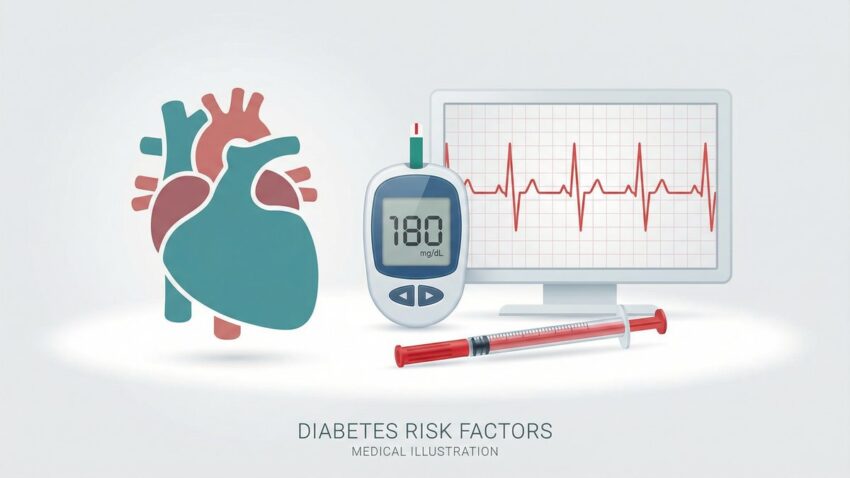
People with diabetes face a cardiovascular risk two to four times higher than the general population. Heart disease remains the leading cause of death among those living with both type 1 and type 2 diabetes — yet the majority of these events are preventable with the right knowledge and consistent management.
Why Diabetes and Heart Disease Are So Closely Linked
The relationship between diabetes and cardiovascular disease is not coincidental. Chronically elevated blood glucose damages the walls of blood vessels through endothelial dysfunction. Over time, this promotes the build-up of fatty plaques inside the arteries — atherosclerosis. When these plaques rupture, they trigger clot formation, blocking blood flow to the heart (heart attack) or brain (stroke).
Beyond glucose itself, diabetes is almost always accompanied by a cluster of metabolic abnormalities: elevated LDL cholesterol, low HDL cholesterol, high triglycerides, insulin resistance, and chronic low-grade inflammation. Each independently increases cardiovascular risk; together, they create a compounding effect known as metabolic syndrome.
Adults with type 2 diabetes are 2–4 times more likely to develop cardiovascular disease than those without diabetes. Approximately 68% of people with diabetes aged 65 or older die from some form of heart disease, according to the American Heart Association.
Your Major Cardiovascular Risk Factors
| Risk Factor | Target | Why It Matters |
|---|---|---|
| HbA1c | <7% | Every 1% reduction cuts CV events by ~14% |
| Blood Pressure | <130/80 mmHg | Hypertension doubles heart attack risk in diabetics |
| LDL Cholesterol | <70 mg/dL | LDL drives atherosclerotic plaque formation |
| Triglycerides | <150 mg/dL | Marker of insulin resistance |
| Smoking | Non-smoker | Smoking + diabetes = 3× higher CV mortality |
Protecting Your Heart: Evidence-Based Strategies
- Achieve and maintain HbA1c within your individualised target range
- Control blood pressure to below 130/80 mmHg
- Take statin therapy if aged 40–75 with diabetes (ADA recommendation)
- Consider SGLT2 inhibitors or GLP-1 receptor agonists — both have proven cardiovascular benefits
- Engage in at least 150 minutes of moderate aerobic exercise per week
- Follow a Mediterranean or DASH dietary pattern
- Stop smoking — the single most impactful modifiable risk factor
Heart disease is the most serious complication of diabetes, but it is largely preventable. Managing your “ABCs” — HbA1c, Blood pressure, and Cholesterol — alongside lifestyle changes and appropriate medication, gives you the strongest possible protection. Speak with your diabetes care team about your individual cardiovascular risk profile at your next appointment.
 English
  Urdu
Urdu