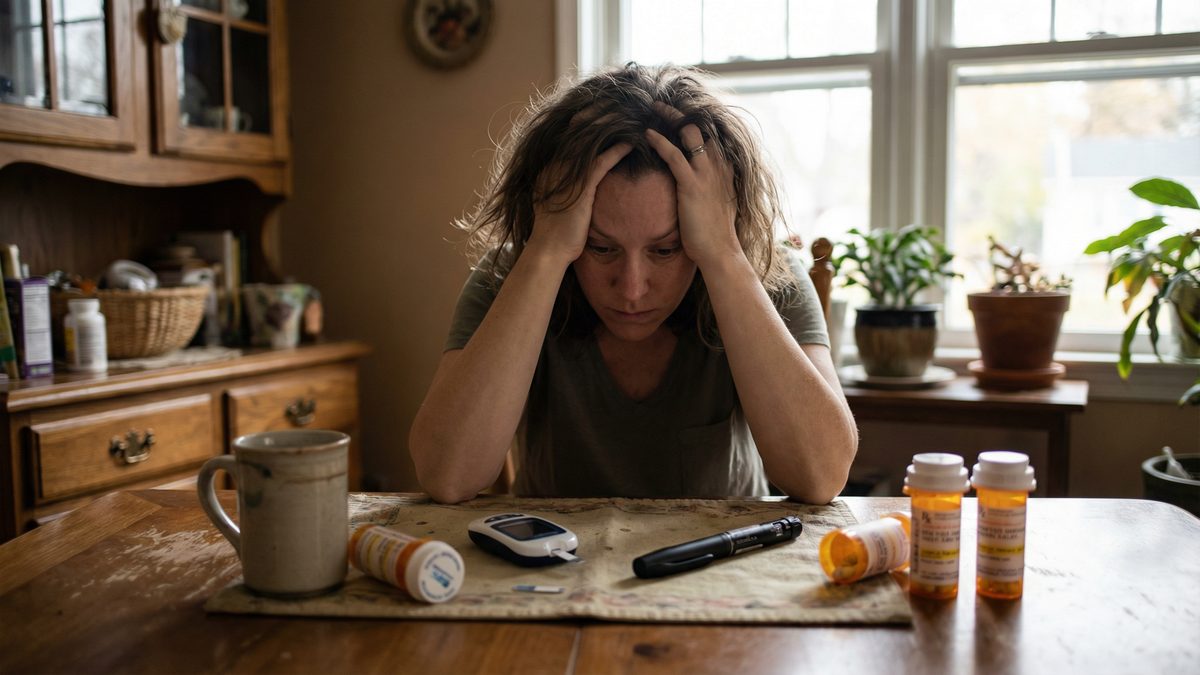
Diabetes burnout can feel like being tired of every number, appointment, food decision, alarm, supply problem, and lecture. It is not laziness. It is a signal that the plan may be too heavy or too unsupported.
Quick summary
Burnout can overlap with depression, anxiety, diabetes distress, financial stress, or eating problems, so it deserves a careful look.
Key takeaways
- Burnout can lead to skipped checks, missed medicines, avoided appointments, or giving up on goals.
- Small goals can be safer than a total reset.
- Support from clinicians, educators, therapists, peers, or family may help.
- Self-harm thoughts or severe depression need urgent help.
First steps back
- Pick one safety task, not ten.
- Ask the care team to simplify the plan.
- Review supplies, costs, and barriers honestly.
- Set kinder glucose review habits.
- Add mental health support if sadness, anxiety, or hopelessness are present.
What not to do
Do not respond to burnout with shame, threats, or extreme rules. Those usually make avoidance worse.
If you have stopped insulin, stopped eating safely, or are avoiding care because everything feels pointless, tell someone now. You deserve help before an emergency happens.
Practical takeaway
Burnout recovery starts with reducing the load and protecting the highest-risk parts of care first.
Safety note
This article is not a substitute for medical care. If you may harm yourself or feel unable to stay safe, call emergency services now. In the United States, call or text 988.
What to ask your care team
- What is the smallest safety step to restart?
- Can my diabetes plan be simplified?
- Should I be screened for depression or anxiety?
Related reading
Source summary
- 10 Tips for Coping With Diabetes Distress, Centers for Disease Control and Prevention. Patient guidance. Accessed June 5, 2026. Source
- Diabetes and Mental Health, Centers for Disease Control and Prevention. Patient guidance. Accessed June 5, 2026. Source
- Healthy Living With Diabetes, National Institute of Diabetes and Digestive and Kidney Diseases. Patient guidance. Accessed June 5, 2026. Source
- 988 Suicide and Crisis Lifeline, 988 Lifeline. Crisis resource. Accessed June 5, 2026. Source