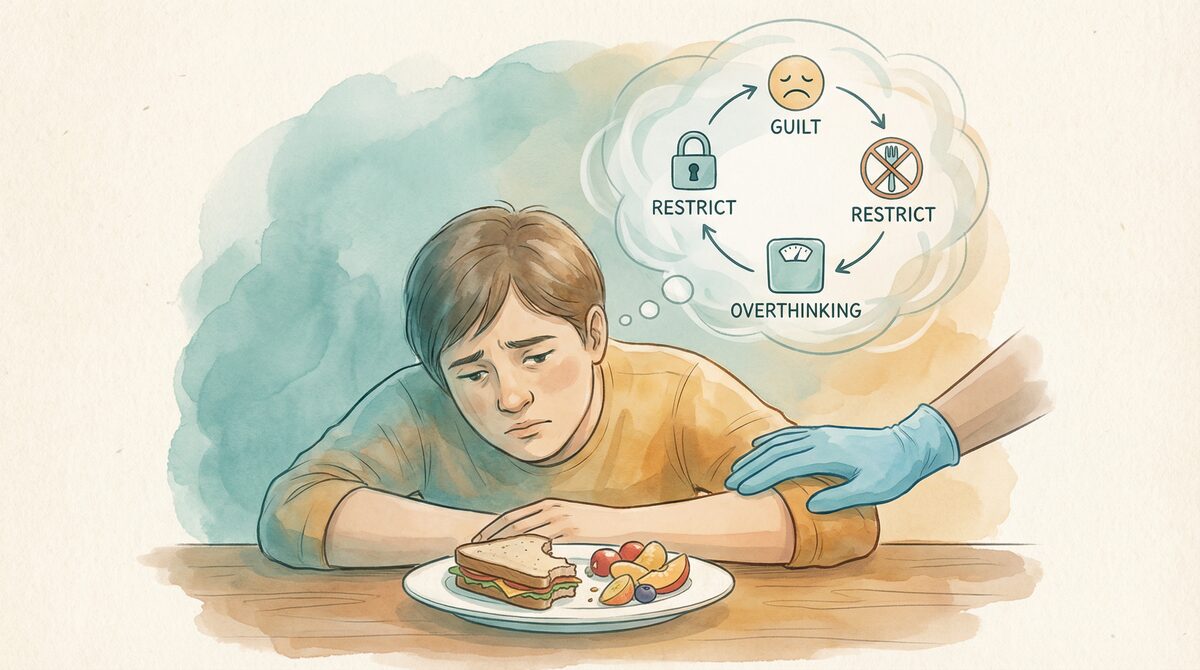
Eating disorders are serious medical illnesses, not choices or vanity. Diabetes can add extra risk because food, weight, glucose, insulin, and body image may become tied together in daily life.
Quick summary
Any pattern of restricting food, bingeing, purging, misusing insulin, or avoiding diabetes care because of weight or shame deserves prompt professional help.
Key takeaways
- Eating disorders can affect people at any body size.
- Insulin omission or dose manipulation can be life-threatening.
- Recovery usually needs coordinated medical, diabetes, nutrition, and mental health care.
- Weight-focused shame can make diabetes care less safe.
Warning signs
- Skipping insulin or medicines to affect weight.
- Avoiding glucose checks because numbers feel upsetting.
- Binge eating, purging, fasting, or severe restriction.
- Fear of eating carbohydrates even when treatment requires them.
- Repeated DKA, severe highs, severe lows, or unexplained weight change.
Safer next steps
Tell a clinician directly if insulin or medicine use has become tied to weight, guilt, or fear. This is a medical safety issue, not a moral failure.
Ask for a team approach. Diabetes care, mental health care, and nutrition support need to work together so glucose safety and eating-disorder recovery are not treated as separate problems.
Practical takeaway
The safest goal is not perfect eating or perfect glucose. It is coordinated care that reduces immediate danger and supports recovery.
Safety note
This article is not a substitute for medical care. Seek urgent care for DKA symptoms, severe low blood sugar, fainting, chest pain, vomiting, self-harm thoughts, or symptoms that feel unsafe.
What to ask your care team
- Can you screen me for an eating disorder or disordered eating?
- How can we make insulin use safer during recovery?
- Who can coordinate diabetes and eating-disorder care?
Related reading
Source summary
- Eating Disorders: What You Need to Know, National Institute of Mental Health. Patient guidance. Accessed June 5, 2026. Source
- Diabetes and Mental Health, Centers for Disease Control and Prevention. Patient guidance. Accessed June 5, 2026. Source
- Psychosocial Care for People With Diabetes, American Diabetes Association. Position statement. Accessed June 5, 2026. Source
- 988 Suicide and Crisis Lifeline, 988 Lifeline. Crisis resource. Accessed June 5, 2026. Source