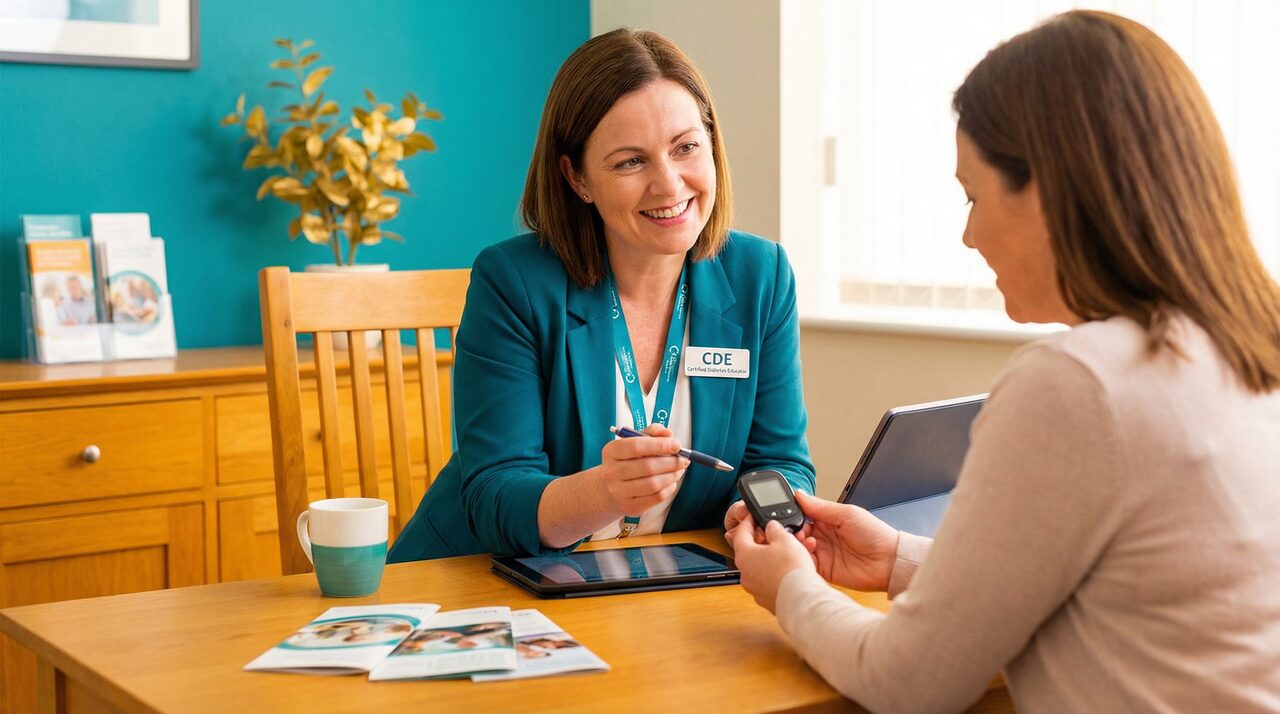
A diabetes educator, often called a diabetes care and education specialist, helps translate a diagnosis into daily skills. The formal service is often called diabetes self-management education and support, or DSMES.
Quick summary
DSMES is not only for people newly diagnosed. It can help when treatment changes, complications appear, life routines shift, or glucose patterns become harder to explain.
Key takeaways
- DSMES teaches practical self-care skills, not just facts.
- It can cover food, medicines, glucose monitoring, activity, sick days, problem solving, and emotional stress.
- Support can be useful at diagnosis, yearly follow-up, treatment changes, and new complications.
- Coverage and referral rules vary, so ask your care team directly.
When to ask for referral
- You were recently diagnosed with diabetes or prediabetes.
- You started insulin, a pump, CGM, GLP-1 medicine, or a new eating plan.
- You have frequent lows, highs, or confusing glucose patterns.
- You are pregnant, planning pregnancy, or caring for a child with diabetes.
- You feel burned out, judged, overwhelmed, or unsure what to do next.
What good support looks like
Good education is personal. It should fit culture, budget, schedule, food access, medicines, technology comfort, mental health, and what the person actually wants to change.
A strong educator does not blame. They help simplify the plan, teach safety skills, and help you bring better questions back to your clinician.
Practical takeaway
DSMES can turn diabetes from a list of instructions into skills you can use in real life.
Safety note
This article is not a substitute for medical care. If diabetes distress, depression, food fear, or medication fear is blocking care, ask for mental health support as well as diabetes education.
What to ask your care team
- Can you refer me to DSMES or a diabetes care and education specialist?
- Which skill should I work on first?
- Does my insurance cover DSMES, medical nutrition therapy, or device training?
Related reading
Source summary
- About Diabetes Self-Management Education and Support, Centers for Disease Control and Prevention. Patient guidance. Accessed June 5, 2026. Source
- Diet, Eating, and Physical Activity, National Institute of Diabetes and Digestive and Kidney Diseases. Patient guidance. Accessed June 5, 2026. Source
- Psychosocial Care for People With Diabetes: A Position Statement, American Diabetes Association, Diabetes Care. Position statement. Accessed June 5, 2026. Source
- Treatment of Low Blood Sugar, Centers for Disease Control and Prevention. Patient guidance. Accessed June 5, 2026. Source