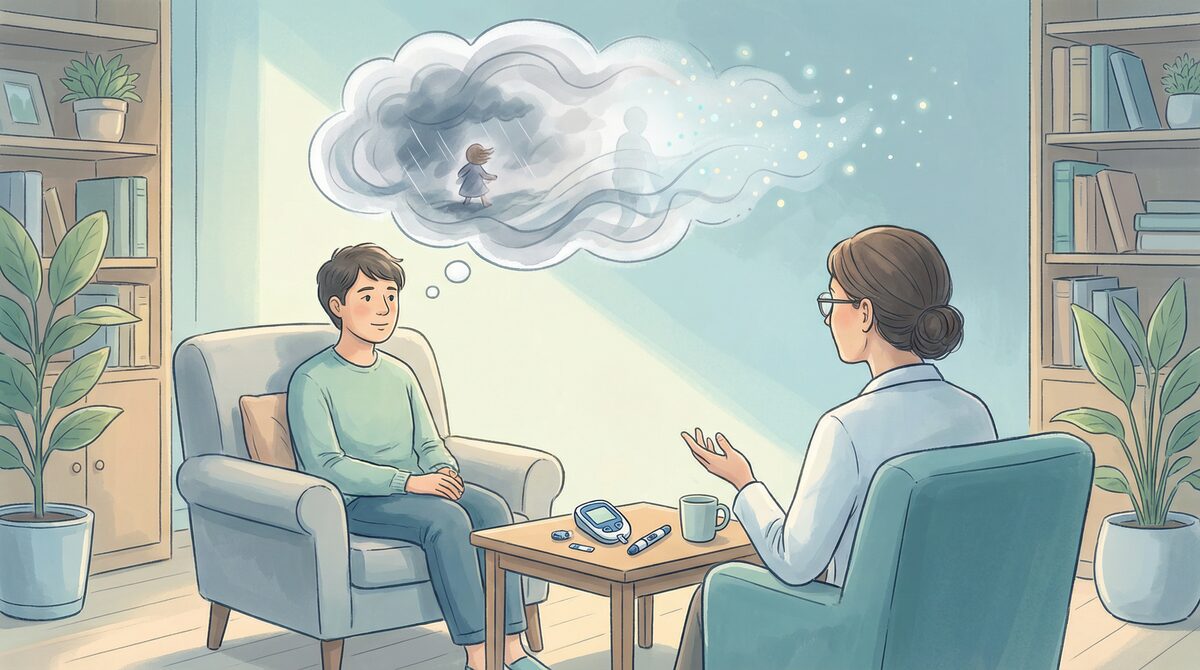
PTSD can affect sleep, stress responses, concentration, trust, and daily routines. For someone with diabetes, that can make appointments, glucose checks, alarms, injections, eating, and medical settings harder.
Quick summary
The goal is not to force someone through diabetes tasks with more shame. The goal is care that is safer, more predictable, and trauma-informed.
Key takeaways
- PTSD can happen after frightening or traumatic events.
- Triggers may be related to medical care, alarms, body sensations, food, or past experiences.
- Avoidance can make diabetes care harder.
- Mental health treatment and diabetes support can work together.
How PTSD can show up in diabetes care
- Avoiding appointments or labs.
- Panic during alarms, injections, or procedures.
- Sleep disruption that affects glucose patterns.
- Difficulty trusting clinicians or devices.
- Feeling shut down when discussing numbers.
Trauma-informed adjustments
Ask the care team to explain steps before touching, scanning, drawing blood, or changing devices. Ask for choices where possible, such as appointment timing, support person, written instructions, or shorter goals.
A therapist can help with PTSD symptoms, while the diabetes team can simplify the care plan so safety tasks are realistic during hard periods.
If alarms, needles, food rules, or clinic visits are triggers, write that down before the appointment. A written note can help the team adjust language, timing, privacy, and backup instructions without forcing you to explain everything in the moment.
Practical takeaway
PTSD does not mean diabetes care is impossible. It means the plan may need more predictability, choice, and support.
Safety note
This article is not a substitute for medical care. Seek urgent help for self-harm thoughts, feeling unsafe, severe low blood sugar, DKA symptoms, or symptoms that feel dangerous.
What to ask your care team
- Can we make visits more predictable?
- What diabetes tasks trigger panic or avoidance?
- Can mental health and diabetes care coordinate?
Related reading
Source summary
- Post-Traumatic Stress Disorder, National Institute of Mental Health. Patient guidance. Accessed June 5, 2026. Source
- Diabetes and Mental Health, Centers for Disease Control and Prevention. Patient guidance. Accessed June 5, 2026. Source
- Psychosocial Care for People With Diabetes, American Diabetes Association. Position statement. Accessed June 5, 2026. Source
- 988 Suicide and Crisis Lifeline, 988 Lifeline. Crisis resource. Accessed June 5, 2026. Source