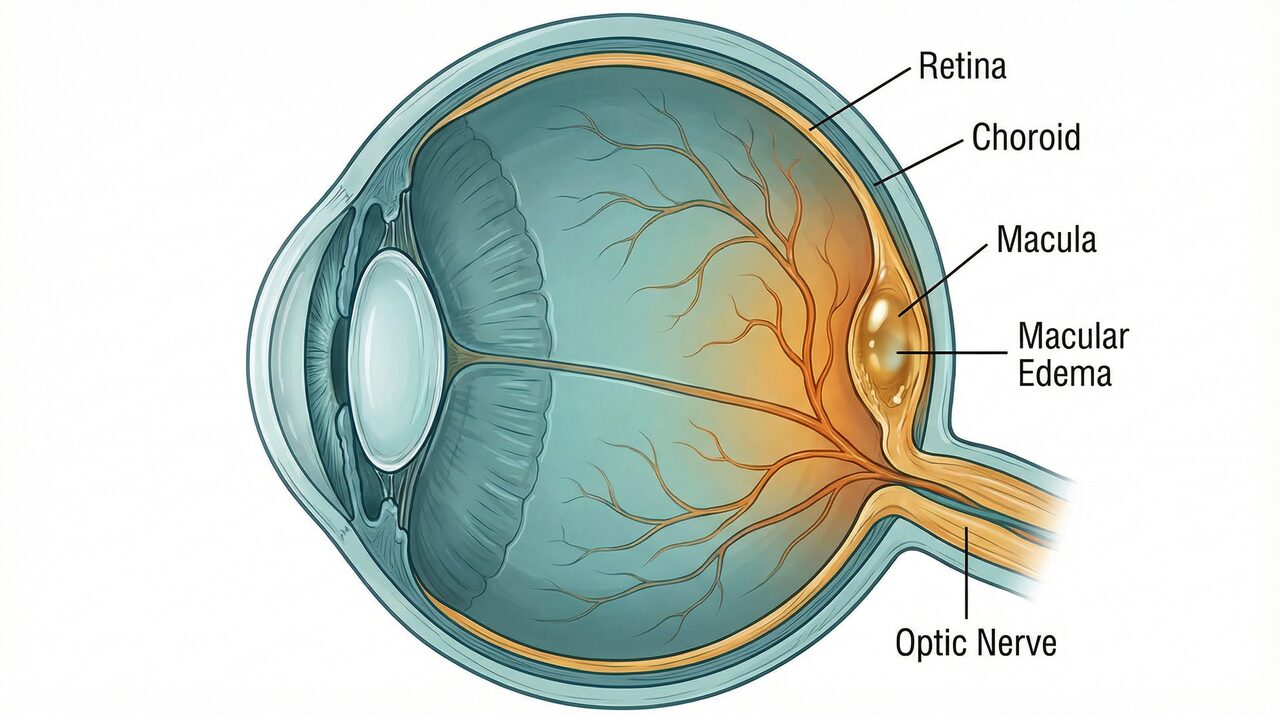
Diabetic macular edema treatment depends on where swelling is located, how much vision is affected, the stage of retinopathy, and the risks of each option.
Quick summary
A treatment plan should explain the goal: improving vision, reducing swelling, preventing worsening, or monitoring safely.
Key takeaways
- Treatment may include anti-VEGF injections, laser treatment, corticosteroids, observation, or surgery in selected complications.
- Repeated visits are often part of retina care.
- Steroids can raise eye pressure and may worsen cataracts, so monitoring is needed.
- Blood sugar, blood pressure, cholesterol, and smoking support remain part of prevention.
Treatment choices are individualized
Some people with diabetic macular edema need injections. Others may need laser, steroid treatment, close monitoring, or a combination. Surgery is generally for selected complications, not routine DME. The right choice depends on the retina specialist’s exam and imaging, not only the diagnosis name.
DME treatment is not the same as treatment for proliferative diabetic retinopathy, although the conditions can overlap. Ask whether the macula center is involved, whether vision is changing, and how the clinic will decide if treatment is working.
Follow-up questions
- How often will I need visits at first?
- What improvement would count as success?
- What side effects should I report urgently?
- Could missed visits reduce benefit or increase vision-loss risk?
- How do glucose, blood pressure, and cholesterol affect the eye plan?
Practical takeaway
DME treatment is a plan, not a one-time decision. Good follow-up and clear warning signs are part of the treatment.
Safety note
This article is not a substitute for medical care. Seek urgent eye care for sudden vision loss, severe eye pain, worsening vision after an injection, flashes, many new floaters, or a curtain over vision.
What to ask your care team
- What is the goal of treatment in my eye?
- What are the risks of each option?
- What happens if my swelling improves or worsens?
Related reading
Source summary
- Diabetic Retinopathy, National Eye Institute. Eye health information. Accessed June 5, 2026. Source
- Injections to Treat Eye Conditions, National Eye Institute. Patient guidance. Accessed June 5, 2026. Source
- Laser Treatment for Diabetic Retinopathy, National Eye Institute. Patient guidance. Accessed June 5, 2026. Source
- Diabetic Eye Disease, National Institute of Diabetes and Digestive and Kidney Diseases. Patient guidance. Accessed June 5, 2026. Source