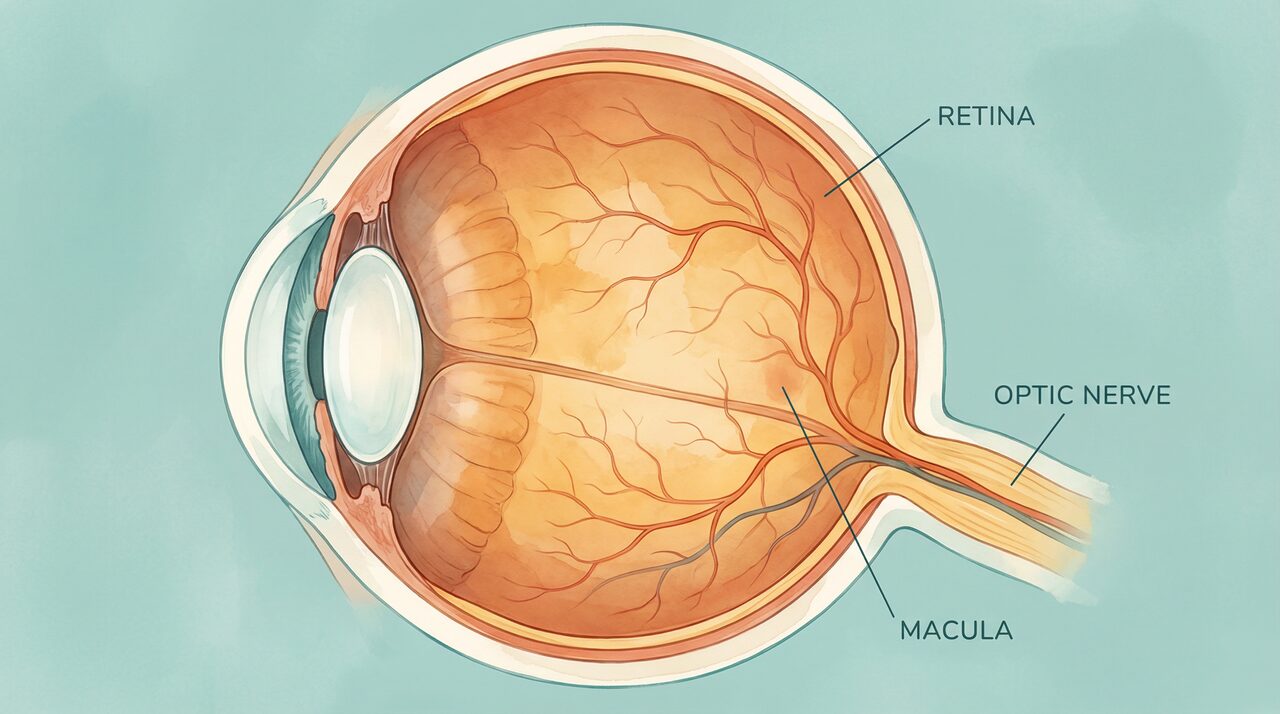
Diabetic retinopathy happens when diabetes damages blood vessels in the retina. It is a major reason people with diabetes can lose vision, but early detection and treatment can reduce risk.
Quick summary
The difficult part is that early retinopathy often has no symptoms. Waiting until vision changes appear can miss the safest window for treatment.
Key takeaways
- People with type 1 or type 2 diabetes can develop retinopathy, and pre-existing diabetes during pregnancy needs special eye follow-up.
- Risk rises with diabetes duration and with higher glucose, blood pressure, and cholesterol.
- Treatment may include injections, laser treatment, surgery in selected complications, or close monitoring.
- Sudden floaters, flashes, or vision loss should be treated as urgent because they may signal retinal tear or detachment.
Protection steps
- Keep regular dilated eye exams.
- Work on glucose, blood pressure, and cholesterol goals with your care team.
- Ask about smoking support if you smoke.
- Keep retina follow-up appointments if disease is found.
- Report sudden vision symptoms quickly.
Treatment expectations
Treatment can often prevent worsening and may improve vision for some people, depending on the eye findings. It may not restore vision that has already been permanently damaged.
The exact plan depends on whether disease is mild, moderate, severe, proliferative, or involves macular edema.
If you are pregnant or planning pregnancy and already have diabetes, ask early about eye exam timing because retinopathy can worsen during pregnancy.
Practical takeaway
Diabetic retinopathy prevention is a partnership: routine eye exams, risk-factor control, and prompt treatment when the retina needs it.
Safety note
This article is not a substitute for medical care. Seek urgent eye care for sudden vision loss, flashes, many new floaters, a curtain over vision, severe pain, or symptoms that feel unsafe.
What to ask your care team
- What stage of retinopathy do I have?
- How often should I be seen?
- What treatment would be needed if it worsens?
Related reading
Source summary
- Diabetic Retinopathy, National Eye Institute. Eye health information. Accessed June 5, 2026. Source
- Diabetic Eye Disease, National Institute of Diabetes and Digestive and Kidney Diseases. Patient guidance. Accessed June 5, 2026. Source
- Vision Loss and Diabetes, Centers for Disease Control and Prevention. Patient guidance. Accessed June 5, 2026. Source
- Promoting Eye Health, Centers for Disease Control and Prevention. Clinical guidance. Accessed June 5, 2026. Source