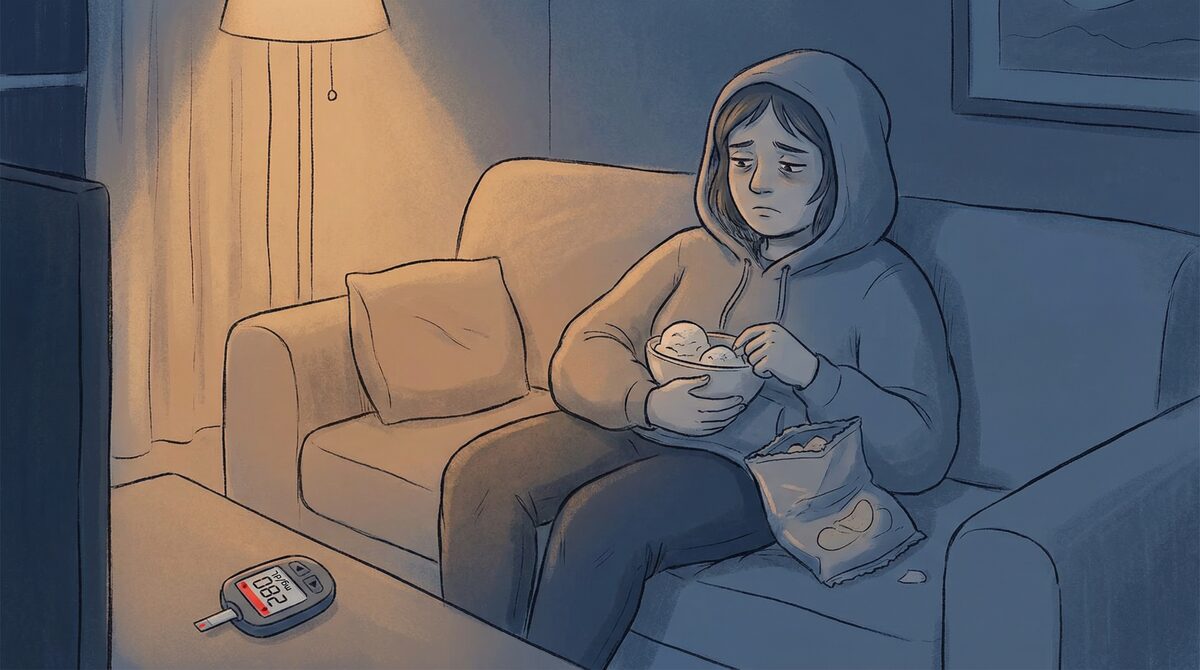
Emotional eating means food is being used to cope with stress, sadness, anger, loneliness, boredom, or exhaustion. With diabetes, it can feel more loaded because glucose numbers may add guilt.
Quick summary
Shame usually makes the pattern worse. A safer approach is to look for the need underneath the eating and build a plan that protects both mental health and glucose safety.
Key takeaways
- Emotional eating is common.
- It is different from binge-eating disorder, but the two can overlap.
- Restrictive rules can backfire for some people.
- Support from a dietitian, therapist, or diabetes educator can help.
What to notice
- What emotion came before eating?
- Was a meal skipped earlier?
- Was the food rule too strict?
- Was there low blood sugar or fear of low blood sugar?
- Did shame lead to avoiding glucose checks afterward?
Small safer steps
Start by adding structure, not punishment. Regular meals, enough protein and fiber, low treatment when needed, and sleep support can reduce reactive eating for some people.
Treating a true low with fast-acting carbohydrate is safety care, not emotional eating. If eating episodes feel out of control, involve purging, severe restriction, insulin omission, or intense shame, ask for eating-disorder-informed help.
Practical takeaway
The goal is not perfect control. It is fewer shame cycles and more predictable support.
Safety note
This article is not a substitute for medical care. Seek medical or crisis help for self-harm thoughts, purging, insulin omission, severe lows, DKA symptoms, or symptoms that feel unsafe.
What to ask your care team
- Could skipped meals or lows be driving this?
- Would a dietitian or therapist help?
- Should we screen for binge eating or an eating disorder?
Related reading
Source summary
- Diabetes and Mental Health, Centers for Disease Control and Prevention. Patient guidance. Accessed June 5, 2026. Source
- Eating Disorders: What You Need to Know, National Institute of Mental Health. Patient guidance. Accessed June 5, 2026. Source
- Healthy Living With Diabetes, National Institute of Diabetes and Digestive and Kidney Diseases. Patient guidance. Accessed June 5, 2026. Source
- Psychosocial Care for People With Diabetes, American Diabetes Association. Position statement. Accessed June 5, 2026. Source