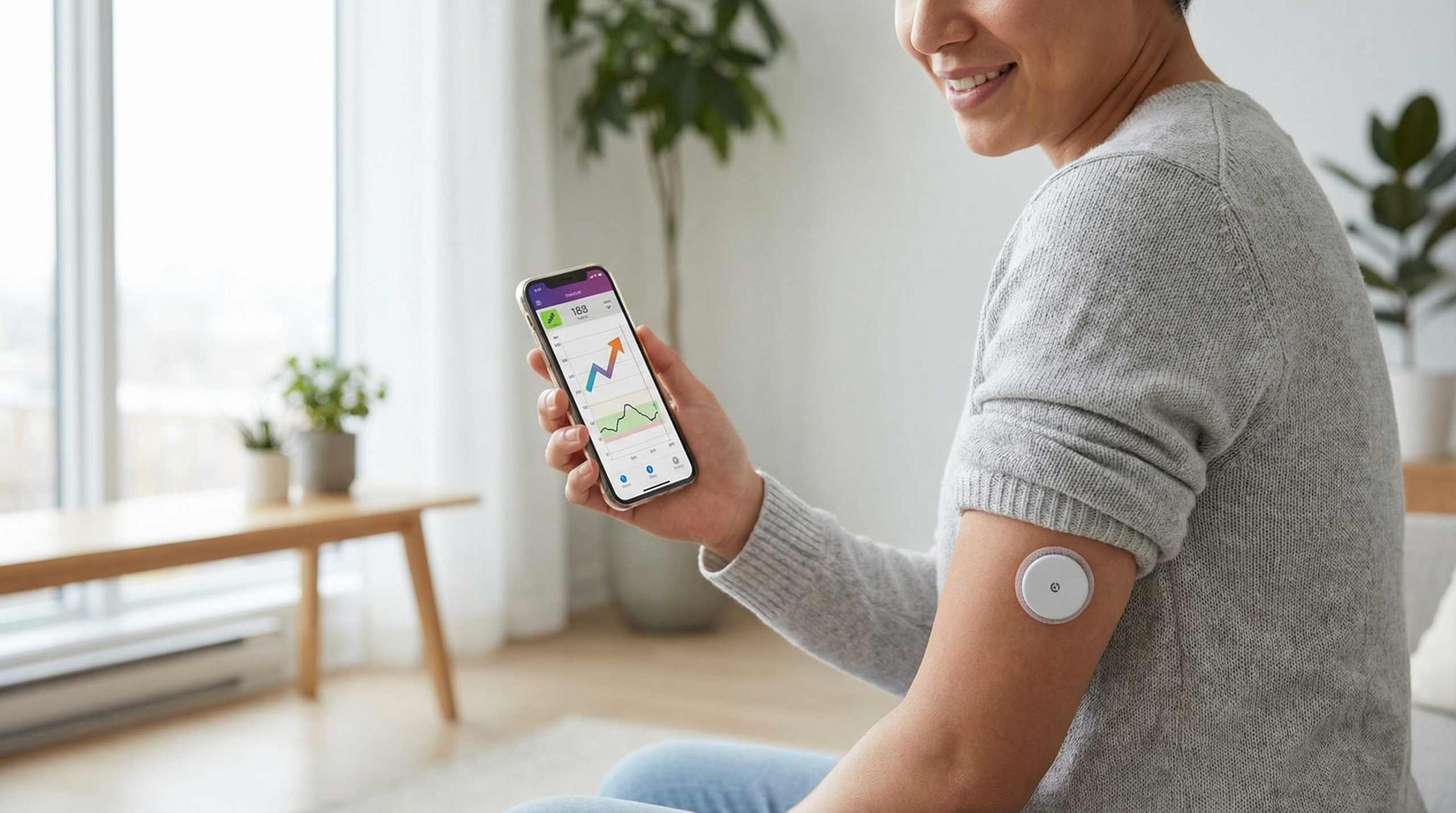
The FDA has cleared Dexcom’s Stelo Glucose Biosensor System as the first over-the-counter continuous glucose monitor, or CGM, for children. The new clearance expands OTC use to children age 2 and older. Stelo is for people age 2 and older who do not use insulin.
This is a device clearance, not a signal that every child needs a CGM. For families, the main message is more practical: Stelo may make glucose pattern tracking easier for some children who are not using insulin, but it has important limits and should be used with adult supervision.
Key takeaways
- The FDA cleared Dexcom Stelo as the first over-the-counter CGM for children.
- It is indicated for people age 2 and older who do not use insulin.
- For children, FDA says the device should be used under adult caregiver supervision.
- It is not for people with problematic hypoglycemia because it is not designed to alert users when low blood sugar occurs.
- Families should speak with a healthcare professional before making medication changes based on the device’s readings.
Why this matters
Continuous glucose monitors can show glucose patterns that a single fingerstick reading may miss. FDA says Stelo can help some pediatric users and their caregivers see how meals, activity, and daily routines relate to glucose patterns.
That can be useful for learning and discussion with a care team. It should not be treated as a stand-alone treatment plan, and it is not a substitute for medical care when a child has diabetes symptoms, high glucose, low glucose risk, or a medication plan that needs clinical guidance.
What FDA cleared
Stelo is a wearable glucose sensor paired with an app on a compatible smartphone or smart device. For a child, the app may be on a parent or caregiver’s phone. FDA says the app displays glucose measurements and trends every 15 minutes.
Each sensor can last up to 15 days before replacement, although FDA notes that wear time may be shorter in pediatric users than in adults. FDA also says mild adverse events in prior study data included local infection, skin irritation, and pain or discomfort.
Who this is for, and who it is not for
FDA describes Stelo as an integrated CGM for people age 2 and older who do not use insulin. FDA also describes use in children, including those with diabetes who receive oral medication, and in people who want to understand how diet, exercise, and other lifestyle changes affect glucose levels.
The limits are important. FDA says Stelo is not for people with problematic hypoglycemia, because it is not designed to alert users when low blood sugar occurs. FDA also says it is not for people on dialysis. People with a history of disordered eating or eating disorders should talk with a healthcare provider before using Stelo.
Practical takeaway for families
If your family is considering an over-the-counter CGM for a child, start by asking what question you want the device to answer. Is the goal to understand glucose patterns after meals, during activity, or during a period of monitoring recommended by a clinician?
For a child who uses insulin, has frequent or severe low blood sugar, needs glucose alarms, is on dialysis, or has a history of disordered eating, this FDA clearance should not be interpreted as a reason to self-select Stelo without medical guidance.
Do not change a child’s diabetes medicine, diet plan, insulin plan, or monitoring routine based only on a new device reading. Follow the device labeling, use the family’s usual safety plan if symptoms and readings do not seem to match, and use the information as a conversation starter with the child’s diabetes care team or pediatric clinician.
Sources
- U.S. Food and Drug Administration. FDA Clears First Over-the-Counter Continuous Glucose Monitor for Children. Published June 12, 2026. Content current as of June 12, 2026.
Editorial and verification notes
This Living Diabetes article was written for general education from FDA source material. It was checked for wording around device clearance, age indication, insulin-use limits, low-blood-sugar caveats, dialysis, caregiver supervision, and patient-safety framing. It is not individualized medical advice.