A new AHA/ACC/ADA/ASN clinical guideline brings diabetes, kidney health, body weight, blood pressure, cholesterol and heart risk into one prevention framework called cardiovascular-kidney-metabolic syndrome, or CKM syndrome.
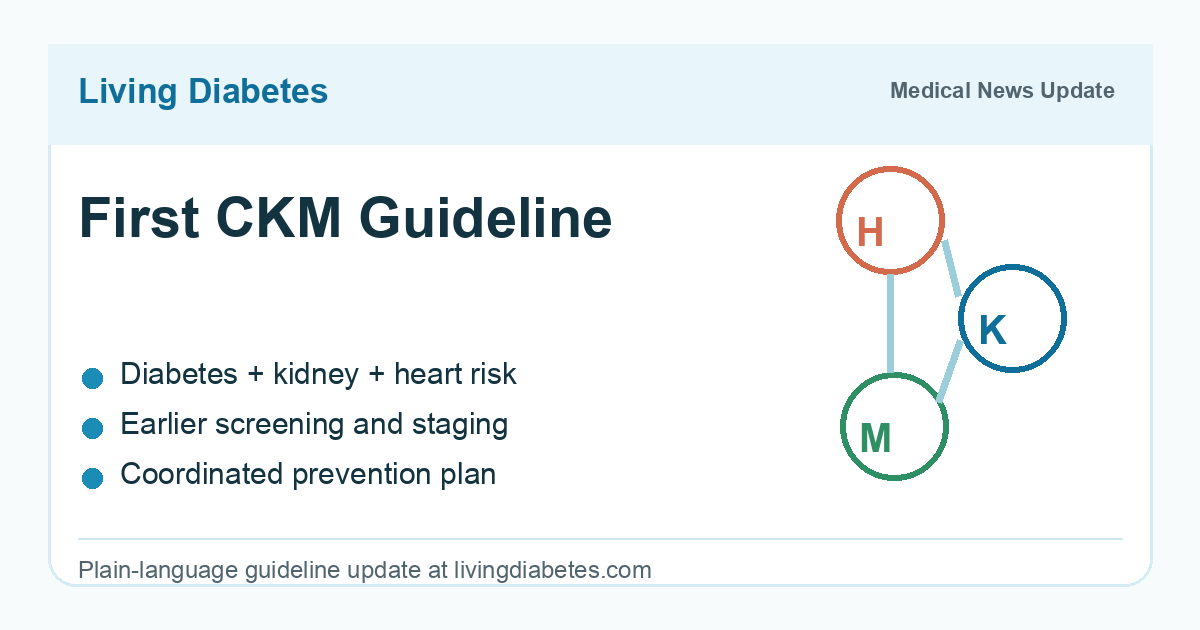
For people living with diabetes or prediabetes, the message is practical: heart, kidney and metabolic risks often overlap. The guideline encourages earlier risk checks and more coordinated care rather than treating each problem in isolation.
Key takeaways
- The guideline is described by AHA/ACC as the first clinical practice guideline for CKM syndrome.
- CKM syndrome is a framework for connected heart, kidney and metabolic risk, not a label people should self-diagnose.
- Risk factors reviewed in the guideline include overweight or obesity, prediabetes or type 2 diabetes, high blood pressure, abnormal lipids and chronic kidney disease.
- The guideline emphasizes earlier screening, staging, coordinated care and healthy lifestyle behaviors.
- Medicines such as SGLT2 inhibitors or GLP-1-based therapies, and metabolic or bariatric surgery, may be considered for selected people. They are not universal recommendations.
Why this matters for diabetes
Many people with diabetes are also managing blood pressure, cholesterol, weight, kidney function or heart risk. The CKM guideline is important because it treats these risks as connected. AHA/ACC says higher CKM stages are linked with a greater burden of serious conditions, including type 2 diabetes, chronic kidney disease and cardiovascular disease.
The guideline is also prevention-focused. It aims to help clinicians identify risk earlier, before a heart attack, heart failure, stroke or kidney failure occurs.
What CKM syndrome means
CKM stands for cardiovascular-kidney-metabolic. In plain language, it describes the overlap between the heart and blood vessels, kidneys, blood sugar, body weight, blood pressure and cholesterol.
The AHA/ACC news release says nearly 90% of U.S. adults have at least one CKM risk factor, such as excess weight, high blood pressure, abnormal lipids, high blood glucose or reduced kidney function. This does not mean almost everyone has advanced disease. It means many people have at least one risk factor worth checking and discussing.
The four stages in plain language
The full professional framework uses stages 0 to 4. Stage 0 describes people without CKM risk factors. The AHA/ACC public release highlights stages 1 to 4, where at least some CKM risk is already present.
Stage 1 includes people with overweight or obesity or prediabetes, but without other metabolic risk factors, kidney disease or cardiovascular disease. Stage 2 includes people with one or more metabolic risk factors, such as high blood pressure, abnormal lipid levels, type 2 diabetes or metabolic syndrome, and/or kidney disease, but without cardiovascular disease.
Stage 3 includes people with subclinical, or silent, cardiovascular disease and CKM risk factors, or people with very high kidney or predicted cardiovascular risk. Stage 4 includes people with diagnosed cardiovascular disease, such as coronary heart disease, heart failure, stroke, peripheral artery disease or atrial fibrillation, together with overweight or obesity, other metabolic risk factors or kidney disease.
What the guideline emphasizes
The guideline highlights better risk assessment, including the PREVENT equations for estimating 10-year and 30-year cardiovascular risk. It also encourages attention to social factors that affect health, such as food insecurity, housing instability and financial strain.
For day-to-day prevention, the guideline emphasizes coordinated care and healthy lifestyle behaviors, including physical activity, nutrition, weight, blood pressure, blood sugar, cholesterol, avoiding tobacco and getting enough quality sleep. It also discusses medication and surgical options for selected people, including therapies that protect the heart and kidneys.
Practical takeaway
If you live with diabetes, prediabetes, high blood pressure, kidney disease, obesity or heart disease, this guideline is a reason to ask a simple question at your next visit: how do my heart, kidney and metabolic risks fit together?
Useful follow-up questions may include: which risk factors should we track, what targets matter for me, do I need more coordinated care, and would any medicine or weight-management option fit my situation?
Do not start, stop or change diabetes, blood pressure, cholesterol, kidney or weight medicines because of a news article. Use this as a conversation starter with a healthcare professional who knows your history.
Sources
- American Heart Association. First-ever guideline on cardiovascular-kidney-metabolic syndrome issued. Published June 9, 2026.
- American Heart Association Professional Heart Daily. 2026 AHA/ACC/ADA/ASN Guideline for the Prevention, Detection, Evaluation, and Management of Cardiovascular-Kidney-Metabolic Syndrome. Updated June 9, 2026.
- American Heart Association Professional Heart Daily. Top Things to Know: 2026 Guideline for CKM Syndrome. Updated June 9, 2026.
Editorial and verification notes
This Living Diabetes article was written for general education from AHA/ACC/ADA/ASN guideline source material. It was checked for guideline scope, staging language, medication caveats, patient-safety framing and source-faithful wording. It is not individualized medical advice.