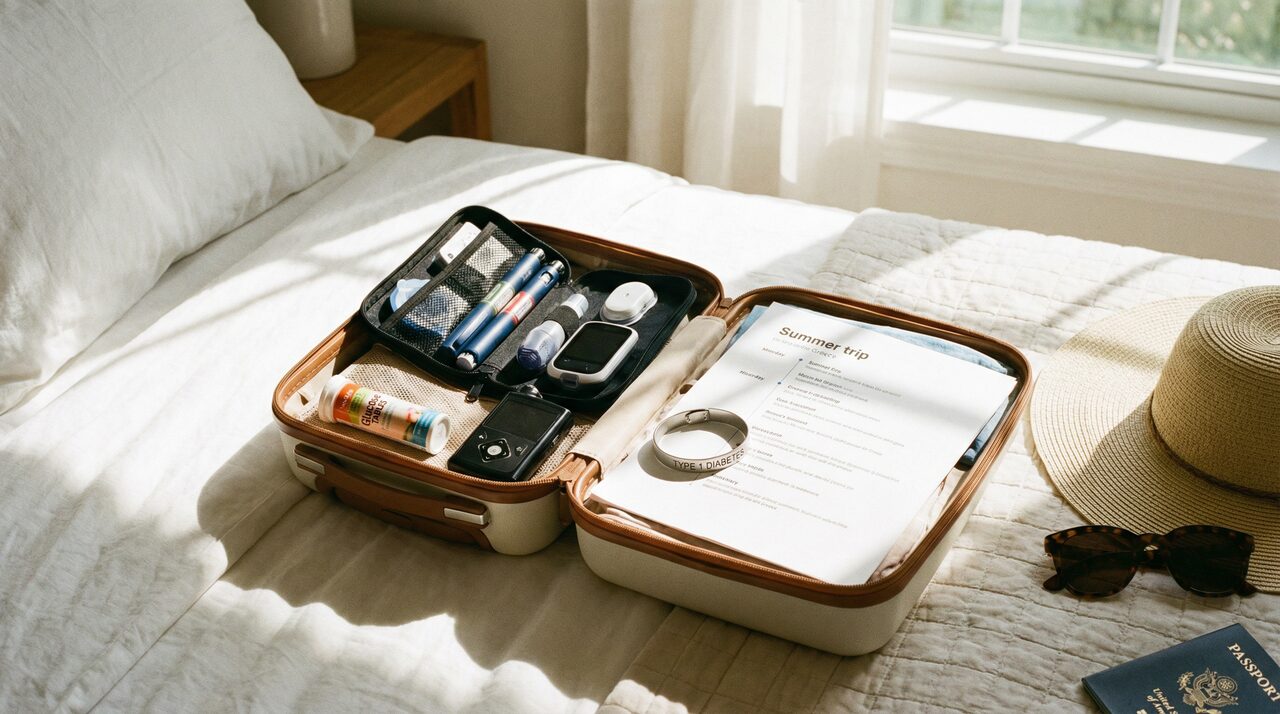
Preparing for air travel when you live with diabetes involves more than just packing your bags. Understanding airport security procedures, especially those set by the Transportation Security Administration (TSA), is crucial for a smooth and stress-free journey. From managing insulin and devices to navigating security checkpoints, a little preparation goes a long way in ensuring your diabetes care stays on track while you’re in the air and at your destination.
Key takeaways
- Pack extra diabetes supplies and keep medicines, devices, snacks, and treatment for lows accessible.
- Check manufacturer instructions for heat, water, scanner, and storage limits on your specific products.
- Make a backup plan for delays, illness, lost supplies, and local medical care.
Why this matters when you live with diabetes
Travel can disrupt your usual routine, affecting meal times, activity levels, and even sleep patterns. For people with diabetes, these changes can impact blood glucose management. Add in the unique environment of an airplane cabin and the stress of airport security, and it’s clear why proactive planning is essential. Knowing your rights and the rules regarding medical supplies can prevent delays and ensure you have everything you need readily accessible.
What to do before you start: Essential Pre-Flight Planning
Travel Documentation and Prescriptions
- Doctor’s Letter: Carry a letter from your doctor explaining your diabetes diagnosis, medications (including insulin), supplies, and devices (like pumps or continuous glucose monitors). This can be helpful if you encounter questions from security personnel or need medical assistance abroad.
- Prescriptions: Keep all medications in their original, labeled containers. Carry copies of your prescriptions for all medications, including insulin.
- Medical Alert Identification: Wear a medical alert bracelet or necklace, and carry a medical alert card in your wallet.
Packing Your Diabetes Supplies
Because TSA procedures can change, review the latest medical item guidance at tsa.gov before you travel in the United States.
The golden rule for diabetes supplies when flying: always pack them in your carry-on bag. This prevents loss if checked luggage is delayed or misplaced and protects sensitive medications like insulin from extreme temperatures in the cargo hold.
- Insulin and Medications: Pack at least double the amount of insulin and other medications you anticipate needing for your trip, accounting for potential delays.
- Syringes, pens, and needles: TSA allows syringes and other injection supplies in carry-on bags when they are accompanied by injectable medications and declared at screening, following TSA medical items rules.
- Blood Glucose Meters, Test Strips, and Lancets: All are allowed in both carry-on and checked luggage.
- Continuous glucose monitors (CGMs) and insulin pumps: You can usually keep insulin pumps and CGMs on during screening. Inform the TSA officer about your device and follow your device manufacturer’s instructions about metal detectors, advanced imaging technology, and X-ray. If your manufacturer advises against certain scanners, request a pat-down or visual inspection.
- Medically Necessary Liquids: Insulin and other medically necessary liquids, including gels or drinks used to treat low blood sugar, can be allowed in amounts greater than the usual 3-1-1 limit when declared to TSA. Declare these items to the TSA officer at the start of the screening process. They may be subject to additional screening as described in TSA guidance for medical items.
- Snacks and Glucagon: Pack plenty of diabetes-friendly snacks to manage blood sugar fluctuations, especially during flight delays. Carry glucagon if prescribed.
Practical steps you can use this week: Navigating the Airport and Flight
At the Security Checkpoint
When you approach the security checkpoint, inform the TSA officer that you have diabetes and are carrying medical supplies and devices. Tell the TSA officer you are carrying medically necessary liquids and supplies. TSA may ask you to separate these from other items and may inspect them; follow instructions while keeping items accessible. If you have an insulin pump or CGM, you may request a pat-down and visual inspection instead of certain scanners, especially if your device manufacturer recommends avoiding them. Some devices are compatible with metal detectors or advanced imaging technology, but always follow the instructions for your exact device. Be prepared for your supplies to be visually inspected.
Protecting Your Supplies from Temperature Extremes
Insulin is sensitive to temperature. Keep it protected from both heat and freezing temperatures.
- Heat Thresholds: Many insulin products remain stable at typical room temperatures for a limited time once opened, but exact temperature ranges and time limits vary by brand. Always check your specific insulin label or package insert. Unopened insulin should be refrigerated (36 degrees Fahrenheit to 46 degrees Fahrenheit or 2 degrees Celsius to 8 degrees Celsius). Avoid leaving insulin in direct sunlight, hot cars, or near heat sources.
- Cold Thresholds: Do not freeze insulin. If it freezes, it loses its effectiveness and should be discarded.
- Storage During Travel: Use an insulated bag or a purpose-made evaporative cooling travel case to keep insulin at a safe temperature. Avoid placing it directly on ice packs, which could freeze it.
During the Flight
- Stay Hydrated: Drink water during your flight to reduce dehydration risk. If you have heart failure, kidney disease, or have been told to limit fluids, ask your healthcare professional how much fluid is safe before increasing intake.
- Move Around: On long flights, get up and walk around the cabin periodically to promote circulation and prevent blood clots.
- Monitor Blood Sugar: Check your blood sugar more frequently than usual, especially if crossing time zones. Adjust insulin or food intake as needed.
- Time Zone Changes: Discuss with your doctor how to adjust your insulin or medication schedule for time zone changes before your trip. Do not change long-acting insulin or other prescription doses on your own without specific guidance.
Emergency Planning
Even with the best planning, emergencies can happen. Be prepared:
- Emergency Contact Information: Keep a list of emergency contacts, including your doctor, readily accessible.
- “Go Bag”: Have a small bag with essential diabetes supplies, snacks, and glucagon (if prescribed) that you can grab quickly.
- Travel Insurance: Consider travel insurance that covers medical emergencies and medication replacement.
When to call your healthcare professional
While traveling, certain symptoms warrant immediate attention. If you experience persistent high or low blood sugar that you cannot manage, severe dehydration, unexplained illness, or any signs of infection (especially with foot injuries), contact your healthcare professional or seek local medical attention. Do not delay care due to travel.
Questions to ask at your next visit
- “What specific adjustments should I make to my insulin or medication schedule when traveling across time zones?”
- “Can you provide a letter for TSA and international travel regarding my diabetes supplies?”
- “What are your recommendations for managing blood sugar during long flights or periods of increased activity?”
- “Should I carry any additional emergency medications or supplies for my trip?”
Medical note: This article is for education only and does not replace care from your healthcare professional. If you use insulin or medicines that can cause low blood glucose, are pregnant, have kidney disease, heart disease, vision problems, neuropathy, or other diabetes-related complications, discuss changes to food, activity, medicines, devices, or travel plans with your diabetes care team.